Liao Ge Wang Zi, a name in traditional Chinese medicine. It is the fruit of Wikstroemia indica (Linn.) C.A.Mey, a plant in the Thymelaeaceae family. It is distributed in Zhejiang, Jiangxi, Fujian, Taiwan, Hunan, Guangdong, Guangxi, Guizhou, and Yunnan. It has the therapeutic effects of detoxifying and dispersing nodules. It is commonly used to treat boils, scrofula, and warts.
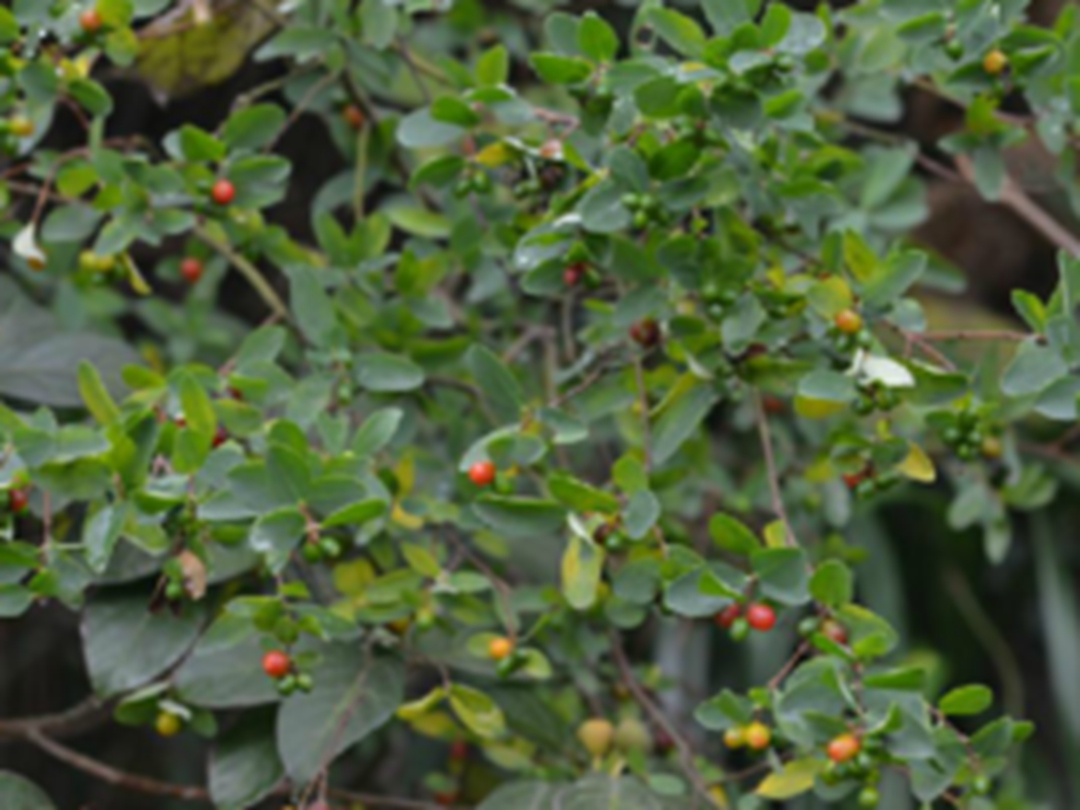
Liao Ge Wang Zi
Liao Ge Wang Zi, a name in traditional Chinese medicine. It is the fruit of Wikstroemia indica (Linn.) C.A.Mey, a plant in the Thymelaeaceae family. It is distributed in Zhejiang, Jiangxi, Fujian, Taiwan, Hunan, Guangdong, Guangxi, Guizhou, and Yunnan. It has the therapeutic effects of detoxifying and dispersing nodules. It is commonly used to treat boils, scrofula, and warts.
Chinese Name : 了哥王子
Aliases : Tongpi Seeds, Gouxin Medicine Seeds, Gouxin Grass Seeds, Xiaoshan Yam Seeds, Quezai Ma Seeds, Jiuxin Grass Seeds
Nature, Flavor & Meridian Tropism : Pungent in taste, slightly cold in nature. Enters the Heart Meridian
Benefits & Efficacy
Benefits
Detoxifies and disperses nodules.
Indications
Boils, scrofula, warts, and skin tags.
Usage and Dosage
External use: Apply an appropriate amount, pounded into a paste; or soak in wine and apply topically.
Precautions
Use with caution when taken internally; contraindicated for those with weak constitutions and pregnant women. *Essentials of the Properties of Raw Herbs*: “Toxic; can be fatal; must not be taken indiscriminately. This herb is poisonous to dogs; if ingested by a dog, death is certain.”
Relevant Discussions
*Essentials of the Properties of Raw Herbs*: “Apply as a poultice for scrofula and abscesses.”
Applications
Processing & Preparation
Harvesting & Processing
Harvest when the fruit ripens in autumn; use fresh or sun-dry.
Crude Drug Identification
Botanical Information
Botanical Classification
A plant of the Daphniphyllaceae family, Nanling Daphniphyllum.
Morphological Characteristics
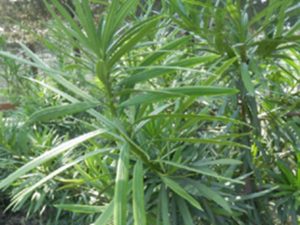
A shrub, 0.5–2 meters tall or taller; young branches reddish-brown, glabrous.Leaves are opposite, papery to nearly leathery, obovate, elliptic-oblong, or lanceolate, 2–5 cm long, 0.5–1.5 cm wide, with a blunt or acute apex, a broadly cuneate or narrowly cuneate base; when dry, they are reddish-brown, glabrous, with fine, dense lateral veins that are highly oblique; petioles are approximately 1 mm long.Flowers are yellowish-green, arranged in terminal capitate racemes; the inflorescence peduncle is 5–10 mm long and glabrous; the pedicel is 1–2 mm long; the calyx is 7–12 mm long, nearly glabrous, with 4 lobes;broadly ovate to oblong, about 3 mm long, with an acute or obtuse apex; stamens 8, in 2 rows, attached above the middle of the calyx tube; ovary obovate or elliptic, glabrous or sparsely pubescent at the apex; style extremely short or nearly absent; stigma capitate; disk scales usually 2 or 4.The fruit is elliptic, approximately 7–8 mm long, and red to dark purple when ripe. Flowering and fruiting occur in summer and fall.
Distribution Area
It is distributed in Zhejiang, Jiangxi, Fujian, Taiwan, Hunan, Guangdong, Guangxi, Guizhou, Yunnan, and other areas.