Prunella is a medicinal herb used to clear heat; it is the dried fruit spike of Prunella vulgaris L., a plant in the genus Prunella of the Lamiaceae family. It has the effects of clearing liver heat, improving vision, dispersing nodules, and reducing swelling. It is primarily used to treat red, swollen, and painful eyes; nocturnal eye pain; headaches and dizziness; scrofula; goiters; mastitis; breast lumps; and breast distension and pain.

Prunella
Prunella is a medicinal herb used to clear heat; it is the dried fruit spike of Prunella vulgaris L., a plant in the genus Prunella of the Lamiaceae family. It has the effects of clearing liver heat, improving vision, dispersing nodules, and reducing swelling. It is primarily used to treat red, swollen, and painful eyes; nocturnal eye pain; headaches and dizziness; scrofula; goiters; mastitis; breast lumps; and breast distension and pain.
Chinese Name : 夏枯草
Latin Name : Prunellae Spica
Aliases : Xiju, Naidong, Yanmian, Maixiaku, Tiesecao, Bangzhutouhua, Denglongtou, Jietoucao, Bangchuicao, Luochuicao, Niuguocao, Guanggucao, Bangtouzhu, Liuyuegan, Xiakutou
Authentic Producing Area : Mainly produced in Jiangsu, Zhejiang, Anhui, Henan, and Hubei
Nature, Flavor & Meridian Tropism : Pungent and bitter in taste; cold in nature; enters the Liver and Gallbladder meridians
Benefits & Efficacy
Benefits
Clears liver heat, improves vision, disperses nodules, and reduces swelling.
Indications
Mainly used to treat redness, swelling, and pain in the eyes; nocturnal eye pain; headache and dizziness; scrofula; goiter; mastitis; breast lumps; and breast distension and pain.
Usage and Dosage
Decoct and take 9–15 g.
Precautions
1. Should not be used in combination with potassium-sparing diuretics such as spironolactone or amiloride, as this may lead to hyperkalemia. 2. Prunella spica is rich in potassium ions and should not be used in combination with potassium salts to avoid the risk of elevated serum potassium levels.
Chemical Constituents
This product contains glycosides such as triterpene saponins, rutin, and hyperoside, as well as organic acids including ursolic acid, caffeic acid, and free oleanolic acid; the flower spikes contain anthocyanins such as delphinidin and cyanidin, as well as d-camphor and d-fennel ketone.
Pharmacological Actions
This product exhibits antimicrobial, antihypertensive, hypoglycemic, and antitumor effects.
Relevant Discussions
1. *Shennong Bencao Jing*: “It treats fever and chills, scrofula, fistulas, head sores, dissolves masses, disperses goiter and stagnant qi, and alleviates leg swelling and damp-induced arthralgia.”
2. *Compendium of Materia Medica*: “Hyssop treats eye pain; soak it in sugar water overnight before use, as it can clear internal heat and soothe liver fire.”
3. *Notes from Chongqing Hall*: “Hyssop is slightly pungent and sweet; therefore, among its properties of dispersing nodules, it also harmonizes yang and nourishes yin. Those who cannot sleep after blood loss will fall asleep immediately upon taking it—its nature is thus evident.”
Applications
Clinical Applications
1. To treat liver fire rising upward, causing redness, swelling, and pain in the eyes, it can be combined with mulberry leaves, chrysanthemum flowers, and cassia seeds; for liver yin deficiency with eye pain that worsens at night, combine it with angelica root and goji berries. It can also be combined with cyperus and licorice, as in the Summer-Dried Grass Powder (Zhang’s Comprehensive Treatise on Medicine).
2. To treat scrofula caused by liver qi stagnation transforming into fire and the accumulation of phlegm-fire, combine it with Fritillaria and Cyperus, as in the Summer Deadgrass Decoction (*Authentic Treatise on Surgery*); to treat goiters, it is often combined with Laminaria and Scrophularia, as in the Summer Deadgrass Paste (*Golden Mirror of Medical Orthodoxy*).
3. To treat swelling and pain from mastitis, it is often used in combination with dandelion (Ben Cao Hui Yan). To treat sores and ulcers caused by heat toxins, it can be combined with honeysuckle, as in the Huadu Dan formula (Qing Nang Mi Chuan).
Related Compatibility
1. Prunella vulgaris combined with Oyster Shell: Prunella vulgaris is bitter and cold, dispersing heat; it excels at clearing liver heat, reducing fire, and improving vision. Oyster Shell is salty and cold, with a heavy, sedating nature; it excels at calming the liver, subduing yang, clearing liver heat, and improving vision. When used together, the effects of calming the liver, clearing liver heat, and improving vision are enhanced. This combination is suitable for symptoms such as dizziness, vertigo, red, swollen, and painful eyes caused by hyperactive liver yang or rising liver fire.
2. Hyssop combined with Zhebei Mu: Hyssop is pungent and dispersing, bitter and draining; it excels at dispersing stagnant phlegm-fire. Zhebei Mu is bitter and cold; it clears heat, transforms phlegm, and disperses nodules. When used together, their effects in clearing heat, transforming phlegm, and dispersing nodules are enhanced. This combination is suitable for scrofula, goiters, and phlegm nodules caused by stagnant phlegm-fire.
Medicinal Identification
1. White-haired Hyssop vs. Hyssop: Both belong to the Lamiaceae family, share a bitter taste and cold nature, and possess heat-clearing properties; they can treat conditions caused by fire-heat and heat-toxin.However, White-haired Summer-dried Grass is a heat-clearing and detoxifying herb that also eliminates phlegm, relieves cough, cools the blood, and stops bleeding. It is primarily used to treat conditions such as severe heat-toxin accumulation, abscesses, boils, and sores; lung-heat cough; yellow, viscous phlegm; sore throat; as well as hemoptysis, epistaxis, or bleeding from external injuries caused by blood heat.Xiakucao is a herb that clears heat and purges fire; it excels at clearing liver fire, dispersing stagnation, and lowering blood pressure. It is particularly effective for treating red, swollen, and painful eyes caused by liver heat or ascending liver fire—such as photophobia, excessive tearing, or corneal opacities—as well as goiters, scrofula, and hypertension resulting from excessive liver fire.
2. Chrysanthemum and Hyssop: Both enter the Liver Meridian and can clear liver heat and improve vision, treating red, swollen, and painful eyes caused by liver fire, as well as dizziness and headaches caused by liver yang hyperactivity.However, chrysanthemum has a pungent, sweet, and bitter taste; is slightly cold and light in nature; and also enters the Lung Meridian. As a pungent-cool herb for relieving exterior syndromes, it not only dispels wind-heat—effectively treating fever and headache associated with wind-heat colds or the early stages of warm diseases—but also nourishes liver yin, clears heat, and eliminates toxins, making it suitable for treating blurred vision due to liver-kidney deficiency, as well as styes and swollen abscesses.Hyssop (Xia Kucao) has a bitter and pungent taste and a cold nature; it also enters the Gallbladder Meridian. As a heat-clearing and fire-purging herb, it is highly effective at clearing liver fire and nourishing liver blood. It is particularly suitable for treating redness, swelling, and pain in the eyes caused by ascending liver fire, as well as conditions such as nocturnal eye pain due to liver yin deficiency. It can also disperse stagnation and lower blood pressure, making it effective for treating scrofula, goiters, and hypertension caused by hyperactivity of liver yang.
Related Medicines
Xiagucao Ointment, Mingzhu Oral Solution, Qingnao Jiangya Tablets, Xiaoyi Pills, Rukang Tablets.
Related Prescriptions
Xiaokucao Decoction (*Authentic Treatise on Surgery*).
Medicinal Diet Therapy
A medicinal dish related to Hyssop is Hyssop and Rose Tea.
1. Benefits: Clears liver heat, soothes the liver, and relieves depression; helps regulate irregular menstruation, and reduces blemishes to beautify the skin.
2. Ingredients: 8 grams of summer枯草, 8 grams of rose petals, and 10 grams of rock sugar.
3. Preparation: Place the summer枯草 and rose petals in a cup. Pour boiling water over them, then add an appropriate amount of rock sugar according to personal taste. Cover and let steep for about 10 minutes.
4. Usage: Drink as a tea. If the two herbs are simmered in water for a short while, their medicinal properties will be extracted more thoroughly.
Notes
Patients requiring treatment with traditional Chinese medicine should first consult a licensed TCM hospital, where a TCM practitioner will conduct a professional diagnosis and prescribe the appropriate herbal formula.
Processing & Preparation
Harvesting & Processing
Harvest in summer when the fruit spikes turn reddish-brown; remove impurities and dry.
Processing Methods
Take the raw herb, remove impurities, flower stalks, and residual leaves, and sift out dust and debris.
Storage Methods
Store in a well-ventilated, dry place.
Crude Drug Identification
Properties of Crude Drugs
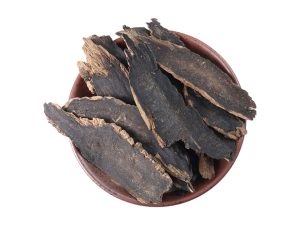
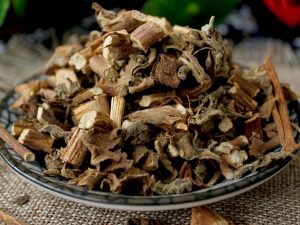
The fruit spikes are cylindrical, slightly flattened, 1.5–8 cm long, 0.8–1.5 cm in diameter, and light brown or reddish-brown.The entire spike consists of several to over ten whorls of persistent calyx and bracts; each whorl has two opposite bracts that are transversely reniform, membranous, with a pointed, tail-like apex, distinct veins, and white, coarse hairs on the outer surface.Each bract contains three flowers; the corolla is often shed. The persistent calyx is bilabiate, with the upper lip 3-lobed and the lower lip 2-lobed; it is closed and contains four small nuts. The fruit is ovoid, brown, with a white protrusion at the tip; when exposed to water, the surface of the nut forms a white mucilaginous layer. It is light in weight, soft in texture, and not easily broken. It has a faint, pleasant aroma and a mild taste.
Properties of Processed Slices
See “Characteristics of Medicinal Materials.”
Botanical Information
Botanical Classification
Prunella, a plant of the genus Prunella in the Lamiaceae family.
Morphological Characteristics
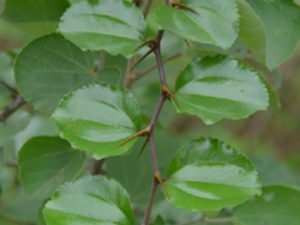
A perennial herb; the rhizome is creeping and produces fibrous roots at the nodes. The stem is 20–30 cm tall, ascending, prostrate at the base, and branched from the base; it is bluntly quadrangular with shallow grooves, purplish-red in color, and covered with sparse rough hairs or nearly glabrous.Stem leaves are ovate-oblong or ovate, varying in size, 1.5–6 cm long and 0.7–2.5 cm wide, with a blunt apex; the base is rounded, truncate, or broadly cuneate, extending downward along the petiole to form a narrow wing; the margin has indistinct wavy teeth or is nearly entire; the leaves are herbaceous, olive-green above, with short stiff hairs or nearly glabrous,the underside is pale green and nearly glabrous; there are 3–4 pairs of lateral veins, slightly prominent on the underside; petioles are 0.7–2.5 cm long, gradually shortening from the base upward. The pair of bracts below the inflorescence resemble the stem leaves, are nearly ovoid, and are sessile or bear inconspicuous short petioles.The verticillate inflorescences form a dense, 2–4 cm long terminal spike, with each verticillate inflorescence supported by a bract;The bracts are broadly cordate, usually about 7 mm long and 11 mm wide, with a 1–2 mm long abruptly pointed apex; the veins are radiate; the outer surface is sparsely bristly along the veins below the middle; the inner surface is glabrous; the margins are ciliate; the bracts are membranous and pale purple. The calyx is campanulate, about 10 mm long including the teeth;the tube is 4 mm long, inversely conical, sparsely bristly on the outside, and bilabiate; the upper lip is flat, broad, nearly suborbicular, with an almost truncate apex bearing three indistinct short teeth, the middle tooth being broad, and all tooth tips slightly spiny; the lower lip is narrower, deeply bifid, with lobes reaching half the width of the lip or less, ciliate along the margins, and tapering to a slightly spiny tip.The corolla is purple, bluish-purple, or reddish-purple, approximately 13 mm long, slightly exceeding the calyx; the corolla tube is 7 mm long, approximately 1.5 mm wide at the base, expanding forward to reach a width of about 4 mm at the throat; the outer surface is glabrous, while the inner surface bears a ring of scaly hairs near the lower one-third; the corolla lobes are bilabiate, with the upper lip nearly circular, approximately 5.5 mm in diameter,concave, somewhat helmet-shaped, with a slightly notched apex; the lower lip is about one-half the size of the upper lip and is 3-lobed, with the central lobe being larger, nearly inversely heart-shaped, and bearing tuft-like small lobes along the apical margin; the lateral lobes are oblong, pendulous, and minute.There are 4 stamens; the anterior pair is much longer, both extending upward to the base of the upper lip lobe and separated from each other. The filaments are slightly flattened and glabrous; the apical end of the anterior pair is bifid, with one fertile lobe bearing an anther and the other lobe being awl-shaped, longer than the anther, slightly curved or nearly erect. The sterile lobe of the posterior pair is slightly tuberculate. The anthers are 2-celled, with the cells widely divergent.The style is slender, with the apex equally bifid; the lobes are awl-shaped and curved outward. The disk is nearly flat. The ovary is glabrous. The nutlets are yellowish-brown, oblong-ovoid, 1.8 mm long, about 0.9 mm wide, and slightly grooved. Flowering occurs from April to June; fruiting occurs from July to October.
Distribution Area
It is distributed throughout most regions of China.
Growth Habits
It prefers a warm and humid environment. It is cold-tolerant and highly adaptable, but thrives best in sandy loam with ample sunlight and good drainage. It can also be planted on dry slopes, at the foot of mountains, on grassy forest edges, along roadsides, and in fields; however, it is not suitable for low-lying, dust-prone, or waterlogged areas.
Propagation Methods
Propagation is by seed or division.
Cultivation Techniques
1. Propagation by seed: Seed collection. When the flower spikes turn yellowish-brown, pick the fruit spikes, dry them in the sun, shake out the seeds, remove impurities, and store them for later use. Sowing.In northern regions, spring sowing takes place from late March to mid-April; fall sowing occurs in late August. Row sowing is most common: on raised beds, make furrows with a row spacing of 20–25 cm and a depth of 0.5–1 cm. Sow the seeds evenly into the furrows, cover with fine soil, lightly firm the soil, water, and keep the soil consistently moist. Seedlings emerge in about 15 days; the seed rate is 0.5–1 kg per mu.
2. Division Propagation: In late spring, when buds begin to emerge, dig up the mature roots and divide them. Dig holes with a row spacing of 25 cm and a plant spacing of 10 cm, planting 1–2 divisions per hole. After planting, cover with soil, firm it down, water, and keep the soil moist; seedlings will emerge in 7–10 days.