Platycodon is a commonly used herb for clearing heat and resolving phlegm. It is the dried root of Platycodon grandiflorus (Jacq.) A. DC., a plant belonging to the genus Platycodon in the Campanulaceae family. It has the effects of promoting lung function, resolving phlegm, soothing the throat, and draining pus. It is primarily used to treat coughs with excessive phlegm, chest tightness and discomfort, sore throat, loss of voice, and lung abscesses with pus discharge.

Platycodon
Platycodon is a commonly used herb for clearing heat and resolving phlegm. It is the dried root of Platycodon grandiflorus (Jacq.) A. DC., a plant belonging to the genus Platycodon in the Campanulaceae family. It has the effects of promoting lung function, resolving phlegm, soothing the throat, and draining pus. It is primarily used to treat coughs with excessive phlegm, chest tightness and discomfort, sore throat, loss of voice, and lung abscesses with pus discharge.
Chinese Name : 桔梗
Latin Name : Platycodonis Radix
Aliases : Fu Shan, Bai Yao, Li Ru, Geng Cao, Lu Ru, Fang Tu, Ji Shi Ji, Ku Geng, Ku Jiegeng, Da Yao, Ku Cai Gen
Authentic Producing Area : Mainly produced in the provinces of Northeast, North, East, and Central China, as well as Guangdong, northern Guangxi, Guizhou, southeastern Yunnan, Sichuan, and Shaanxi
Nature, Flavor & Meridian Tropism : Taste: bitter and pungent; nature: neutral; enters the Lung meridian
Benefits & Efficacy
Benefits
This herb has the effects of promoting lung function, eliminating phlegm, soothing the throat, and draining pus.
Indications
It is primarily used to treat coughs with excessive phlegm, chest tightness and discomfort, sore throat, loss of voice, and lung abscesses with pus discharge.
Usage and Dosage
Decoct and take 3–10 g.
Precautions
1. As this herb has ascending and dispersing properties, it should not be used in cases of upward rebelling qi, vomiting, choking cough, dizziness, or hemoptysis due to yin deficiency with excessive fire. Excessive doses may cause nausea and vomiting. 2. This product has a strong hemolytic effect; therefore, it should only be taken orally and must not be administered by injection. After oral administration, Platycodon glycosides are hydrolyzed and degraded in the digestive tract, thereby eliminating the hemolytic effect.
Chemical Constituents
This product contains various saponins, primarily Platycodin. The aglycones produced by the complete hydrolysis of these mixed saponins include platycodin aglycone, platycodinic acid, and small amounts of platycodinic acid. It also contains inulin, phytosterols, and other compounds.
Pharmacological Actions
This product possesses pharmacological effects including expectorant, antitussive, anti-inflammatory, lipid-lowering, anti-atherosclerotic, hypoglycemic, antitumor, and hepatoprotective actions.
Relevant Discussions
1. *Shennong’s Classic of Materia Medica*: “It treats chest and flank pain as if stabbed by a knife, abdominal distension with faint rumbling of the intestines, and anxiety-induced palpitations.”
2. *The Rhapsody on the Medicinal Properties of the Pearl Sack*: “It has four uses: to relieve sore throat and clear nasal congestion; to regulate diaphragmatic qi and treat lung abscesses; to serve as a vehicle for other herbs; and to act as a guide for the lung meridian.”
Applications
Clinical Applications
1. For coughs with excessive phlegm caused by wind-cold, combine with Perilla leaf and Apricot kernel, as in the Apricot-Perilla Powder (Treatise on the Differentiation of Warm Diseases); for wind-heat conditions, combine with Mulberry leaf, Chrysanthemum, and Apricot kernel, as in the Mulberry-Chrysanthemum Decoction (Treatise on the Differentiation of Warm Diseases); to treat phlegm-stagnation and chest fullness, combine with Trifoliate Orange peel.
2. To treat sore throat, hoarseness, and loss of voice caused by external pathogens invading the lungs, it is often combined with licorice and burdock seeds, as in Platycodon Decoction (*Jin Gui Yao Lue*) and Enhanced Licorice-Platycodon Decoction (*Medical Insights*).
3. To treat sore throat, hoarseness, and throat swelling caused by intense heat toxins, it can be combined with Belamcanda, Phellinus, and Isatis root to clear heat, eliminate toxins, and soothe the throat.
4. For lung abscess with purulent sputum, accompanied by cough, chest pain, and foul-smelling sputum, it can be combined with licorice, as in the Platycodon Decoction (from *Essentials of the Golden Cabinet*); in modern clinical practice, it is often combined with Houttuynia cordata and winter melon seeds to enhance the ability to clear the lungs and expel pus.
Related Compatibility
1. Platycodon Combined with Mulberry Leaves: Platycodon is pungent and dispersing, bitter and draining; it opens and disperses lung qi, eliminates phlegm, and promotes the flow of qi. Mulberry leaves are sweet, bitter, and cold; they can both disperse wind-heat and clear the lungs to moisten dryness. When used together, these two herbs enhance the effects of opening the lungs, resolving phlegm, and relieving cough. Suitable for conditions of exogenous wind-heat with cough and yellow phlegm.
2.Platycodon combined with Apricot Kernel: Platycodon has a pungent, dispersing nature and a bitter, draining nature; it opens and disperses lung qi, eliminates phlegm, and regulates qi. Apricot Kernel has a bitter, descending nature and excels at relieving cough and calming wheezing. When used together, one disperses and the other descends, complementing each other to achieve the combined effect of dispersing and descending lung qi, relieving cough, and calming wheezing. This combination is suitable for conditions involving stagnation of lung qi with cough, wheezing, and copious phlegm; it can be formulated according to the specific syndrome, regardless of whether the condition is due to cold or heat, deficiency or excess.
3. Platycodon combined with Belamcanda: Platycodon has a pungent, dispersing, and bitter, draining nature; it excels at promoting the flow of lung qi, eliminating phlegm, and clearing the throat to restore the voice. Belamcanda has a bitter, cold, and draining nature; its primary functions are clearing heat, resolving toxins, eliminating phlegm, and clearing the throat. When used together, these two herbs have the effect of resolving toxins, eliminating phlegm, and clearing the throat. This combination is suitable for cases of throat swelling and pain caused by excessive heat toxins, accompanied by yellow, viscous phlegm.
4. Platycodon combined with Fructus Aurantii: Platycodon has pungent and dispersing properties, as well as bitter and draining properties; it opens and disperses lung qi, eliminates phlegm, and regulates qi. Fructus Aurantii has pungent and moving properties, as well as bitter and descending properties; it excels at regulating qi, opening the chest, relieving epigastric fullness, and eliminating distension.When used together, these two herbs work synergistically to regulate the ascending and descending movements of qi, open the chest, relieve diaphragmatic constriction, and stop coughing while eliminating phlegm. This combination is suitable for conditions such as chest and diaphragmatic fullness, painless bowel rumbling, and chest tightness with coughing and phlegm.
5. Platycodon combined with Pinellia: Platycodon has pungent and dispersing properties and a bitter, draining nature; it excels at dispersing the lungs, eliminating phlegm, clearing the throat, and restoring the voice. Pinellia is pungent, warm, and drying; it excels at drying dampness, transforming phlegm, descending rebellious qi, and stopping vomiting. When combined, these two herbs have the effects of dispersing the lungs, descending qi, stopping cough, and transforming phlegm. This combination is suitable for coughs with copious, thin, and clear phlegm resulting from external invasion of wind-cold or chronic damp-phlegm.
Medicinal Identification
1. Platycodon and Xianhu: Both are phlegm-resolving herbs and can treat conditions characterized by cough with copious phlegm. However, Xianhu excels at descending qi and resolving phlegm; it is often used for coughing and wheezing with copious yellow phlegm. It can also disperse wind-heat, so it is also used to treat exogenous wind-heat conditions;Platycodon (Jiegeng) has a stronger phlegm-resolving effect and is particularly effective for treating coughs with copious phlegm that is difficult to expectorate. It can also soothe the throat and restore the voice, clear the lungs and expel pus, and is used to treat sore throat with loss of voice, lung abscess with coughing up purulent sputum, as well as obstruction of urination and defecation, and impaired lung qi.
2. Platycodon and Arctium: Both have the effects of soothing the throat and promoting the passage of urine and stool, and both can treat sore throat and obstruction of urination and defecation. However, Arctium is a herb for resolving exterior syndromes; it is cold in nature and has a slippery, lubricating action. It is particularly effective at dispersing wind-heat and promoting the eruption of rashes, while also detoxifying and reducing swelling. Therefore, it can be used for wind-heat common colds, measles with poor eruption, and abscesses, swellings, and toxic sores;Platycodon is a phlegm-resolving herb, excelling at dispersing lung qi, resolving phlegm, soothing the throat, and draining pus. It is suitable for conditions such as cough with excessive phlegm due to impaired lung qi dispersion, difficult expectoration, sore throat, loss of voice, and lung abscess with coughing up purulent sputum.
Related Medicines
1. Linggui Kezhuan Ning Capsules (from *Clinical Guidelines for the Use of Traditional Chinese Medicine Formulations*, 2020 Edition)
(1) Composition: Poria, Cinnamon Twig, Platycodon, Bitter Apricot Kernel, Atractylodes, Tangerine Peel, Processed Pinellia, Dragon Bone, Oyster Shell, Ginger, Jujube, Licorice.
(2) Functions and Indications: Warms the lungs and transforms phlegm; relieves cough and alleviates wheezing. Indicated for cough with copious phlegm, wheezing, chest tightness, and shortness of breath caused by external invasion of wind-cold and phlegm-dampness obstructing the lungs; also indicated for acute and chronic bronchitis presenting with the aforementioned symptoms.
2. Cough-Relieving and Phlegm-Resolving Granules (Pills) (from *Clinical Guidelines for Medication Use: Traditional Chinese Medicine Formulated Preparations*, 2020 Edition)
(1) Composition: Platycodon root, bitter apricot kernel,Capsella sativa Seed, Tussilago flower, Peucedanum root, Sichuan Fritillary Bulb, Trichosanthes seed, Aristolochia root, Stemona root, Gypsum, Anemarrhena rhizome, Scrophularia root, Ophiopogon tuber, Asparagus root, Perilla leaf, Mulberry leaf, Euphrasia flower, Dried Tangerine Peel, Pinellia rhizome, Trifoliate Orange peel, Wood Fragrance, Poppy capsule, Schisandra berry, Rhubarb, Fried Licorice root.
(2) Functions and Indications: Clears the lungs and relieves cough; resolves phlegm and alleviates wheezing. Indicated for cough and wheezing caused by phlegm-heat obstructing the lungs, accompanied by yellow, viscous phlegm.
3. Platycodon and Tussilago Tablets (from *Essential Guide to Clinical Medication: Traditional Chinese Medicine Formulations*, 2020 Edition)
(1) Composition: Platycodon root, Tussilago flower, Polygala root, Licorice root.
(2) Functions and Indications: Relieves cough and eliminates phlegm. Indicated for cough with copious phlegm caused by turbid phlegm obstructing the lungs; also for bronchitis presenting with the aforementioned symptoms.
4. Phlegm-Cough Relief Tablets (Powder) (from *Clinical Guidelines for Medication Use: Traditional Chinese Medicine Formulated Preparations*, 2020 Edition)
(1) Composition: Platycodon grandiflorus, Polygala tenuifolia, bitter apricot kernel, borneol, gallnut, fried licorice, caffeine.
(2) Functions and Indications: Clears the orifices and regulates qi; suppresses cough and eliminates phlegm. Indicated for cough with copious phlegm, chest tightness, shortness of breath, and wheezing caused by phlegm-dampness obstructing the lungs; as well as for acute and chronic bronchitis, pharyngitis, and emphysema presenting with the aforementioned symptoms.
5. Chuanke Ning Tablets (from *Pharmaceutical Standards of the Ministry of Health of the People’s Republic of China: Traditional Chinese Medicine Formulated Preparations*)
(1) Composition: Platycodon root, pig bile, licorice, bitter apricot kernel paste, ephedra.
(2) Functions and Indications: Relieves cough and alleviates wheezing. Indicated for cough and wheezing caused by underlying internal heat combined with external exposure to wind-cold.
Related Prescriptions
1. Sangju Decoction (from *Treatise on the Differentiation of Warm Diseases*)
(1) Composition: Apricot kernel, Forsythia, Peppermint, Mulberry leaf, Chrysanthemum, Bitter Platycodon, Licorice, Reed stem.
(2) Functions and Indications: Dispels wind and clears heat; promotes lung function and relieves cough. Indicated for the early stage of wind-heat syndrome with mild exterior heat symptoms.Symptoms include cough, mild fever, slight thirst, and a floating and rapid pulse.
2. Apricot and Perilla Powder (from *Treatise on the Differentiation of Warm Diseases*)
(1) Ingredients: Perilla leaf, Pinellia, Poria, Peucedanum, bitter Platycodon, Fructus Aurantii, licorice, fresh ginger, jujube, tangerine peel, and apricot kernel.
(2) Functions and Indications: Gently disperses cool dryness, regulates the lungs, and resolves phlegm. Indicated for syndromes of exogenous cool dryness. Symptoms include aversion to cold without sweating, mild headache, cough with thin phlegm, nasal congestion, dry throat, white tongue coating, and a string-like pulse.
3. Rusheng Yinzi (from *Selected Essences on Eruptive Diseases*)
(1) Composition: Platycodon root, raw licorice root, burdock seed, and Ophiopogon tuber.
(2) Functions and Indications: Dispels wind and clears heat; resolves phlegm and relieves throat discomfort. Indicated for wind-heat ascending to the upper burner, with sores in the throat and difficulty swallowing.
4. Ruyi Jiedu San (from *Mysterious and Effective Formulas for Boils and Abscesses*)
(1) Ingredients: Platycodon root, licorice root, Coptis rhizome, Scutellaria root, Phellodendron bark, Gardenia fruit.
(2) Functions and Indications: Clears heat and detoxifies. Indicated for lung abscess accompanied by fever, restlessness, and thirst, with a forceful and full pulse.
Medicinal Diet Therapy
1. Platycodon and Winter Melon Decoction
(1) Effects: Dispels wind, clears heat, promotes lung function, and relieves cough. Suitable for patients with acute bronchitis caused by wind-pathogen invading the lungs.
(2) Ingredients and Preparation: 150 grams of winter melon, 10 grams of apricot kernels, 9 grams of Platycodon, 6 grams of licorice, and appropriate amounts of salt, garlic, scallions, soy sauce, and MSG. Wash and dice the winter melon, then place it in a pan with hot oil and stir-fry with salt.Add an appropriate amount of water, then add the almonds, Platycodon root, and licorice root and simmer until cooked. Season with MSG, garlic, and other seasonings to taste, and serve.
2. Platycodon and Pork Kidney Soup
(1) Effects: Nourishes the kidneys and moistens dryness; tonifies qi and generates body fluids. Suitable for those with coughing, wheezing, shortness of breath, thirst with a desire to drink, or those who frequently feel a dry mouth and drink excessively.
(2) Ingredients and Preparation: 1 pork kidney, sliced and marinated with appropriate amounts of oil, salt, and cooking wine; 30 grams of sweet Platycodon root; 30 grams of Codonopsis root; and an appropriate amount of water. Bring to a boil over high heat, add 150 grams of soybean sprouts (roots removed), reduce to low heat, and simmer for 15 minutes. Then add the pork kidney and continue simmering over low heat for another 15 minutes.
3. Quail and Platycodon Soup
(1) Benefits: Opens the lungs and transforms phlegm; eliminates phlegm and relieves cough. Suitable for patients with pulmonary heart disease.
(2) Ingredients and Preparation: 15 grams of Platycodon root, 7 pitted jujubes, 2 quails, and 10 grams of cooking wine. Add water and simmer into a soup; season to taste.
Notes
Patients requiring treatment with traditional Chinese medicine should first consult a licensed TCM hospital, where a TCM practitioner will conduct a professional diagnosis and prescribe the appropriate herbal formula.
Processing & Preparation
Harvesting & Processing
Harvest in the fall; remove the fibrous roots; scrape off the outer skin; soak in clean water for 2–3 hours; slice; sun-dry for use either raw or stir-fried.
Processing Methods
1. Platycodon: Take the raw herb, remove impurities, wash thoroughly, steam until thoroughly moistened, slice thinly, and dry.
2. Roasted Platycodon: Place the Platycodon slices in a pan and roast over heat until the surface turns slightly yellow.
3. Honey-coated Platycodon: First, take refined honey, dilute it with an appropriate amount of boiling water, and place the mixture in a pan. Add the Platycodon slices, stir to combine, and let them soak thoroughly. Roast over low heat until the surface turns yellow and the slices no longer stick to the hands. Remove and let cool. Use 24 kg of refined honey for every 100 kg of Platycodon.
Storage Methods
Store in a dry container. Keep stir-fried Platycodon and honey-coated Platycodon tightly sealed in a well-ventilated, dry place to prevent mold and insect infestation.
Crude Drug Identification
Identification
1. Cross-section of this product: Cork cells are sometimes present; specimens with the outer bark intact exhibit a cork layer, with cells containing small prisms of calcium oxalate. The inner cork layer is narrow. Groups of lactiferous vessels in the phloem are scattered; the vessel walls are slightly thick and contain fine, granular yellowish-brown material. The cambium forms a ring.The xylem vessels are scattered singly or in small clusters, arranged radially. The parenchyma cells contain inulin.
2. Take a sample of this product, prepare a section, mount it in dilute glycerol, and observe under a microscope; fan-shaped or circular inulin crystals are visible.
3. Take 1 g of the powdered sample, add 20 mL of a 7% ethanol-water (1:3) mixture of sulfuric acid, reflux for 3 hours, allow to cool, and extract twice with 20 mL of chloroform each time. Combine the chloroform extracts, wash twice with 30 mL of water each time, discard the washings,dehydrate the chloroform solution with anhydrous sodium sulfate, filter, evaporate the filtrate to dryness, and dissolve the residue in 1 mL of methanol to prepare the test solution. Separately, take 1 g of Platycodon grandiflorus reference material and prepare a reference solution using the same method.Test by thin-layer chromatography (General Chapter 0502): Pipette 10 μL of each of the two solutions and apply them separately onto the same silica gel G plate. Develop with a mobile phase of chloroform–diethyl ether (2:1), remove the plate, allow it to air-dry, spray with a 10% ethanol solution of sulfuric acid, and heat at 105°C until the spots become clearly visible.In the chromatogram of the test sample, spots of the same color appear at positions corresponding to those in the reference herbal material chromatogram.
Properties of Crude Drugs
The root is cylindrical or spindle-shaped, tapering toward the base, sometimes branched, 6–20 cm long, and 1–2 cm in diameter.The surface is pale yellowish-white, slightly lustrous, wrinkled, with twisted longitudinal grooves, as well as transverse lenticel scars and traces of lateral roots; occasionally, yellowish-brown or grayish-brown cork that has not been completely scraped off may be visible. The upper rootstock (rhizome) is 0.5–4 cm long and approximately 1 cm in diameter, with a semilunar stem scar, appearing nodular.The texture is hard and brittle; it breaks easily, with a slightly uneven fracture surface showing radial fissures. The cortex is off-white, the cambium ring is brown, and the xylem is pale yellow. It has a faint odor and a slightly sweet and bitter taste. The best specimens have a plump, white root that is firm in texture and has a bitter taste.
Properties of Processed Slices
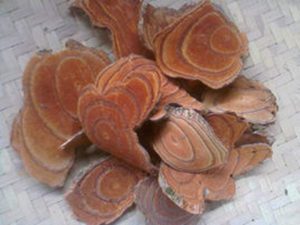
1. Platycodon: Irregular, round, thin slices; the cross-section is off-white or pale yellowish-white, with a brown cambium ring and visible radial fissures. The outer skin is white or pale yellowish-white; specimens with the outer skin intact are yellowish-brown to grayish-brown. The texture is hard and brittle. It has a faint odor and a slightly sweet taste followed by bitterness.
2. Roasted Platycodon: Resembles Platycodon slices and is pale yellow in color.
3. Honey-coated Platycodon: Resembles Platycodon slices, with a yellow surface and a sweet taste.
Botanical Information
Botanical Classification
Platycodon grandiflorus, a plant of the genus Platycodon in the family Campanulaceae.
Morphological Characteristics
A perennial herb, 30–120 cm tall. The entire plant contains white latex. The taproot is long and spindle-shaped, with few branches. The stem is glabrous, usually unbranched or slightly branched toward the upper part.Leaves: 3–4, arranged in whorls, opposite, or alternate; sessile or with very short petioles; leaf blades ovate to lanceolate, 2–7 cm long, 0.5–3 cm wide, with an acute apex, a cuneate base, and sharply serrate margins; the underside is covered with a white powdery coating. Flowers: 1 to several, solitary at the stem apex or arranged in sparse racemes; calyx campanulate, with 5 lobes;the corolla is broadly bell-shaped, 4–6 cm in diameter, blue or bluish-purple, with 5 triangular lobes; there are 5 stamens, with filaments widened at the base and densely covered with fine hairs; the ovary is inferior, and the style is 5-lobed. The capsule is obovate and splits into 5 valves at the apex when ripe. Seeds are numerous and brown. Flowering occurs from July to September, and fruiting from August to October.
Distribution Area
Distributed throughout China.
Growth Habits
Prefers a cool climate; cold-tolerant and sun-loving. Best cultivated in hilly areas below 1,100 m elevation, in sandy loam with partial shade and partial sun; grows best in neutral sandy loam rich in phosphorus and potassium fertilizers. Seed viability lasts for 1 year and can be extended by storing them at low temperatures.Seeds stored dry at 0–4°C for 18 months exhibit a germination rate 3.5–4 times higher than those stored at room temperature. The germination rate is 70%; at temperatures of 18–25°C, with sufficient warmth, seedlings emerge 15 days after sowing.
Propagation Methods
Propagation by seed can be done via direct seeding or by raising seedlings and transplanting them.
Cultivation Techniques
1. Direct Seeding: Soak seeds in warm water for 24 hours before sowing, or soak them in a 0.3% potassium permanganate solution for 12 hours.Both spring and fall sowing are possible, though fall sowing is preferable. Sow in rows with a row spacing of 20–25 cm and a seeding depth of 3–5 cm. Cover the seeds with wood ash after sowing, lightly firm the soil, and water. Seedlings emerge in about two weeks. When seedlings reach a height of about 5 cm, thin out overcrowded or weak seedlings while loosening the soil; when seedlings reach 10–15 cm in height, thin them to a final spacing of 10 cm between plants.
2. Seedling Rearing Method: Used in drier regions without irrigation facilities. Prepare 150-cm-wide raised beds; sow in rows with a row spacing of 5–10 cm, covering the seeds with 1–1.5 cm of soil, and keep the soil moist. Seedlings emerge in about two weeks. After the seedlings have uniformly emerged, thin out overcrowded seedlings, loosen the soil, and remove weeds; they can be transplanted to the field by April of the following year.
Pest and Disease Control
1. Ring spot disease and leaf spot disease damage the leaves. At the early stage of infection, spray a 1:1:100 Bordeaux mixture or a 1,000-fold dilution of 50% carbendazim.
2. For root rot, remove diseased plants at the early stage of infection. Alternatively, apply a 500-fold dilution of 50% thiophanate-methyl wettable powder by drenching.
3. Wireworms, which damage the roots of Platycodon, can be controlled by spraying with a 90% diazinon solution diluted 800 times or a 50% zinc phosphide solution diluted 1,000 times.
4. Other pests include red spider mites, cutworms, aphids, and seed-eating insects.