Agrimonia pilosa, a name in traditional Chinese medicine, refers to the dried aerial parts of Agrimonia pilosa Ledeb., a plant belonging to the genus Agrimonia in the Rosaceae family. It is primarily produced in Zhejiang, Jiangsu, and Hubei.This herb has astringent and hemostatic properties; it also treats malaria, stops dysentery, detoxifies, and tonifies deficiency. It is primarily used to treat hemoptysis, hematemesis, metrorrhagia and menorrhagia, malaria, bloody dysentery, abscesses, boils, and skin infections, vaginal itching and leukorrhea, as well as exhaustion and overwork-induced debility.

Agrimonia
Agrimonia pilosa, a name in traditional Chinese medicine, refers to the dried aerial parts of Agrimonia pilosa Ledeb., a plant belonging to the genus Agrimonia in the Rosaceae family. It is primarily produced in Zhejiang, Jiangsu, and Hubei.This herb has astringent and hemostatic properties; it also treats malaria, stops dysentery, detoxifies, and tonifies deficiency. It is primarily used to treat hemoptysis, hematemesis, metrorrhagia and menorrhagia, malaria, bloody dysentery, abscesses, boils, and skin infections, vaginal itching and leukorrhea, as well as exhaustion and overwork-induced debility.
Chinese Name : 仙鹤草
Latin Name : Agrimoniae Herba
Aliases : Dragon’s Tooth Grass, Weakness Grass, Wolf’s Tooth Grass, Golden-Topped Dragon’s Tooth, Yellow Dragon’s Tail, Hairy-Footed Moss
Authentic Producing Area : Zhejiang, Jiangsu, Hubei
Nature, Flavor & Meridian Tropism : Taste: bitter, astringent; Nature: neutral; Enters the Heart and Liver meridians
Benefits & Efficacy
Benefits
Astringent to stop bleeding, stops malaria, stops dysentery, detoxifies, and tonifies deficiency.
Indications
Mainly used for hemoptysis, hematemesis, metrorrhagia and menorrhagia, malaria, bloody dysentery, abscesses, swellings, and toxic sores, genital itching with leukorrhea, and exhaustion due to overwork.
Usage and Dosage
1. Internal use: Decocted as a soup, 10–15 g; a high dose of up to 30 g may be used; or incorporated into a powder formulation. 2. External use: Pounded into a paste and applied as a poultice; or boiled into a paste and applied topically.
Precautions
Not yet established.
Chemical Constituents
This product primarily contains resorcinol condensation products, flavonoids, and organic acid compounds. The hemostatic components include herba-crane-grass extract, tannins, gallic acid, and vitamin K, among others.
Pharmacological Actions
This product possesses anti-inflammatory, analgesic, hemostatic, hypoglycemic, and antihypertensive effects.
Relevant Discussions
1. *Herbal Materia Medica of Southern Yunnan*: “Treats irregular menstruation (early or late), menorrhagia, leukorrhea, cold sensations in the face and back, low back pain, fever, bloating, and dysentery with red and white stools.”
2. *Essentials of the Nature of Raw Herbs*: “Treats contusions and bruises, stops bleeding, and dispels toxin from sores.”
3. *In Search of the Origins of Materia Medica*: “Leaves steamed with vinegar and applied to festering sores are highly effective at removing necrotic tissue and reducing swelling; they are also used to wash rheumatic foot ulcers.”
Applications
Clinical Applications
1. For bleeding caused by blood heat leading to uncontrolled blood flow, it can be combined with blood-cooling and hemostatic herbs such as raw Rehmannia root, Platycladus orientalis leaves, and Moutan bark; for bleeding due to deficiency-cold, it can be combined with qi-tonifying, blood-nourishing, and meridian-warming hemostatic herbs such as Codonopsis, prepared Rehmannia root, processed ginger, and mugwort.
2. To treat exhaustion and overwork caused by excessive physical exertion—manifesting as mental fatigue, weakness, and a sallow complexion but with normal appetite—it is often simmered with jujubes; consume the jujubes and drink the broth. If there is deficiency of qi and blood, accompanied by mental fatigue, weakness, dizziness, and vertigo, it can be used in combination with Codonopsis, Prepared Rehmannia, and longan flesh.
Related Compatibility
1. Herba Eupatorii combined with Raw Rehmannia Root: Herba Eupatorii has astringent and hemostatic properties, while Raw Rehmannia Root clears heat, cools the blood, and stops bleeding. When combined, these two herbs clear blood heat, calm uncontrolled blood flow, and enhance the hemostatic effect. This formula is suitable for various bleeding disorders caused by blood heat and uncontrolled blood flow.
2. Herba Eupatorii combined with Jujube: Herba Eupatorii tonifies deficiency and strengthens the body, while Jujube tonifies the spleen and nourishes the blood. When combined, these two herbs complement each other, enhancing their tonifying effects. This combination is suitable for conditions of spleen deficiency and blood deficiency characterized by fatigue and overexertion.
Medicinal Identification
1. Herba Eupatorii and Panax notoginseng: Both possess hemostatic properties and are key herbs for stopping bleeding, widely used in various hemorrhagic conditions; they also tonify deficiency and strengthen the body, making them suitable for treating exhaustion and overwork-induced injuries.However, Herba Herularia excels at astringent hemostasis; it can also arrest malaria, stop dysentery, and detoxify, making it suitable for treating malaria with alternating chills and fever, chronic diarrhea and dysentery, as well as boils, abscesses, and swellings. Panax notoginseng excels at resolving blood stasis and stopping bleeding; it can also invigorate blood circulation and relieve pain, making it suitable for treating contusions, fractures, and injuries, as well as swelling and pain caused by blood stasis. It is a key herb in traumatology.
2. Herba Cistanches and Bai Ji: Both possess astringent and hemostatic properties and can be used for various bleeding conditions. However, Herba Cistanches has a stronger hemostatic effect and a broader range of applications; it can also astringe the intestines to stop dysentery, detoxify, arrest malaria, and tonify deficiency to strengthen the body. It is used for bloody dysentery, malaria with alternating chills and fever, sores, boils, and swellings, as well as exhaustion and overwork-induced injuries.Bai Ji excels at stopping bleeding, particularly in cases of pulmonary and gastric hemorrhage; it can also reduce swelling and promote tissue regeneration, making it suitable for treating sores, abscesses, skin fissures, and burns from fire or water.
Related Medicines
Weixue Ning Granules (compound), Dapai Cao, Ulcer Capsules, Fu’an Granules, and Yangxue Anshen Tablets (syrup, pills).
Medicinal Diet Therapy
Herba Eupatorii and Red Date Decoction:
1. Effects: Tonifies the spleen and nourishes blood; alleviates damage to the hematopoietic system caused by radiation and chemotherapy. Suitable for patients undergoing radiation or chemotherapy for various cancers.
2. Ingredients: 15 red dates, 30g Herba Eupatorii.
3. Preparation: Place the red dates and Herba Eupatorii in a pot, pour in 3 bowls of water, and simmer until reduced to 1 bowl.
4. Usage: Drink the resulting decoction. Take one dose daily; the herbs may be decocted twice, with the resulting liquid divided into two servings.
Notes
Patients requiring treatment with Chinese herbal medicine should first consult a licensed Traditional Chinese Medicine (TCM) hospital to receive a prescription following a professional TCM differential diagnosis.
Processing & Preparation
Harvesting & Processing
Harvest during the summer and fall when the stems and leaves are lush; remove impurities and dry.
Processing Methods
1. Herba Eupatorii: Take the raw herb, remove residual roots and impurities, wash thoroughly, moisten slightly, cut into sections, and dry.
2. Charred Herba Eupatorii: Place the Herba Eupatorii sections in a pot, heat over high flame, and stir-fry until the surface turns black; sprinkle a small amount of water to extinguish any embers, remove immediately, spread out, and allow to cool completely.
Storage Methods
Store in a dry, airtight container in a well-ventilated, dry place. Charred Herba Herbae-crane must be allowed to cool completely to prevent reignition.
Crude Drug Identification
Identification
1. The powdered leaves of this product are dark green. Upper epidermal cells are polygonal; lower epidermal cell walls are undulating, with stomatal openings of indeterminate or unequal types. Non-glandular trichomes are unicellular, varying in length, with thick, lignified walls bearing wart-like projections; a few exhibit spiral striations.Small glandular trichomes have heads consisting of 1–4 cells, ovate in shape, with stalks of 1–2 cells; there are also a few glandular scales with single-celled heads, up to approximately 68 μm in diameter, containing oil droplets, and single-celled stalks. Clusters of calcium oxalate crystals are abundant, ranging from 9 to 50 μm in diameter.
2. Take 2 g of the powdered sample, add 40 mL of petroleum ether (60–90°C), sonicate for 30 minutes, filter, and evaporate the filtrate to dryness. Dissolve the residue in 10 mL of chloroform, extract by shaking with 10 mL of 5% sodium hydroxide solution, discard the chloroform layer,adjust the pH of the sodium hydroxide solution to 1–2 with dilute hydrochloric acid, extract twice with 10 mL of chloroform each time by shaking, combine the chloroform extracts, wash with 10 mL of water, discard the aqueous layer, and concentrate the chloroform extract to 1 mL to serve as the test solution.Separately, take 2 g of the reference herb (Herba Eupatorii) and prepare a reference herb solution using the same method.Next, take Xianhecao Phenol B reference standard and dissolve it in chloroform to prepare a solution containing 0.5 mg per mL, which serves as the reference standard solution. Perform the test according to the thin-layer chromatography method (General Rules 0502): pipette 10 μL of each of the three solutions mentioned above and spot them separately onto the same silica gel G thin-layer plate. Develop the plate using the upper layer of a mixture of petroleum ether (60–90°C)-ethyl acetate-acetic acid (100:9:5) as the developing agent, develop the plate, remove it, air-dry it, spray it with a 10% ethanol solution of sulfuric acid, and heat at 105°C until the spots become clearly visible. In the chromatogram of the test sample, spots of the same color appear at positions corresponding to those in the reference herbal material chromatogram and the reference standard chromatogram.
Properties of Crude Drugs
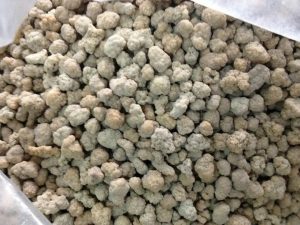
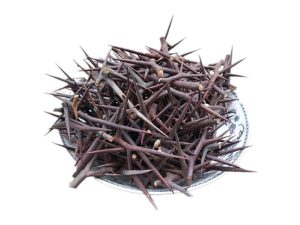
This product is 50–100 cm long and covered entirely with white soft hairs. The lower part of the stem is cylindrical, 4–6 mm in diameter, and reddish-brown; the upper part is quadrangular, slightly concave on all four sides, greenish-brown, with longitudinal grooves and ridges, and nodes; it is light in weight, hard in texture, breaks easily, and is hollow in cross-section.The odd-pinnate compound leaves are alternate, dark green, and wrinkled and curled; they are brittle and easily broken. The leaflets come in two sizes, arranged alternately along the rachis; the terminal leaflet is larger. When flattened, the intact leaflets are ovate or oblong-elliptic, with an acute apex, a cuneate base, and serrated margins. There are two stipules, clasping the stem and obliquely ovate.The raceme is slender; the lower part of the calyx is tubular, with hooked spines on the upper part of the calyx tube; the apex is 5-lobed; the petals are yellow. It has a faint odor and a slightly bitter taste.
Properties of Processed Slices
1. Herba Heracleum: This product consists of irregular segments; the stems are mostly quadrangular, with longitudinal grooves and ridges, and are jointed. The cross-section is hollow. The leaves are mostly fragmented, dark green, and serrated at the margins; the stipules clasp the stem. Yellow flowers or hooked fruits are sometimes visible. It has a faint odor and a slightly bitter taste.
2. Charred Herba Heracleum: Resembles Herba Heracleum in appearance, but is black in color and contains a small amount of charcoal powder.
Botanical Information
Botanical Classification
Longyacra (Longyacra spp.), a plant of the genus Longyacra in the Rosaceae family.
Morphological Characteristics
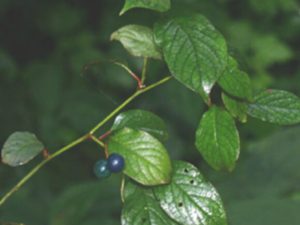
A perennial herb, 30–120 cm tall. The rhizome is short, often with one or several underground buds at the base. The stem is covered with sparse soft hairs and short soft hairs; the lower part is rarely covered with sparse, long, stiff hairs.Odd-pinnate compound leaves are alternate; stipules are sickle-shaped, rarely ovate, with an acute or acuminate apex, margins sharply serrate or lobed, rarely entire; leaflets come in two sizes, arranged alternately along the rachis; the larger leaflets occur in 3–4 pairs,rarely 2 pairs, decreasing upward to 3 leaflets; leaflets nearly sessile, obovate to obovate-lanceolate, 1.5–5 cm long, 1–2.5 cm wide, apex acute to rounded, rarely acuminate, base cuneate, margin with acute to rounded teeth; upper surface green, sparsely pubescent,the underside pale green, with sparse, appressed soft hairs along the veins; rarely glabrous, with prominent glandular dots. A single raceme or 2–3 racemes are borne at the stem apex; the rachis is pubescent, and the pedicels are 1–5 mm long and pubescent; bracts are usually deeply 3-lobed, with ribbon-like lobes; bracteoles are opposite, ovate, with entire or lobed margins;Flowers 6–9 mm in diameter; sepals 5, triangular-ovate; petals 5, oblong, yellow; stamens 5–15; styles 2, filiform, with capitate stigmas.The achene is obovate-conical, with 10 ribs on the outside, sparsely pubescent, and bearing several layers of hooked spines at the apex; it is erect when young but converges inward upon maturity; including the hooked spines, it measures 7–8 mm in length, with a diameter of approximately 3–4 mm at its widest point. Flowering and fruiting occur from May to December.
Distribution Area
It is distributed throughout China, from north to south.
Growth Habits
It is highly adaptable to various climates and can withstand severe cold. It can be grown in most types of soil, though yields are higher when cultivated in relatively fertile sandy loam. Growth is rapid during the rainy, hot months of July and August.
Propagation Methods
Propagate by seed or root division.
Cultivation Techniques
1. Seed Propagation: For spring sowing, late March in the south and mid- to late April in the north; for fall sowing, late September to early October in the south, and late October to early November in the north, before the ground freezes. On prepared soil, create 1.3-meter-wide flat beds. For row sowing, dig 1–2 cm deep furrows with a row spacing of 30–40 cm, scatter the seeds evenly into the furrows, cover with a thin layer of soil, lightly tamp down, and water.The seeding rate is 15–22.5 kg per hectare; the optimal germination temperature is 25°C, and seedlings emerge 10–15 days after sowing.
2.Propagation by Root Division: This can be done in both spring and fall. Dig up the roots and split them; each root should have 2–3 root buds, and they should be planted promptly. For hole planting, use a row spacing of 30 cm × a plant spacing of 15 cm. Dig holes 15 cm deep, place one root per hole, cover with 5 cm of soil, firm the soil, and water. If buds have already emerged, plant them so that the buds are exposed above the ground. Water after planting; the germination rate can reach over 95%.