Gleditsia Thorns, a name in traditional Chinese medicine. These are the dried thorns of the leguminous plant Gleditsia sinensis Lam.It is distributed in Hebei, Shandong, Henan, Shanxi, Shaanxi, Gansu, Jiangsu, Anhui, Zhejiang, Jiangxi, Hunan, Hubei, Fujian, Guangdong, Guangxi, Sichuan, Guizhou, and Yunnan. It has the effects of reducing swelling, expelling toxins, draining pus, and killing parasites. It is commonly used for the early stages of boils and abscesses or when pus has formed but has not yet ruptured; it is also used externally to treat scabies, tinea, and leprosy.
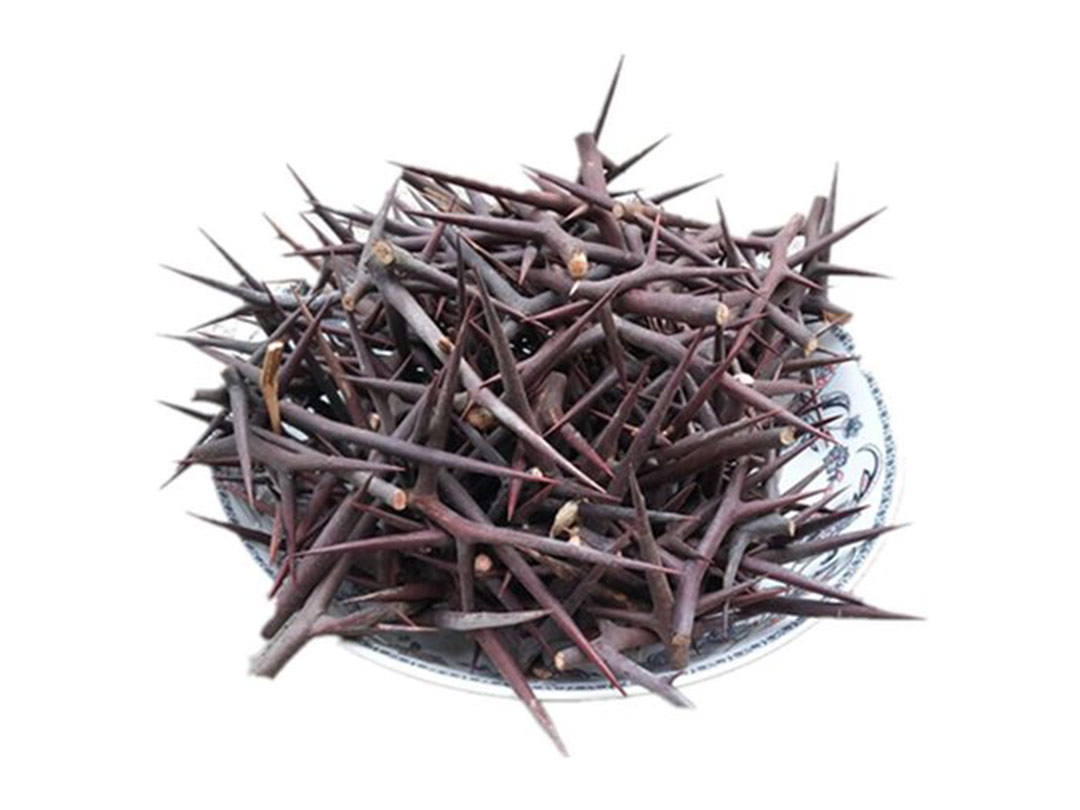
Soapberry Thorn
Gleditsia Thorns, a name in traditional Chinese medicine. These are the dried thorns of the leguminous plant Gleditsia sinensis Lam.It is distributed in Hebei, Shandong, Henan, Shanxi, Shaanxi, Gansu, Jiangsu, Anhui, Zhejiang, Jiangxi, Hunan, Hubei, Fujian, Guangdong, Guangxi, Sichuan, Guizhou, and Yunnan. It has the effects of reducing swelling, expelling toxins, draining pus, and killing parasites. It is commonly used for the early stages of boils and abscesses or when pus has formed but has not yet ruptured; it is also used externally to treat scabies, tinea, and leprosy.
Chinese Name : 皂角刺
Latin Name : Gleditsiae Spina
Aliases : Soapberry Thorn, Soap Thorn, Tianjing
Authentic Producing Area : Mainly produced in Jiangsu, Hubei, Hebei, Shanxi, Henan, and Shandong.
Nature, Flavor & Meridian Tropism : Pungent in taste, warm in nature; enters the Liver and Stomach meridians
Benefits & Efficacy
Benefits
Reduces swelling, expels toxins, drains pus, and kills parasites.
Indications
Used for the early stages of boils and abscesses or when pus has formed but has not yet ruptured; used externally to treat scabies, tinea, and leprosy.
Usage and Dosage
1. Internal use: Decocted as a soup, 3–9 g; or incorporated into pills or powders. 2. External use: Apply an appropriate amount after simmering in vinegar, or sprinkle as a powder, or mix into a paste for application.
Precautions
*Commentary on the Classic of Materia Medica*: “It should not be taken once boils or abscesses have ruptured; it is also contraindicated for pregnant women.”
Chemical Constituents
Contains flavonoid glycosides, phenolic compounds, and amino acids. The flavonoid compounds include fustin (i.e., 3,7,3,4-tetrahydroxy-dihydroflavone) and fisetin (i.e., 3,7,3,4-tetrahydroxyflavone), and it also contains colorless anthocyanins.
Relevant Discussions
1. *Introduction to Medicine*: “Soapberry thorns can open the orifices of abscesses and boils that have not yet ruptured; for those that have ruptured, they can guide the medicine to the site of the sore. They are therefore essential medicines for various malignant sores, tinea, and leprosy.”
2. *Compendium of Materia Medica*: “Soapberry thorns treat wind-related disorders and kill parasites; their efficacy is the same as that of the soapberry pods, but they differ in that their sharpness allows them to penetrate directly to the site of the disease.”
3. *Comprehensive Discourse on Materia Medica*: “Soapberry thorns draw out toxins and dispel wind.For abscesses and boils that have not yet fully formed, they can guide the pathogen to dissipate; for those about to rupture, they can guide the pus to emerge; and for those that have already ruptured, they can guide the pus to drain. Among medicines for treating toxic sores, they are the foremost essential agent. Furthermore, they dispel wind-heat and wind-toxin from the blood, so in treatments for leprosy, this herb is also regarded as the vanguard for opening and guiding the path.”
Applications
Clinical Applications
1. Mastitis: Soapberry thorns (half-charred, retaining some raw parts) half liang; genuine clam powder three qian. Grind the herbs into a fine powder. Take one qian per dose, mixed with wine. (From *Ren Zhai Zhi Zhi Fang*)
2. Postpartum failure of lactation with accumulated toxin: Soapberry thorns and Chinese privet seeds—each charred until the essence remains—mixed in equal parts and ground into a powder. Take two qian with warm wine.(*Pocket Formulary*)
3. Swellings without a defined head: Soapberry thorns—burned to ash, air-dried, and ground into a powder. Take three qian per dose, mixed with wine; chew three to five sunflower seeds and swallow the decoction. (*Rumen Shiquin*)
4. Retained placenta: Burn soapberry thorns to ash and grind into a powder. Take one qian per dose, mixed with warm wine. (From *Compendium of Materia Medica*, citing *Supplement to Xiong’s Effective Prescriptions for Women*)
5. Tongue swelling in children: Burn soapberry thorns to ash, add a small amount of borneol, use as a mouthwash, and apply under the tongue; the condition resolves once saliva begins to flow. (From *Formulas for Universal Relief*)
Notes
Patients requiring treatment with Chinese herbal medicine should first consult a licensed Traditional Chinese Medicine (TCM) hospital, where a TCM practitioner will conduct a professional pattern differentiation and prescribe an herbal formula.
Processing & Preparation
Harvesting & Processing
Can be harvested year-round; dry as is, or slice while fresh and then dry.
Processing Methods
Remove impurities; for unsliced material, soak briefly until thoroughly moistened, then cut into thick slices and dry.
Storage Methods
Store in a dry place.
Crude Drug Identification
Identification
1. Cross-section of this product: The epidermis consists of a single layer of cells covered by a cuticle; single-celled non-glandular trichomes are sometimes visible. The cortex comprises 2–3 layers of parenchyma cells, some of which contain brownish-red substances.Fibrous bundles in the stele are arranged in discontinuous rings; some cells surrounding the fibrous bundles contain calcium oxalate crystals, with clusters occasionally observed. Single or 2–3 clustered stone cells with thin walls are often found adjacent to the fibrous bundles. The phloem is narrow. The cambium forms a ring. The xylem forms a ring, with xylem rays 1–2 cell rows wide. The pith is broad, and the parenchyma cells contain a small amount of starch granules.
2. Take 1 g of the powdered sample, add 10 mL of methanol, subject to ultrasonic treatment for 30 minutes, filter, and evaporate the filtrate to dryness. Dissolve the residue in 10 mL of water, add 10 mL of ethyl acetate, and shake to extract. Take the ethyl acetate solution, evaporate to dryness, and dissolve the residue in 1 mL of methanol to prepare the test solution.Separately, take 1 g of the reference material (Gleditsia thorn) and prepare a reference material solution using the same method.Perform the test according to the thin-layer chromatography method (General Chapter 0502). Pipette 5–10 μL of the test solution and 5 μL of the reference herbal material solution, and apply them separately onto the same silica gel G thin-layer plate. Develop the plate using the lower phase of a dichloromethane–methanol–concentrated ammonia solution (9:1:0.2) as the developing agent. Remove the plate, allow it to air-dry,examine under a UV lamp (365 nm). In the test sample chromatogram, fluorescent spots of the same color appear at positions corresponding to those in the reference herbal material chromatogram.
Properties of Crude Drugs
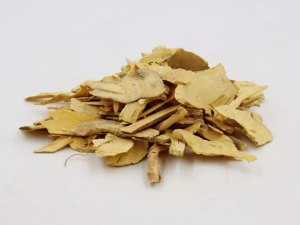
This product consists of main thorns and 1st- and 2nd-order lateral branches. The main thorns are oblong-conical, 3–15 cm long or longer, with a diameter of 0.3–1 cm; the lateral branches are 1–6 cm long, with sharply pointed tips. The surface is purplish-brown or brownish-black. The product is light in weight, hard in texture, and difficult to break.Cross-sections are 0.1–0.3 cm thick and often retain the sharp, slender tips of the spines; the xylem is yellowish-white, and the pith is loose and pale reddish-brown; the material is brittle and breaks easily. It has a faint odor and a bland taste.
Properties of Processed Slices
Same as “Characteristics of the Medicinal Material.”
Botanical Information
Botanical Classification
Sapindus, a plant of the Fabaceae family.
Morphological Characteristics
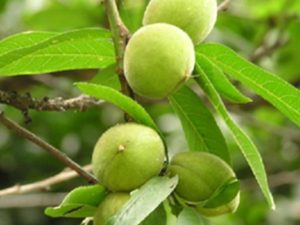
Soapberry (Sapindus), a tree reaching up to 15 m in height. Thorns are stout, usually branched, up to 16 cm long, and cylindrical. Twigs are glabrous. Leaves are once-pinnate, even-pinnate, 12–18 cm long;6–14 leaflets, long-ovate, long-elliptic to ovate-lanceolate, 3–8 cm long, 1.5–3.5 cm wide, with a blunt or acuminate apex, an obliquely rounded or obliquely cuneate base, finely serrate margins, and glabrous. Flowers are bisexual, arranged in axillary racemes;The calyx is bell-shaped, with 4 lanceolate lobes; there are 4 white petals; 6–8 stamens; the ovary is linear and hairy along the suture. The pod is linear, not twisted, 12–30 cm long, 2–4 cm wide, slightly thick, blackish-brown, and covered with a white powdery bloom. Flowering occurs from April to May, and fruiting from September to October.
Distribution Area
Native to Hebei, Shandong, Henan, Shanxi, Shaanxi, Gansu, Jiangsu, Anhui, Zhejiang, Jiangxi, Hunan, Hubei, Fujian, Guangdong, Guangxi, Sichuan, Guizhou, and Yunnan.