Xiangfu is a traditional Chinese medicine derived from the dried rhizome of Cyperus rotundus L., a plant belonging to the genus Cyperus in the Cyperaceae family. This herb has the effects of soothing the liver and relieving depression, regulating qi and alleviating epigastric distension, and regulating menstruation and relieving pain. It is primarily used to treat liver depression and qi stagnation, distending pain in the chest and flanks, hernia pain, breast distension and pain, spleen and stomach qi stagnation, epigastric and abdominal fullness and distension, bloating and pain, irregular menstruation, amenorrhea, and dysmenorrhea.

Xiangfu
Xiangfu is a traditional Chinese medicine derived from the dried rhizome of Cyperus rotundus L., a plant belonging to the genus Cyperus in the Cyperaceae family. This herb has the effects of soothing the liver and relieving depression, regulating qi and alleviating epigastric distension, and regulating menstruation and relieving pain. It is primarily used to treat liver depression and qi stagnation, distending pain in the chest and flanks, hernia pain, breast distension and pain, spleen and stomach qi stagnation, epigastric and abdominal fullness and distension, bloating and pain, irregular menstruation, amenorrhea, and dysmenorrhea.
Chinese Name : 香附
Latin Name : Cyperi Rhizoma
Aliases : Ornithopogon, Cyperus root, Cyperus rhizome, Herba Acorus, Cyperus seed, Acorus rhizome, Acorus rhizome
Authentic Producing Area : Shandong, Zhejiang, Fujian, Hunan
Nature, Flavor & Meridian Tropism : Pungent, slightly bitter, and slightly sweet in taste; neutral in nature; enters the Liver, Spleen, and Triple Energizer meridians
Benefits & Efficacy
Benefits
Relieves liver stagnation and dispels depression; regulates qi and soothes the epigastrium; regulates menstruation and alleviates pain.
Indications
Mainly used for liver qi stagnation, distending pain in the chest and flanks, hernia pain, breast distension and pain, spleen and stomach qi stagnation, epigastric and abdominal fullness and distension, pain due to distension, irregular menstruation, amenorrhea, and dysmenorrhea.
Usage and Dosage
1. Internal use: Decoct 5–10 g; or incorporate into pills or powders. 2. External use: Apply as a powder or as a paste.
Precautions
Not yet established.
Chemical Constituents
This product contains essential oil. The main components of the oil are β-pinene, cyperene, α-cyperone, β-cyperone, patchouli ketone, α-salamene, β-salamene, limonene, and others. It also contains alkaloids, flavonoids, and triterpenes.
Pharmacological Actions
This product has analgesic, antioxidant, and antidepressant effects.
Relevant Discussions
1. *Compendium of Materia Medica*: “It regulates the Three Jiao, relieves the Six Types of Stagnation, eliminates food stagnation and phlegm-fluid accumulation, alleviates fullness and distension, swelling and abdominal distension, beriberi, and relieves various pains in the heart and abdomen, limbs, head, eyes, teeth, and ears… It treats women’s conditions such as metrorrhagia, leukorrhea, irregular menstruation, and all ailments before and after childbirth.” “It is the master of qi disorders and the commander-in-chief of gynecology.”
2. *Seeking the Truth in Materia Medica*: “Xiangfu is specifically used to dispel stagnation and regulate qi. While it shares a function with Mu Xiang in promoting qi circulation, their appearances are similar but their natures differ. Mu Xiang has a bitter and harsh taste, so it promotes qi circulation very rapidly; Xiangfu, however, is bitter but not to such an extreme, so it primarily relieves stagnation. Moreover, its nature is milder than that of Mu Xiang, so it can be adjusted and modified to serve as a formula for promoting qi circulation. Otherwise, this herb is appropriate while the other is not.”
3. *Ben Cao Zheng Yi*: “Xiangfu has a very pungent taste and a rather strong fragrance; it acts primarily through the channel of qi, and thus specializes in treating diseases caused by qi stagnation.”
Applications
Clinical Applications
1. To treat distending pain in the flanks caused by stagnation of liver qi, it is often used in combination with Chaihu, Chuanxiong, and Zhike, as in the Chaihu Shugan San (from *Jingyue Quanshu*).
2. To treat epigastric pain caused by cold stagnation and qi stagnation, or liver qi invading the stomach, it can be combined with Gaoliangjiang, as in Liangfu Pills (*Liangfang Jie*).
3. To treat abdominal pain caused by cold hernia, it is often used in combination with Xiaohuixiang, Wuyao, and Wuzhuyu.
4. To treat chest and diaphragm fullness, epigastric and abdominal distension and pain, vomiting, acid regurgitation, and undigested food caused by the six types of stagnation (qi, blood, phlegm, fire, dampness, and food), it can be combined with Chuanxiong, Cangzhu, and Zhizi, as in the Yueju Pills (from *Danxi Xinfang*).
5. To treat irregular menstruation and dysmenorrhea, it may be used alone or in combination with Bupleurum, Ligusticum, and Angelica sinensis, as in the Xiangfu-Gui-Xiong Decoction (*Shen’s Book on Valuing Life*).
6. To treat breast distension and pain, it is often used in combination with Bupleurum, Green Tangerine Peel, and Trichosanthes Fruit Peel.
7. To treat epigastric and abdominal distension and pain, chest and diaphragm obstruction, belching and acid regurgitation, and loss of appetite, it can be combined with Amomum villosum and Glycyrrhiza uralensis, as in the Kuaiqi Decoction (*Heji Jufang*); or the above formula can be further supplemented with Lindera aggregata and Perilla frutescens, as in the Shusha Xiangfu Decoction (*Shiyi Dexiao Fang*).
Related Compatibility
1. Cyperus with Perilla: Cyperus has a pungent and slightly bitter taste and a neutral nature; it soothes the liver and relieves depression, regulates menstruation and alleviates pain, and regulates qi and harmonizes the middle jiao. Perilla has a pungent, sweet, and warm nature; it promotes qi circulation, relieves epigastric distension, and stabilizes the fetus. Cyperus enters the blood level to regulate qi within the blood, while Perilla acts on the qi level to promote qi circulation and relieve epigastric distension.When combined, these two herbs—one targeting the blood and the other the qi—harmonize both qi and blood, enhancing their ability to regulate qi, relieve stagnation, alleviate pain, and relieve bloating and fullness. This combination is suitable for conditions involving qi and blood disharmony, chest and abdominal distension and discomfort, as well as pregnancy-related nausea, vomiting, and abdominal distension.
2. Xiangfu Combined with Huoxiang: Xiangfu disperses stagnant qi with its pungent nature, descends rebellious qi with its bitter taste, and disperses through its aromatic properties; it is neutral in nature with no cold or hot bias, making it an excellent herb for resolving qi stagnation in the spleen and stomach;Huoxiang has a pungent and aromatic nature that disperses; it releases exterior pathogens without being harsh. Slightly warm and fragrant, it transforms dampness without drying it out. When dampness is transformed and qi flows, the spleen and stomach are harmonized and vomiting ceases on its own. Therefore, it has the function of dispelling exterior pathogens externally and transforming internal dampness and turbidity to harmonize the middle and stop vomiting. When these two herbs are combined, they simultaneously regulate qi and transform dampness.When qi flows, dampness dissipates; when dampness is removed, qi becomes unobstructed. The two complement each other, jointly achieving the effects of harmonizing the middle burner through aromatic transformation and regulating qi to harmonize the stomach. Furthermore, this combination regulates qi without harming the blood and transforms dampness with minimal depletion of yin. It is suitable for conditions caused by dampness stagnation or qi stagnation leading to dampness, manifested as costal pain, epigastric distension, vomiting of sour fluid, and loss of appetite; it is also indicated for pregnancy-related nausea and vomiting (morning sickness) and disorders of fetal qi in women.
3. Xiangfu Combined with Gaoliangjiang: Xiangfu is pungent and dispersing, bitter and descending, with a mild nature; it is an excellent herb for regulating qi, capable of traversing the Three Jiao, soothing the liver and relieving depression, regulating menstruation, and alleviating pain—it is considered a blood-regulating herb within the category of qi-regulating herbs. Gaoliangjiang is pungent, aromatic, warm, and dispersing; its specific functions are to warm the stomach and dispel cold, regulate qi and relieve pain, and strengthen the stomach to aid digestion.When combined, these two herbs complement each other perfectly. Xiangfu, aided by Gaoliangjiang’s pungent and warm properties, dispels cold and regulates qi; Gaoliangjiang, aided by Xiangfu’s qi-regulating action, dispels cold and resolves stagnation, resulting in a significantly enhanced effect in warming the middle burner, dispelling cold, regulating qi, and relieving pain.
4. Xiangfu Combined with Aiye: Xiangfu is pungent and dispersing, bitter and descending; neither cold nor hot in nature, it excels at regulating qi and relieving stagnation, regulating menstruation, and relieving pain, making it an excellent herb for gynecological menstrual regulation; Aiye is pungent, bitter, and warm, warming the meridians, dispelling cold, regulating qi, and warming the uterus.When these two herbs are combined—one addressing qi and the other addressing blood—they harmonize both qi and blood, demonstrating remarkable efficacy in warming the meridians, dispelling cold, regulating menstruation, and relieving pain. This combination is suitable for conditions such as liver qi stagnation complicated by cold, irregular menstruation, menstrual abdominal pain or cold pain in the lower abdomen, uterine cold leading to infertility, fetal restlessness, and persistent vaginal discharge.
5. Xiangfu Combined with Danggui: Xiangfu has a pungent nature that disperses and a bitter nature that drains; it regulates qi, relieves stagnation, regulates menstruation, and alleviates pain;Danggui is pungent, bitter, and warm; it nourishes blood, regulates menstruation, promotes blood circulation to relieve pain, and moistens the intestines to promote bowel movements. When combined, one regulates qi and the other harmonizes blood; their complementary actions jointly regulate both qi and blood, thereby enhancing the efficacy of soothing the liver, harmonizing blood, regulating menstruation, and relieving pain. It is suitable for irregular menstruation, lower abdominal distension and pain, stabbing pain in the chest and flanks, and breast distension and pain.
6. Xiangfu combined with Muxiang: Both have the effect of promoting qi circulation and relieving pain.Mu Xiang is pungent and warm; it can regulate qi and relieve pain, strengthen the spleen, and aid digestion, with a focus on resolving qi stagnation in the stomach and intestines, primarily entering the qi aspect. Xiang Fu is pungent and neutral; it soothes the liver and relieves depression, regulates menstruation and alleviates pain, and regulates qi to harmonize the middle jiao, with a focus on promoting the smooth flow of qi throughout the Twelve Meridians, while also entering the blood aspect. When combined, the effects of regulating qi and relieving pain are enhanced. This combination is suitable for gastrointestinal bloating, epigastric and abdominal pain, and intestinal rumbling.
Medicinal Identification
1. Raw Xiangfu, Vinegar-Processed Xiangfu, and Wine-Processed Xiangfu: Raw Xiangfu excels at promoting the flow of qi, relieving depression, regulating menstruation, and alleviating pain. It is commonly used for liver qi stagnation, distending pain in the flanks, fullness and oppression in the chest and diaphragm, and dysmenorrhea.Vinegar-fried Xiangfu is more effective at soothing the liver and relieving pain, and it can also eliminate food stagnation and resolve stagnation; it is used for abdominal pain caused by indigestion, qi stagnation in the blood, cold-induced qi stagnation, and epigastric pain. Wine-fried Xiangfu can unblock meridians and disperse nodules and stagnation; it is often used for hernia pain and wandering pain.
2. Xiangfu and MuXiang: Both herbs have the function of regulating qi and relieving pain, and can also soothe the middle burner and aid digestion. They are both used for spleen-stomach qi stagnation, epigastric and abdominal distension and pain, and poor appetite. However, MuXiang has a drier nature, primarily enters the Spleen and Stomach meridians, and is particularly effective for treating undigested food accumulation due to spleen-stomach qi stagnation, epigastric and abdominal distension and pain, as well as diarrhea, dysentery, tenesmus, and a sensation of incomplete evacuation; it is a key herb for regulating qi and relieving pain.Xiangfu has a neutral nature and primarily enters the Liver meridian. It excels at soothing the Liver, relieving depression, regulating menstruation, and alleviating pain. It is primarily used to treat symptoms such as distension and pain in the flanks and ribs, breast distension and pain, irregular menstruation, and pain associated with masses and masses (zhengjia) caused by Liver Qi stagnation, making it a key herb for regulating menstruation in gynecology.
Related Medicines
Dingkun Dan, Yangwei Granules, Lemao Granules, Gynecological Ten-Ingredient Tablets, and Weikang Capsules.
Related Prescriptions
Ai Fu Nuan Gong Wan (from *Zhi Zhi Fang*), Yue Ju Wan (from *Dan Xi Xin Fa*), Chai Hu Shu Gan San (from *Yi Xue Tong Zhi*), Xiang Su San (from *He Ji Ju Fang*), Gu Jing Wan (from *Dan Xi Xin Fa*).
Medicinal Diet Therapy
Xiangfu and Gaoliangjiang Chicken Soup:
1. Effects: Regulates qi and soothes the liver; dispels cold and relieves pain.
2. Ingredients: 250 grams of chicken, 12 grams of Xiangfu, 15 grams of Gaoliangjiang, and 5 red dates.
3. Preparation: Wash the chicken, trim off excess fat, and cut into pieces. Blanch in boiling water, then drain thoroughly. Wash the Xiangfu, Gaoliangjiang, and red dates (pitted), then place them in a clay pot with the chicken. Add an appropriate amount of water. Bring to a boil over high heat, then reduce to low heat and simmer for 2 hours. Season to taste before serving.
4. Usage: Consume as desired.
Notes
Patients requiring treatment with Chinese herbal medicine should first consult a licensed Traditional Chinese Medicine (TCM) hospital to receive a prescription following a professional TCM differential diagnosis.
Processing & Preparation
Harvesting & Processing
Harvest in the fall; singe off the hairs and root fibers; briefly boil in boiling water or steam thoroughly before sun-drying; or singe and then sun-dry directly.
Processing Methods
1. Xiangfu: Take the raw herb, remove hairs and impurities, and cut into thick slices or crush.
2. Vinegar-Processed Xiangfu: Take Xiangfu grains or slices, mix thoroughly with vinegar, let stand until thoroughly moistened, place in a pot, heat over low heat, stir-fry until dry, then remove and allow to cool. Use 20 kg of rice vinegar for every 100 kg of crushed Xiangfu or slices.
3. Charred Cyperus Rhizome: Take the cleaned Cyperus rhizome, place it in a wok, and stir-fry over high heat until the surface is charred black and the interior is charred yellow, while retaining its medicinal properties. Spray with clean water, then remove and dry.
4. Four-Processed Cyperus Rhizome: Take the cleaned Cyperus rhizome pieces or slices, mix thoroughly with ginger juice, salt water, rice wine, and rice vinegar, and let stand until thoroughly moistened. Place in a wok, heat over low heat, stir-fry until dry, then remove and let cool.For every 100 kg of Xiangfu chunks or slices, use 10 kg each of rice wine and rice vinegar, 5 kg of fresh ginger, and 2 kg of salt.
5. Wine-Processed Xiangfu: Take Xiangfu chunks or slices, mix thoroughly with rice wine, let stand until thoroughly infused, place in a wok, heat over low heat, stir-fry until dry, then remove and let cool. For every 100 kg of Xiangfu, use 20 kg of rice wine.
Storage Methods
Store in a dry container in a cool, dry place to prevent insect infestation. Vinegar-processed Cyperus, Four-Processed Cyperus, Wine-processed Cyperus, and Charred Cyperus should be stored in airtight containers. Charred Cyperus should be allowed to cool completely before storage to prevent reignition.
Crude Drug Identification
Identification
1. The powder of this product is light brown. Secretory cells are subcircular, 35–72 μm in diameter, containing pale yellow-brown to reddish-brown secretions, surrounded by 5–8 cells arranged in a radial ring.Epidermal cells are polygonal, often accompanied by hypodermal fibers and thick-walled cells. Hypodermal fibers occur in bundles; they are dark brown or reddish-brown, 7–22 μm in diameter, with thick walls. Thick-walled cells are square-like, round-like, or irregular in shape, with slightly thick walls and distinct pits. Sclereids are few in number, square-like, round-like, or polygonal-like, with relatively thick walls.
2. Take 1 g of the powdered sample, add 5 mL of ether, let stand for 1 hour while shaking occasionally, filter, and evaporate the filtrate to dryness. Dissolve the residue in 0.5 mL of ethyl acetate to prepare the test solution.Separately, take an α-cyperone reference standard and dissolve it in ethyl acetate to prepare a solution containing 1 mg per mL; use this as the reference solution. Perform thin-layer chromatography (General Chapter 0502): pipette 2 μL of each of the two solutions and apply them separately onto the same silica gel GF254 plate. Develop the plate using a mobile phase of dichloromethane-ethyl acetate-glacial acetic acid (80:1:1) as the developing agent, remove the plate, allow it to air-dry, and examine it under ultraviolet light (254 nm).In the chromatogram of the test sample, identical deep blue spots appear at positions corresponding to those in the reference standard chromatogram; when sprayed with dinitrophenylhydrazine solution and allowed to stand for a moment, the spots gradually turn orange-red.
Properties of Crude Drugs
This product is mostly spindle-shaped, some slightly curved, 2–3.5 cm long, and 0.5–1 cm in diameter. The surface is brownish or blackish-brown, with longitudinal wrinkles and 6–10 slightly raised nodes; the nodes bear traces of brown trichomes and rootlet scars that have not been completely removed. Specimens from which the trichomes have been completely removed are relatively smooth, and the nodes are not prominent.The texture is hard; when steamed or boiled, the cross-section is yellowish-brown or reddish-brown and horn-like; when sun-dried, the cross-section is white and powdery, with a distinct inner pericycle ring, a darker central column, and scattered dot-like vascular bundles. It has a fragrant odor and a slightly bitter taste.
Properties of Processed Slices
1. Xiangfu: This product consists of irregular thick slices or granules. The outer epidermis is brownish-black or blackish-brown; annular rings are sometimes visible. The cross-section is white or yellowish-brown, hard in texture, with distinct annular patterns of the inner pericycle. It has a fragrant odor and a slightly bitter taste.
2. Vinegar-treated Xiangfu: Resembles Xiangfu in appearance, but the surface is darker in color with spots and has a slight vinegar odor.
3. Charred Xiangfu: Resembles Xiangfu; the surface is charred black, the interior is charred brown, and it has a burnt odor.
4. Four-Processed Xiangfu: Resembles Xiangfu; the surface is dark brownish-black, the interior is yellowish-brown, and it has a fresh, fragrant aroma.
5. Wine-Processed Xiangfu: Resembles Xiangfu; the surface is reddish-purple with charred spots, and it has a slight wine-like aroma.
Botanical Information
Botanical Classification
Cyperus, a plant of the genus Cyperus in the family Cyperaceae.
Morphological Characteristics
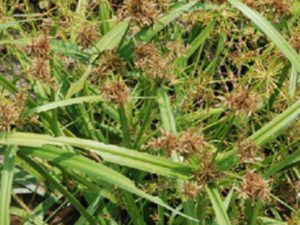
A perennial herb, 15–95 cm tall. The stem is erect and trigonal; the rhizome is creeping and elongated, with some sections swollen into a spindle shape, sometimes connected in clusters. Leaves are clustered at the base of the stem; the leaf blades are linear, 20–60 cm long and 2–5 mm wide, with entire margins and parallel veins, the midrib being raised on the underside.Inflorescence is a compound spike. Nutlets are round-obovate. Flowering period: May–August. Fruiting period: July–November.
Distribution Area
Distributed in North China, Central and South China, Southwest China, as well as in Liaoning, Hebei, Shanxi, Shaanxi, Gansu, and Taiwan.