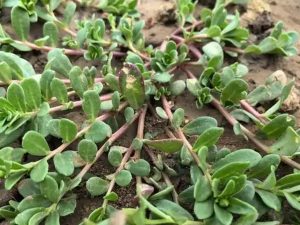
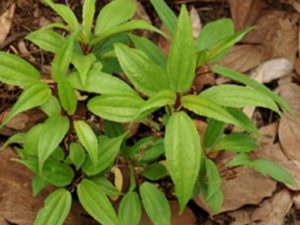
Lophatherum gracile, a name in traditional Chinese medicine. It refers to the dried stems and leaves of Lophatherum gracile Brongn., a plant belonging to the genus Lophatherum in the Poaceae family. It has the effects of clearing heat and purging fire, relieving restlessness and quenching thirst, and promoting urination to relieve dysuria. It is primarily used to treat feverish illnesses accompanied by restlessness and thirst, scanty, red, painful, and difficult urination, and sores on the mouth and tongue.

Lophatherum Leaves
Lophatherum gracile, a name in traditional Chinese medicine. It refers to the dried stems and leaves of Lophatherum gracile Brongn., a plant belonging to the genus Lophatherum in the Poaceae family. It has the effects of clearing heat and purging fire, relieving restlessness and quenching thirst, and promoting urination to relieve dysuria. It is primarily used to treat feverish illnesses accompanied by restlessness and thirst, scanty, red, painful, and difficult urination, and sores on the mouth and tongue.
Chinese Name : 淡竹叶
Latin Name : Lophatheri Herba
Aliases : Bamboo Leaf, Winter Melon, Mi Shen Cao, Mountain Chicken Rice, Golden Bamboo Leaf, Long Bamboo Leaf, Mountain Winter, Ground Bamboo, Light Bamboo Rice, Forest Bamboo
Authentic Producing Area : Zhejiang, Jiangsu
Nature, Flavor & Meridian Tropism : Sweet and bland in taste; cold in nature; enters the Heart, Stomach, and Small Intestine meridians
Benefits & Efficacy
Benefits
Clears heat and purges fire; relieves restlessness and quenches thirst; promotes urination and relieves dysuria.
Indications
Used for feverish illnesses with restlessness and thirst, scanty, red, and painful urination, and sores in the mouth and on the tongue.
Usage and Dosage
Oral use: Decoct and take 6–9 g.
Precautions
Use with caution in patients without "real fire" or damp-heat; contraindicated in patients with constitutional deficiency and cold.
Chemical Constituents
This product contains triterpenoid compounds, such as luzhusu, baimaosu, and dandelin, as well as steroidal substances such as β-sitosterol, stigmasterol, campesterol, and dandelin.
Pharmacological Actions
This product possesses antimicrobial, hepatoprotective, antioxidant, and cardioprotective effects.
Relevant Discussions
1. *Compendium of Materia Medica*: “Relieves restlessness and fever, promotes urination, and clears the heart.”
2. *Essentials of the Properties of Raw Herbs*: “Resolves phlegm and quenches thirst; eliminates upper-burner heat; improves vision; promotes urination; treats leukorrhea; reduces fever; and dispels the toxicity of hemorrhoids.”
Applications
Clinical Applications
1. To treat febrile diseases causing fluid depletion, restlessness, and thirst, it is often combined with gypsum (Shigao) and reed root (Lugen); or with scutellaria (Huangqin), anemarrhena (Zhimu), and ophiopogon (Maimendong), as in the Dan Zhu Ye Decoction (*Medical Insights*).
2. To treat excessive heart and stomach fire, mouth and tongue sores, and heat-induced painful and scanty urination in the small intestine, it can be combined with talc (Huashi), white茅根 (Baimaogen), and rush (Dengxincao).
Related Compatibility
1. Dan Zhu Ye combined with Lu Gen: Dan Zhu Ye excels at clearing heart and stomach fire to relieve restlessness and quench thirst, while Lu Gen excels at clearing real heat in the Qi aspect of the lung and stomach to generate body fluids and quench thirst. When used together, the effects of clearing heat, relieving restlessness, and quenching thirst are enhanced. This combination is suitable for heat-related diseases with fluid depletion, accompanied by restlessness and thirst.
2. Bamboo Leaf combined with Ophiopogon: Bamboo Leaf clears heat, purges fire, relieves restlessness, and quenches thirst; Ophiopogon nourishes yin, generates body fluids, moistens the lungs, and clears the heart. When used together, these two herbs work synergistically to clear heart heat, relieve restlessness, nourish yin, and generate body fluids, thereby purging heat without the drawback of damaging yin. This combination is suitable for conditions such as warm-heat diseases where pathogenic factors disturb the heart’s nutritive blood, resulting in fever and restlessness.
3. Bamboo Leaf combined with White Reed Root: Bamboo Leaf clears heat, purges fire, promotes urination, and relieves dysuria; White Reed Root cools the blood, stops bleeding, clears heat, and promotes urination. When used together, these two herbs enhance the effects of clearing heat and promoting urination, making them suitable for cases of heat-induced dysuria, blood-induced dysuria, and difficulty urinating.
Medicinal Identification
Bamboo Leaves (Dan Zhu Ye) vs. Bamboo Leaves (Zhu Ye): Both have a sweet and bland taste and a cold nature, entering the Heart, Stomach, and Small Intestine meridians. They are both capable of clearing heat, relieving restlessness, and promoting urination, and are used to treat feverish restlessness, mouth and tongue sores, and painful, scanty urination caused by heart fire rising upward and descending to the small intestine. However, Bamboo Leaves (Dan Zhu Ye) is more effective at clearing heat and promoting urination and is more commonly used for mouth sores, red urine, and painful, scanty urination.Bamboo Leaves (Zhuye) are particularly effective at clearing heart heat and relieving restlessness, and are frequently used for restlessness associated with febrile diseases; they also possess a pungent flavor, combining clearing with dispersing properties, and can cool and disperse wind-heat in the upper jiao, making them commonly used for wind-heat exterior syndromes or the early stages of warm diseases.
Related Medicines
Yinqiao Detoxification Pills (granules, tablets, capsules), Summer-Heat Clearing and Detoxification Granules, and Kidney-Relieving Granules.
Related Prescriptions
Xiao Ji Decoction (from *Jisheng Fang*).
Notes
Patients requiring treatment with Chinese herbal medicine should first consult a licensed Traditional Chinese Medicine (TCM) hospital to receive a prescription following a professional TCM differential diagnosis.
Processing & Preparation
Harvesting & Processing
Harvest in summer before the flower spikes emerge, then sun-dry.
Processing Methods
Take the raw herbal material, remove impurities and residual roots, rinse thoroughly with running water, cut into sections, and dry.
Storage Methods
Store in a dry container in a well-ventilated, dry place.
Crude Drug Identification
Identification
Microscopic observation of the leaf surface: The upper epidermal cells are rectangular or square-like, with undulating vertical walls; circular guard cells are visible beneath them.The lower epidermis consists of long and short cells arranged alternately or in groups of several; the long cells are rectangular with undulating vertical walls; the short cells are dumbbell-shaped siliceous cells and square-like suberous cells, which form chains at the leaf veins; there are numerous stomata, with dumbbell-shaped guard cells and nearly circular-triangular subsidiary cells. There are three types of non-glandular trichomes: one type consists of single-celled, long non-glandular trichomes;another type consists of short, single-celled non-glandular trichomes that are short and conical; and a third type consists of short, two-celled downy trichomes, which are occasionally observed.
Properties of Crude Drugs
The stem is cylindrical, 25–30 cm long, and 1.5–2 mm in diameter; the surface is pale yellowish-green, with nodes, each bearing a leaf sheath; the cross-section is hollow. The leaves are mostly shriveled and curled; the leaf blades are lanceolate, 5–20 cm long and 1–3.5 cm wide; the surface is light green or yellowish-green, with parallel veins and transverse minor veins forming a rectangular reticulate pattern.This pattern is particularly evident on the underside. The leaf sheaths are approximately 5 cm long, split, with longitudinal striations on the outside and long, soft white hairs along the margins. The plant is light in weight and supple in texture. It has a faint odor and a bland taste.
Properties of Processed Slices
This product consists of irregular short segments. The stems are cylindrical, pale yellow-green on the surface, hollow in cross-section, and some may show stem nodes or split leaf sheaths. The leaves are shriveled and curled, pale green or yellow-green on the surface, with parallel veins and transverse minor veins forming a rectangular reticulate pattern, which is particularly evident on the underside. It is light in weight, supple, with a faint odor and a bland taste.
Botanical Information
Botanical Classification
Derived from the genus *Danzhuyue* (*Danzhuyue* spp.) of the Poaceae family.
Morphological Characteristics
A perennial herb, 40–90 cm tall. The rhizome is thick, short, and hard. Fibrous roots are sparse; those near the apex or in the middle are often thickened into spindle-shaped tuberous roots. The culms are slender and somewhat lignified.Leaves are alternate, broadly lanceolate, 5–20 cm long and 1.5–3 cm wide, with an acuminate or shortly acute apex and entire margins; the base is nearly rounded or cuneate, tapering gradually into a petiole-like structure or sessile; there are numerous parallel veins and distinct transverse veins forming a small rectangular grid pattern; both surfaces are smooth or bear minute prickly hairs.Leaf sheaths are smooth or ciliate at the margins; the ligule is short and stiff, 0.5–1 mm long, with cilia along the margin. The inflorescence is a terminal panicle, 10–30 cm long, sparsely branched, open, ascending obliquely or spreading;spikelets are linear-lanceolate, 7–12 mm long (including the short awn), 1.5–2.5 mm wide, with a stout spikelet pedicel approximately 1 mm long; glumes are oblong, with five veins, blunt at the apex, and with membranous margins; the first glume is shorter than the second;The outer glume is longer than the lemma, lanceolate, 6–7 mm long, about 3 mm wide, with a short apex, and bearing 5–7 veins; the inner glume is shorter than the outer glume and membranous and translucent. The caryopsis is spindle-shaped and dark brown. Flowering occurs from June to September, and fruiting from August to October.
Distribution Area
Distributed south of the Yangtze River basin and in southwestern regions.
Growth Habits
Prefers a cool, shaded climate. Cultivation is best suited to areas under forest canopies on hillsides and in shaded, moist locations. Sandy loam rich in humus is the preferred growing medium.
Propagation Methods
Propagated by seed.
Cultivation Techniques
Direct Seeding Method: From July to September, when the seeds are ripe, cut the fruit spikes, rub the seeds off, sun-dry them, winnow them clean, and store them for later use. For spring sowing in March–April, on leveled forest floor, dig transverse furrows with a center-to-center spacing of 25–30 cm, a sowing width of about 10 cm, and a depth of 2–5 cm.Before sowing, mix the seeds thoroughly with wood ash. When sowing, first apply manure or livestock slurry to the furrows, then evenly scatter the seed-ash mixture into the furrows and cover with a thin layer of fine soil. Use 10.5–12 kg of seeds per hectare.