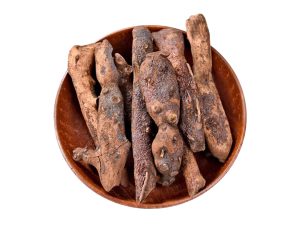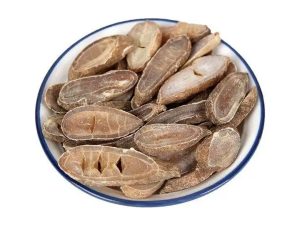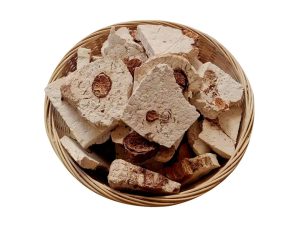
Di Meizi, a name in traditional Chinese medicine. It refers to the root of Rubus xanthocarpus Bur. et Franch., a plant in the Rosaceae family. It is distributed in Shaanxi, Gansu, Anhui, Sichuan, and other regions. It has the efficacy of clearing heat and detoxifying. It is commonly used to treat wind-heat-induced eye inflammation, redness, swelling, and pain in the eyes, as well as swollen and toxic sores.
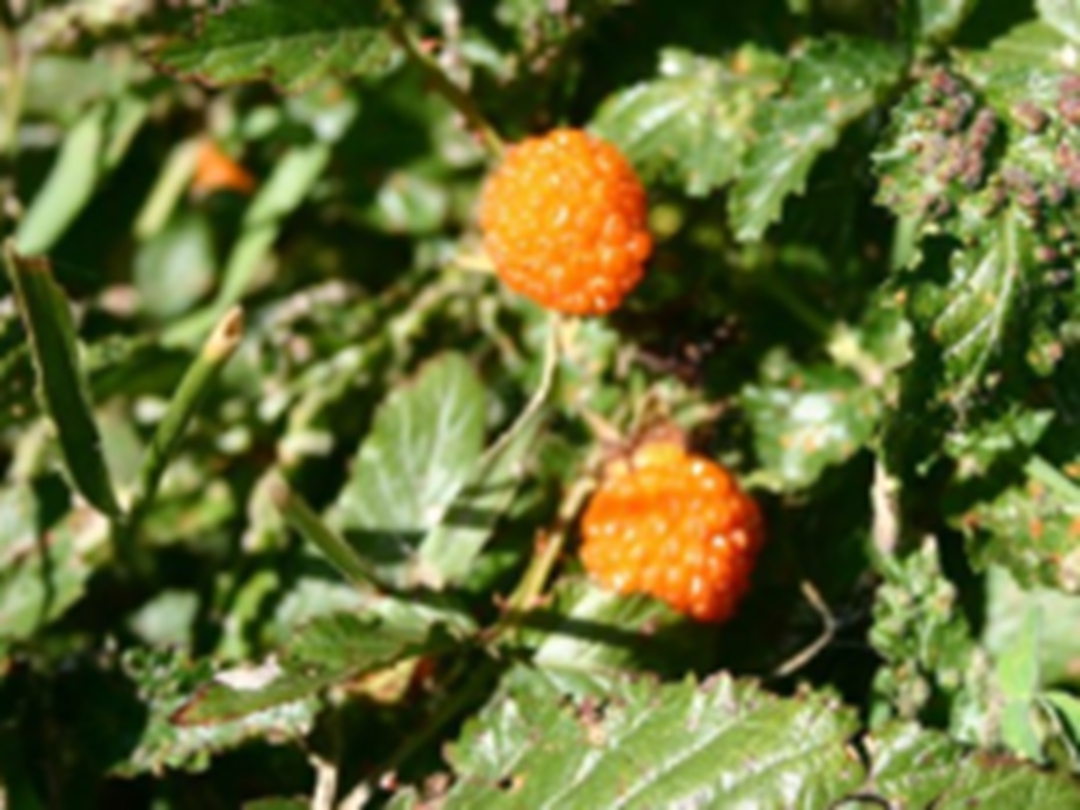
Groundberry
Di Meizi, a name in traditional Chinese medicine. It refers to the root of Rubus xanthocarpus Bur. et Franch., a plant in the Rosaceae family. It is distributed in Shaanxi, Gansu, Anhui, Sichuan, and other regions. It has the efficacy of clearing heat and detoxifying. It is commonly used to treat wind-heat-induced eye inflammation, redness, swelling, and pain in the eyes, as well as swollen and toxic sores.
Chinese Name : 地莓子
Aliases : Yellow Hat, Yellow Thistle Root
Nature, Flavor & Meridian Tropism : Taste: sour; nature: slightly cold. Enters the Liver meridian
Benefits & Efficacy
Benefits
Clears heat and eliminates toxins.
Indications
Wind-fire eye ulcers, redness, swelling, and pain in the eyes, and swollen and toxic sores.
Usage and Dosage
External use: Apply an appropriate amount, pounded into a paste; or decoct in water for steam baths or washing.
Relevant Discussions
*Shaanxi Chinese Herbal Medicine*: “Reduces inflammation and relieves pain. Primarily used to treat conjunctivitis, blepharitis, and unspecified swellings and abscesses.”
Applications
Related Compatibility
1. For conjunctivitis and blepharitis: Use an appropriate amount of fresh *Dibmeizi*; decoct in water and use for steam baths or washing. (*Shaanxi Chinese Herbal Medicine*)
2. For unspecified swellings and abscesses: Use an appropriate amount of fresh *Dibmeizi*; pound into a paste and apply externally. (*Shaanxi Chinese Herbal Medicine*)
Processing & Preparation
Harvesting & Processing
Dig up the roots in spring or fall, remove the stems, leaves, and fine roots, wash thoroughly, slice, and sun-dry.
Crude Drug Identification
Botanical Information
Botanical Classification
Rubiaceae family, Rubus genus, Rubus chingii.
Morphological Characteristics
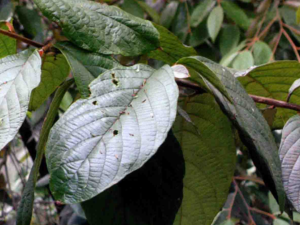
A subshrubby perennial herb. Stems are prostrate or ascending, 30–50 cm tall. Twigs are ribbed and sparsely covered with small, swollen spines at the base. Leaves are alternate;petioles and leaf rachis sparsely covered with prickles; three leaflets, sometimes five, oblong, rarely ovate-lanceolate; the terminal leaflet 5–10 cm long and 1.5–3 cm wide, often with two shallow lobes at the base; lateral leaflets half the length and width of the terminal leaflet, with acuminate apices, rounded bases, and irregularly serrated margins; both surfaces glabrous, with prickles along the veins on the underside.Flowers occur in corymbs of 1–4, with flower stalks sparsely bearing spines; flowers are white, 1–2.5 cm in diameter; calyx lobes are densely covered with fine spines on the outer surface and hairy on the inner surface. The aggregate fruit is flattened globose or semicircular, 1–1.2 cm in diameter, and orange-yellow. Flowering occurs from May to June, and fruiting in August.
Distribution Area
Distributed in Shaanxi, Gansu, Anhui, Sichuan, and other areas.