Amaranth, a name in traditional Chinese medicine. It refers to the stems and leaves of Amaranthus tricolor L., a plant of the Amaranthaceae family. It is cultivated throughout China and sometimes naturalizes as a semi-wild plant. It has the effects of clearing heat, detoxifying, and promoting urination and defecation. It is used to treat dysentery, difficulty with urination and defecation, snake and insect bites, and toxic sores.
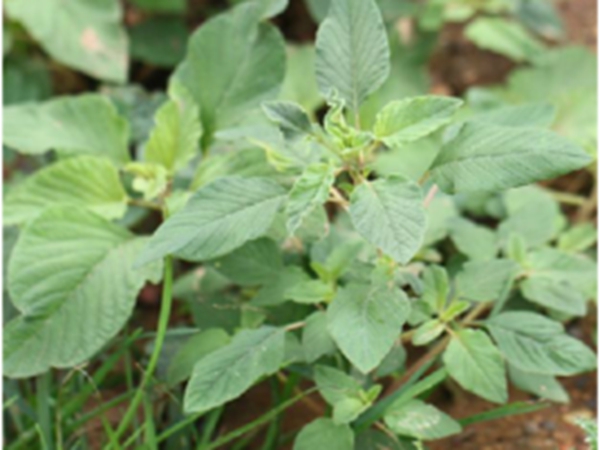
Amaranth
Amaranth, a name in traditional Chinese medicine. It refers to the stems and leaves of Amaranthus tricolor L., a plant of the Amaranthaceae family. It is cultivated throughout China and sometimes naturalizes as a semi-wild plant. It has the effects of clearing heat, detoxifying, and promoting urination and defecation. It is used to treat dysentery, difficulty with urination and defecation, snake and insect bites, and toxic sores.
Chinese Name : 苋
Aliases : Amaranth, Human Amaranth, Red Human Amaranth, Wild Goose Red, Old-Youth, Ten-Variety Brocade, Old-Becomes-Young, Three-Color Amaranth, Green-Scented Amaranth, Old-Becomes-Change, Autumn Red
Nature, Flavor & Meridian Tropism : Sweet in taste, slightly cold in nature
Benefits & Efficacy
Benefits
Clears heat and detoxifies; promotes bowel movements and urination.
Indications
Used for dysentery, difficulty with urination and defecation, snake and insect bites, and toxic sores.
Usage and Dosage
Internal use: Decoct 30–60 g; or cook into congee. External use: Apply an appropriate amount as a poultice or use the decoction for fumigation and washing.
Precautions
Use with caution in cases of spleen deficiency with loose stools. Contraindicated with fern powder and soft-shelled turtle meat. Avoid in cases of shao-zhang (abdominal distension) and watery diarrhea.
Pharmacological Actions
~Possesses antibacterial properties.~
Relevant Discussions
*Collected Annotations on the Classic of Materia Medica*: “Red Amaranth: Can treat bloody diarrhea.”
Applications
Related Compatibility
1. To treat chapped lips in children: Pound red amaranth to extract juice and wash the affected area with it. (*Shenghui Fang*)
2. To treat itching caused by lacquer poisoning: Boil amaranth in water and use the decoction to wash the affected area. (*Compendium of Materia Medica*)
Processing & Preparation
Harvesting & Processing
Harvest in spring or summer; wash thoroughly; use fresh or sun-dry.
Processing Methods
Remove impurities, rinse with clean water, moisten slightly, cut into sections, and sun-dry.
Crude Drug Identification
Properties of Crude Drugs
Stems are 80–150 cm long, green or red, and often branched.Leaves are alternate; the leaf blades are wrinkled and, when flattened, are rhomboid-ovate to lanceolate, 4–10 cm long and 2–7 cm wide, with a blunt or notched apex bearing a prominent tip; they are green, red, purple, yellow, or green with colorful spots; petioles are 2–6 cm long. Inflorescences are spikelike. The capsules are ovate-oblong and dehiscent. Slight odor; bland taste.
Botanical Information
Botanical Classification
A member of the Amaranthaceae family.
Morphological Characteristics
An annual herb, 80–150 cm tall; stems stout, green or red, often branched, hairy or glabrous when young.Leaves ovate, rhombo-ovate, or lanceolate, 4–10 cm long, 2–7 cm wide, green or often red, purple, or yellow, or partly green mottled with other colors; apex rounded or emarginate, with a prominent tip; base cuneate; margin entire or undulate; glabrous; petioles 2–6 cm long, green or red.Inflorescences are axillary, extending down to the lower leaves, or accompanied by terminal inflorescences, forming pendulous spikelike inflorescences; the inflorescences are globose, 5–15 mm in diameter, with male and female flowers intermixed;bracts and bracteoles are ovate-lanceolate, 2.5–3 mm long, translucent, with a single long awn at the apex and a single raised green or red midvein on the abaxial surface;Tepals oblong, 3–4 mm long, green or yellowish-green, with a long awn at the apex and a raised green or purple midvein on the back; stamens longer or shorter than the tepals. Capsule ovate-oblong, 2–2.5 mm long, ring-shaped transversely dehiscent, enclosed within the persistent tepals.Seeds are nearly round or obovate, about 1 mm in diameter, black or dark brown, with blunt margins. Flowering period: May–August; fruiting period: July–September.
Distribution Area
It is cultivated throughout China and sometimes naturalizes as a semi-wild plant.