Cnidium, a name in traditional Chinese medicine, refers to the dried, mature fruit of Cnidium monnieri (L.) Cuss., a plant of the genus Cnidium in the Apiaceae family. This product has the effects of dispelling dampness and wind, killing parasites and relieving itching, and warming the kidneys to enhance yang. It is primarily used to treat vaginal itching with leukorrhea, itchy eczema, lower back pain due to dampness-obstruction, impotence caused by kidney deficiency, and infertility due to a cold uterus.

Shechuangzi
Cnidium, a name in traditional Chinese medicine, refers to the dried, mature fruit of Cnidium monnieri (L.) Cuss., a plant of the genus Cnidium in the Apiaceae family. This product has the effects of dispelling dampness and wind, killing parasites and relieving itching, and warming the kidneys to enhance yang. It is primarily used to treat vaginal itching with leukorrhea, itchy eczema, lower back pain due to dampness-obstruction, impotence caused by kidney deficiency, and infertility due to a cold uterus.
Chinese Name : 蛇床子
Latin Name : Cnidii Fructus
Aliases : Snake Rice, Snake Pearl, Snake Grain, Cnidium Seed, Cnidium Fruit, Qi Fruit, Double Kidney Seed, Leptospermum Seed, Wild Fennel
Authentic Producing Area : Produced in most regions of the country
Nature, Flavor & Meridian Tropism : Warm in nature, pungent and bitter in taste; enters the Kidney meridian
Benefits & Efficacy
Benefits
Dries dampness and dispels wind; kills parasites and relieves itching; warms the Kidney and strengthens yang.
Indications
Mainly used for vaginal itching with leukorrhea, itchy eczema, lower back pain due to dampness-obstruction, impotence due to kidney deficiency, and infertility due to uterine cold.
Usage and Dosage
1. Internal use: Decocted as a soup, 3–9 g; or incorporated into pills or powders. 2. External use: Apply an appropriate amount; decoct for fumigation and washing; or prepare as a sitz bath or suppository; or grind into a fine powder and apply as a poultice.
Precautions
Contraindicated for those with damp-heat in the lower jiao, kidney yin deficiency, prone to uncontrolled “phase fire,” or loose semen retention.
Chemical Constituents
It primarily contains coumarin compounds (such as cnidicin, isohouttuyone, and Sichuan pepper toxin) and essential oils (such as dimethyl ethyl ketone, cis-carvone, trans-β-acacene, and β-acacene).
Pharmacological Actions
1. Antimicrobial activity: It exerts inhibitory effects on various bacteria, including Staphylococcus aureus, methicillin-resistant S. aureus (MRSA), Bacillus subtilis, Pseudomonas aeruginosa, and Proteus spp., as well as fungi such as Microsporum lanosum, Epidermophyton floccosum, and Trichophyton gypseum. 2. Antiallergic Effects: Cnidium essential oil has an antipruritic effect, which is associated with its ability to antagonize histamine and inhibit mast cell degranulation. 3. Other Effects: Cnidium also possesses analgesic, anti-inflammatory, antiarrhythmic, and sedative properties, as well as the ability to boost immunity and improve learning and memory.
Relevant Discussions
1. *Shennong Bencao Jing*: Treats male impotence and genital itching, as well as swelling and pain in the female genital area; eliminates bi syndrome, improves joint mobility, and treats epilepsy and malignant sores.
2. *Treatise on the Nature of Medicinal Substances*: Treats deficiency in men and women, damp bi syndrome, toxic wind, intractable pain, and relieves lower back pain in men. When used in a bath for the male genital area, it dispels wind-cold and greatly enhances sexual function. It is indicated for severe itching caused by wind; a decoction used for bathing cures this condition. It also treats toothache and childhood convulsions.
Applications
Clinical Applications
1. To treat male erectile dysfunction caused by kidney yang deficiency and female infertility due to a cold uterus, combine with Goji berries (枸杞子), Dodder seed (菟丝子), Schisandra berries (五味子), and Cinnamon bark (肉桂), among others.
2. To treat kidney yang deficiency with cold, combine with Dodder seed (菟丝子), Schisandra berries (五味子), and Cistanche (肉苁蓉), as in the Tianxiong Pill (天雄丸) from *Essential Prescriptions Worth a Thousand Gold* (*Qianjin Yaofang*).
3. To treat cold-damp leukorrhea in women, combine with Deer Antler Gelatin, Cornus Fruit, and Plantain Seed (from *The Authentic Treatise on Prescriptions*).
4. To treat lower back pain caused by kidney deficiency with invasion of cold and dampness, combine with Mulberry Parasite, Eucommia Bark, and Dogspine.
5. To treat scrotal eczema and vaginal itching with excessive discharge in women. It may be used alone or decocted with Sophora Root, Phellodendron Bark, and Alum for external washing.
6. For itching and pain in the scrotum due to wind-dampness: decoct Weilingxian, Dangguiwei, and Kushen in water for fumigation and washing, and take Longdan Xiegan Decoction orally (*Great Compendium of Surgery*).
Related Compatibility
1. Cnidium monnieri combined with realgar: Cnidium monnieri dries dampness, dispels wind, kills parasites, and relieves itching; realgar detoxifies and kills parasites. When used together, these two herbs enhance their detoxifying, antiparasitic, dampness-drying, and itch-relieving effects. Externally, they are used to treat eczema, damp sores, scabies, tinea, and skin itching caused by damp-heat stagnation in the skin and muscles.
2. Cnidium Monnieri combined with White Alum: Cnidium Monnieri dries dampness, kills parasites, and relieves itching; White Alum detoxifies, kills parasites, dries dampness, and relieves itching. When used together, they enhance the ability to dry dampness, kill parasites, and relieve itching, making them suitable for eczema, damp sores, and skin itching.
3. Cnidium Monnieri Combined with Coptis: Cnidium Monnieri is warm in nature and kills parasites, dries dampness, and relieves itching; Coptis is extremely bitter and cold in nature, clears heat, dries dampness, purges fire, and detoxifies. When combined, this pairing emphasizes clearing heat, drying dampness, and detoxifying, making it suitable for sores caused by damp-heat toxicity.
4. Cnidium Monnieri combined with Gentiana Macrophylla: Cnidium Monnieri dispels wind and cold and dries dampness; Gentiana Macrophylla dispels wind-dampness and relieves arthralgic pain. When used together, these two herbs dispel wind, remove dampness, and relieve pain, making them suitable for rheumatic arthralgic pain.
5.Cnidium Monnieri Combined with Cuscuta Seed: Cnidium Monnieri is warm in nature and enters the Kidney meridian, where it warms the Kidney and strengthens yang; Cuscuta Seed is pungent to moisten dryness and sweet to tonify deficiency, serving as a balanced tonic for both yin and yang. Its functions include tonifying Kidney yang, nourishing Kidney essence to consolidate semen, and reducing urinary leakage. When used together, these two herbs enhance the effect of warming the Kidney and assisting yang, making them suitable for conditions such as impotence and seminal emission due to Kidney deficiency, uterine cold leading to infertility, and leukorrhea caused by deficiency-cold.
Medicinal Identification
1. Raw Cnidium Monnieri vs. Roasted Cnidium Monnieri: Raw Cnidium Monnieri is superior for external use in drying dampness and killing parasites; it can treat genital eczema, vaginal trichomoniasis, scabies, and stubborn tinea. When taken internally, it warms the kidneys and aids yang, and is used for male erectile dysfunction, female infertility due to a cold uterus, and leukorrhea caused by cold-dampness.In modern practice, it is generally used raw, whereas ancient formulas for internal use often called for the roasted variety; the purpose of roasting was to neutralize toxicity and remove the pungent taste, and its effects when taken internally are the same as those of the raw form.
2. Cnidium Monnieri and White Alum: Both herbs can be used externally and internally. When used externally, they dry dampness, kill parasites, and relieve itching, and are used for scabies, eczema, and itchy skin; however, their effects differ when taken internally. Cnidium Monnieri has a bitter and pungent taste and a warm nature; it warms the kidneys and strengthens yang, treating erectile dysfunction and infertility due to uterine cold. It also dries dampness and dispels cold, treating leukorrhea caused by cold-dampness and damp-bi-induced low back pain.White alum has a sour taste and a cold nature; it can stop bleeding and diarrhea, treating vomiting of blood, epistaxis, hemorrhage from external injuries, and chronic diarrhea and dysentery. It can also clear heat and resolve phlegm, treating wind-phlegm epilepsy and mania caused by internal accumulation of phlegm-heat.
4. Cnidium Monnieri and Kochia Trichosperma: Both herbs relieve itching and are used to treat damp sores, eczema, genital itching, and leukorrhea. However, Cnidium Monnieri is warm in nature and excels at drying dampness, relieving itching, dispelling wind, and killing parasites. It is suitable for conditions caused by cold-dampness or deficiency-cold, and also treats scabies and tinea. Additionally, it warms the kidneys and strengthens yang, treating erectile dysfunction, infertility due to uterine cold, and damp-bi-induced low back pain;Di Fu Zi has a cold nature; it clears heat and drains dampness to relieve itching, making it particularly suitable for conditions caused by damp-heat. It is also especially effective for treating difficulty urinating and painful, scanty urination due to heat.
5. Shechuangzi and Kusheng: Both herbs have a bitter taste and can dry dampness; they also kill parasites and relieve itching, and are used for vaginal itching with leukorrhea, skin itching, scabies, and tinea. However, Shechuangzi has a bitter and pungent taste and a warm nature; when taken internally, it warms the kidneys and strengthens yang, making it useful for erectile dysfunction and infertility due to a cold uterus. It can also dispel cold, eliminate wind, and dry dampness, and is often used for leukorrhea caused by cold-dampness and damp-bi-syndrome-induced low back pain.Kushen has a bitter taste and a cold nature; it clears heat and dries dampness, treating conditions such as jaundice, diarrhea, dysentery, vaginal discharge, and genital itching caused by damp-heat. It also has a diuretic effect and is used for difficulty urinating due to damp-heat.
Related Medicines
Wu She Zhi Yang Wan (Black Snake Itch-Relief Pills), Skin Kang Wash, Eczema Powder, and Yi He Chun Capsules.
Related Prescriptions
Shechuangzi Powder (*Authentic Treatise on Surgery*), Shechuangzi Pills (*Thousand Gold Prescriptions*), and Suppository Formula (*Secret Essentials from the Outer Pavilion*).
Notes
Patients requiring treatment with Chinese herbal medicine should first consult a licensed Traditional Chinese Medicine (TCM) hospital, where a TCM practitioner will conduct a professional pattern differentiation and prescribe an herbal formula.
Processing & Preparation
Harvesting & Processing
Harvest when the fruits ripen in summer and fall. Pick the fruits and sun-dry them; or cut the above-ground parts, sun-dry them, shake off the fruits, and sift or winnow away impurities.
Processing Methods
1. Cnidium Monnieri: Take the raw herb, remove impurities, and sift out ash and debris.
2. Roasted Cnidium Monnieri: Take the cleaned Cnidium Monnieri and roast over low heat until fragrant; remove and allow to cool.
Storage Methods
Store in a dry container in a well-ventilated, dry place to prevent insect infestation.
Crude Drug Identification
Identification
1. The powder of this product is yellowish-green. Most oil tubes are broken; their inner walls contain golden-yellow secretions, and roundish oil droplets are visible.The cells of the inner pericarp’s mosaic layer are pale yellow; when viewed from the surface, the cells are elongated, with bead-like thickening of the cell walls. Parenchymatous cells are square- or round-shaped, colorless, with striated or reticulate thickening of the cell walls. Calcium oxalate crystals appear as clusters or prisms, 3–6 μm in diameter; endosperm cells are polygonal and contain starch grains and minute calcium oxalate crystals.
2. Take 0.3 g of the powdered sample, add 5 mL of ethanol, sonicate for 5 minutes, allow to stand, and take the supernatant as the test solution. Separately, take 0.3 g of Cnidium monnieri reference material and prepare a reference material solution using the same method. Further, take a Cnidium lactone reference standard, dissolve it in ethanol to prepare a solution containing 1 mg per mL, and use this as the reference standard solution.Perform the test according to the thin-layer chromatography method (General Chapter 0502). Pipette 2 μL of each of the three solutions and apply them separately onto the same silica gel G thin-layer plate. Develop the plate using a mobile phase of toluene–ethyl acetate–n-hexane (3:3:2), remove the plate, allow it to air-dry, and examine it under ultraviolet light (365 nm).In the chromatogram of the test sample, fluorescent spots of the same color appear at positions corresponding to those in the chromatograms of the reference herbal material and the reference standard.
Properties of Crude Drugs
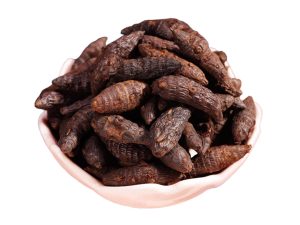
This product consists of double-seeded fruits that are oval in shape, 2–4 mm long, and approximately 2 mm in diameter. The surface is grayish-yellow or grayish-brown; the apex bears two outwardly curved columnar bases, and the base occasionally has a slender stalk. The dorsal surface of the mericarps has five thin, raised longitudinal ridges; the junction surface is flat and bears two brown, slightly raised longitudinal ridges.The pericarp is brittle and easily detaches when rubbed. The seeds are minute, grayish-brown, and oily to the touch. It has a fragrant aroma, a pungent and cool taste, and produces a numbing sensation on the tongue.
Properties of Processed Slices
1. Cnidium monnieri: See “Characteristics of the Medicinal Material.”
2. Roasted Cnidium monnieri: Resembles Cnidium monnieri in shape, but with a darker surface color and a rich aroma.
Botanical Information
Botanical Classification
Cnidium, a plant of the genus Cnidium in the Apiaceae family.
Morphological Characteristics
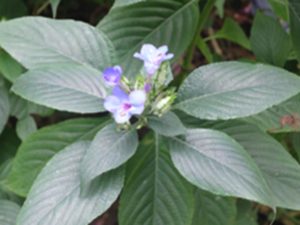
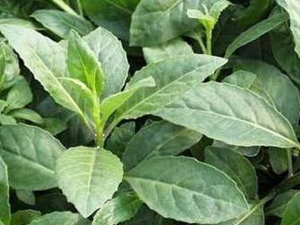
An annual herb, 20–80 cm tall. The root is slender and conical. The stem is erect or ascending, cylindrical, highly branched, hollow, with deep longitudinal striations on the surface, and the ridges are often covered with short hairs. The basal leaves have short petioles; the leaf sheaths are short and broad, with membranous margins; the upper leaves are almost entirely reduced to sheaths;leaf blades are ovate to triangular-ovate in outline, 3–8 cm long and 2–5 cm wide, and are twice or thrice ternately pinnately compound; terminal segments are linear to linear-lanceolate, 3–10 mm long and 1–1.5 mm wide, with a small apex, and rough along the margins and veins.Compound umbels are terminal or lateral, 2–3 cm in diameter; bracts 6–10, linear to linear-lanceolate, ca. 5 mm long, with membranous margins and short soft hairs; rays 8–25, 0.5–2 cm long;numerous small bracts, linear, 3–5 mm long, with membranous margins and fine cilia; small corymbs bearing 15–20 flowers; calyx teeth indistinct; petals white, with a small, inwardly folded lobe at the apex; style base slightly raised, style 1–1.5 mm long, curved downward.The schizocarp is oblong, 1.3–3 mm long and 1–2 mm wide; in cross-section, it is pentagonal with five principal ridges, all expanded into wings; each ridge groove contains one oil tube; there are two fused faces; the ventral surface of the endosperm is straight. Flowering period: April–June; fruiting period: May–July.
Distribution Area
Distributed throughout most of the country.