Stir-Fried White Lentils are a traditional Chinese medicinal material made from the dried, mature seeds of the legume plant Vigna radiata, processed through a traditional stir-frying method. Compared to raw white lentils, the stir-fried variety has a slightly warmer nature (changing from slightly warm to warm) and enhanced efficacy in strengthening the spleen and dispelling dampness. It is particularly suitable for treating spleen deficiency-induced diarrhea and excessive vaginal discharge.In addition, stir-fried white mung beans are classified as a “food-medicine” substance; they can not only be used in traditional Chinese medicine formulas but also incorporated into daily diets to serve as a dietary therapy.

Roasted White Lentils
Stir-Fried White Lentils are a traditional Chinese medicinal material made from the dried, mature seeds of the legume plant Vigna radiata, processed through a traditional stir-frying method. Compared to raw white lentils, the stir-fried variety has a slightly warmer nature (changing from slightly warm to warm) and enhanced efficacy in strengthening the spleen and dispelling dampness. It is particularly suitable for treating spleen deficiency-induced diarrhea and excessive vaginal discharge.In addition, stir-fried white mung beans are classified as a “food-medicine” substance; they can not only be used in traditional Chinese medicine formulas but also incorporated into daily diets to serve as a dietary therapy.
Chinese Name : 炒白扁豆
Authentic Producing Area : Produced in most regions of China
Nature, Flavor & Meridian Tropism : Sweet in taste, warm in nature; enters the Spleen and Stomach meridians
Benefits & Efficacy
Benefits
Stir-fried white kidney beans have the efficacy of strengthening the spleen and transforming dampness.
Indications
Roasted white kidney beans are primarily used to treat diarrhea caused by spleen deficiency and excessive vaginal discharge.
Usage and Dosage
Clinically, stir-fried white kidney beans are often decocted with other Chinese herbal medicines to make a decoction, with a standard dosage of 9–15 g. Since each patient’s condition and constitution vary, the specific dosage of stir-fried white kidney beans may differ from person to person; patients should strictly adhere to the dosage prescribed by their doctor.
Precautions
1. If you need to take other medications while using stir-fried white kidney beans, be sure to consult your doctor or pharmacist promptly. This is because interactions may occur between different medications, which could affect efficacy or even cause adverse reactions; consulting a professional can effectively mitigate such risks. 2.Pregnant women, women planning to become pregnant, and breastfeeding women must proactively inform their doctor of their physiological status (such as stage of pregnancy or breastfeeding status) before using Roasted White Kidney Beans, so that the doctor can assess the safety and suitability of the medication based on their individual circumstances. 3. If Roasted White Kidney Beans show signs of spoilage, mold, unusual odor, or insect infestation, discontinue use immediately. Such herbal materials may have produced harmful substances and could pose a health risk if consumed.
Applications
Medicinal Identification
Roasted white mung beans should be distinguished from raw white mung beans. Both are processed forms of white mung beans, but due to differences in processing methods, their therapeutic effects have distinct emphases. Raw white mung beans excel at dispelling summer heat and detoxifying; they are primarily used for summer heat and dampness affecting the middle burner, chest tightness, abdominal distension, vomiting, and diarrhea. Roasted white mung beans are effective at strengthening the spleen and transforming dampness; they are primarily used for diarrhea caused by spleen deficiency and excessive leukorrhea.
Related Medicines
Ba’erkang Syrup, Shenling Baizhu Pills, Xiangsu Zhengwei Pills.
Related Prescriptions
Shenling Baizhu Powder (*Taiping Huimin Heji Jufang*), Liuhe Decoction (*Taiping Huimin Heji Jufang*), Xiangru Powder (*Taiping Huimin Heji Jufang*), Guanyin Quanshe Powder (*Huoyou Kouyi*).
Medicinal Diet Therapy
1. White Broad Bean and Chinese Yam Porridge
(1) Ingredients: 30g of roasted white broad beans, 30g of fresh iron-rod Chinese yam, 100g of rice, and 5 red dates.
(2) Preparation: Rinse the roasted white broad beans, then soak them in an appropriate amount of water for at least 4 hours. Wash, peel, and dice the iron-rod Chinese yam, then set aside.Bring the soaking water from the white kidney beans to a boil over high heat, then reduce to low heat and simmer for 30 minutes. Add the iron-rod yam, rice, and red dates. Bring to a boil over high heat, then reduce to low heat and simmer until the porridge is cooked.
(3) Benefits: Nourishes the spleen and stomach; harmonizes the middle burner and stops diarrhea.
2. White Kidney Bean, Job’s Tears, and Spinal Bone Soup
(1)Ingredients: 20g roasted white mung beans, 20g coix seeds, 20g astragalus root, 10 red dates, 250g winter melon, 250g pork spine.
(2) Preparation: Wash the pork spine, place it in cold water, and bring to a boil; skim off the scum. Wash the roasted white mung beans, coix seeds, astragalus root, and other ingredients, then soak for 30 minutes.Place all ingredients in a pot, add an appropriate amount of water, bring to a boil over high heat, then reduce to low heat and simmer for 1–2 hours. Season with salt to taste, then serve.
(3) Benefits: Strengthens the spleen, boosts qi, and aids digestion.
3. White Kidney Bean Porridge
(1) Ingredients: 60g roasted white kidney beans, 60g rice.
(2) Preparation: Rinse the white mung beans and rice separately, then place them together in a pot with water to cook into porridge. Bring to a boil over high heat, then reduce to low heat and simmer until the rice and white mung beans are tender.
(3) Benefits: Strengthens the spleen and nourishes the stomach; clears summer heat and stops diarrhea. Suitable for conditions such as spleen and stomach deficiency, poor appetite, vomiting, fatigue, summer-heat-dampness-induced diarrhea, and excessive thirst.
Notes
Patients requiring treatment with traditional Chinese medicine should first consult a licensed TCM hospital, where a TCM practitioner will conduct a professional pattern differentiation and issue a prescription.
Processing & Preparation
Harvesting & Processing
Harvest the ripe fruits in the fall and winter, place them in the sun to dry, and once the fruits are dry, remove the seeds and continue drying them.
Processing Methods
Take clean white mung beans, place them in a pan, and stir-fry over low heat until they turn slightly yellow and develop slight scorch marks; then remove and allow to cool.
Storage Methods
Store in a dry container in a well-ventilated, dry place to prevent insect infestation.
Crude Drug Identification
Properties of Crude Drugs
Flatly elliptical or flatly ovoid in shape, 8–13 mm long, 6–9 mm wide, and approximately 7 mm thick. The surface is pale yellowish-white or pale yellow, smooth, and slightly lustrous, with a raised, white, brow-like hilum along one edge. The texture is hard. The seed coat is thin and brittle; there are two cotyledons, which are thick and yellowish-white. It has a faint odor and a bland taste; when chewed, it emits a bean-like odor.
Properties of Processed Slices
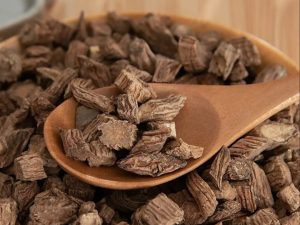
Flatly elliptical or flatly ovate, 8–13 mm long, 6–9 mm wide, and approximately 7 mm thick. The surface is pale yellow, with slight scorch marks, and has a fragrant aroma.
Botanical Information
Botanical Classification
Lentil (Lentilus spp.), a plant of the genus Lentilus in the family Fabaceae.
Morphological Characteristics
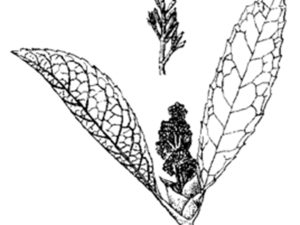
An annual, twining, herbaceous vine, growing up to 6 m in length.
1. Stem and Leaf Characteristics
(1) Stem: The stem is usually pale purple or pale green, glabrous or sparsely pubescent.
(2) Leaves: Trifoliate; petioles 4–14 cm long; stipules lanceolate or triangular-ovate, covered with white soft hairs; the petiole of the terminal leaflet is 1.5–3.5 cm long, while those of the lateral leaflets are shorter, 2–3 mm long, and all covered with white soft hairs;The terminal leaflet is broadly triangular-ovate, 5–10 cm long, with a width approximately equal to its length; it has an acute apex, a broadly cuneate or truncate base, and entire margins; it is covered with short soft hairs on both surfaces, with a higher density along the veins; it has three basal primary veins, and the lateral veins are pinnate; the lateral leaflets are obliquely ovate and asymmetrical on both sides.
2. Flower and Fruit Characteristics
(1) Flowers: Axillary racemes, 15–25 cm long, erect, with a relatively stout rachis; 2–4 flowers or clusters of flowers are borne at the nodes of the rachis; bracteoles are ligulate, two in number, and early deciduous; the calyx is broadly campanulate, 5-lobed at the apex, with the upper two lobes almost completely fused, the remaining three lobes nearly equal in size, and the margins densely covered with white soft hairs;The corolla is papilionaceous, white or pale purple, approximately 2 cm long; the standard is broadly elliptic, with the apex slightly concave inward; the wings are obliquely elliptic, with an ear-like projection on one side near the base; the keel is boat-shaped, curved to nearly a right angle;There are 10 stamens; one is solitary, while the filaments of the remaining nine are partially fused into a tubular structure that encloses the pistil; the ovary is linear, covered with silky hairs, and bears glands at the base; the style has white bristles near the apex, and the stigma is capitate.
(2) Fruit: The pod is sickle-shaped or obovate-oblong, flattened, 5–8 cm long, 1–3 cm wide, broader at the apex, with a downward-curving beak at the tip, and rough margins.Seeds: 2–5 per pod, flattened-elliptic, white, reddish-brown, or nearly black, 8–13 mm long, 6–9 mm wide, and 4–7 mm thick; the hilum and seed ridge are long and prominent; one margin bears a raised, white, crescent-shaped aril. Flowering period: June–August; fruiting period: September.
Distribution Area
It is distributed throughout most regions of the country.
Growth Habits
It prefers a warm, humid climate and is susceptible to frost. Frost damage can range from mild growth impairment to death in severe cases. The seedlings require moist conditions, so care should be taken to water them adequately. During the flowering period, the plant prefers drier conditions; high air and soil humidity can cause flowers to drop easily. It thrives in fertile, well-drained sandy loam soil.
Propagation Methods
Propagated by seed.
Cultivation Techniques
Sow in mid- to late April. Since young shoots have limited ability to break through the soil, if the soil is too dry or the covering soil is too thick, seedlings often fail to emerge, resulting in gaps in the stand. Therefore, good soil moisture conditions are required before sowing. If the soil is dry, water thoroughly once before sowing and wait until the moisture has penetrated before planting. Both spot sowing and hole sowing are acceptable.Hole sowing is generally used, with holes spaced 30 cm apart and 3 cm deep; place 3 seeds in each hole in a triangular pattern. After sowing, cover with about 3 cm of fine soil and lightly firm the soil.
Pest and Disease Control
1. Diseases include rust, which occurs in the spring. Control measures include spraying with a 0.3° Baumé lime-sulfur solution or a 300-fold dilution of sodium dioxylate.
2. Pests include aphids and red spider mites, which can be controlled with 2.5% dichlorvos; bean pod borers can be controlled by spraying with contact insecticides during the early larval stage.