Dalbergia odorifera, a traditional Chinese medicine. It is the dried heartwood of the trunk and roots of Dalbergia odorifera T. Chen, a plant belonging to the genus Dalbergia in the Fabaceae family. It has the effects of resolving blood stasis and stopping bleeding, as well as regulating qi and relieving pain. It is primarily used to treat hemoptysis, epistaxis, bleeding from external injuries, liver qi stagnation with costal pain, stabbing chest pain, pain from falls or blows, and vomiting accompanied by abdominal pain.

Agallocha
Dalbergia odorifera, a traditional Chinese medicine. It is the dried heartwood of the trunk and roots of Dalbergia odorifera T. Chen, a plant belonging to the genus Dalbergia in the Fabaceae family. It has the effects of resolving blood stasis and stopping bleeding, as well as regulating qi and relieving pain. It is primarily used to treat hemoptysis, epistaxis, bleeding from external injuries, liver qi stagnation with costal pain, stabbing chest pain, pain from falls or blows, and vomiting accompanied by abdominal pain.
Chinese Name : 降真香
Aliases : Wisteria Fragrance, Agarwood, Aquilaria, Rosewood Mother
Authentic Producing Area : Hainan
Nature, Flavor & Meridian Tropism : Pungent in taste, warm in nature; enters the Liver and Spleen meridians
Benefits & Efficacy
Benefits
Dispels blood stasis and stops bleeding; regulates qi and relieves pain.
Indications
Hemoptysis, epistaxis, bleeding from external injuries, liver qi stagnation with costal pain, stabbing chest pain, pain from falls or blows, vomiting with abdominal pain.
Usage and Dosage
1. Internal use: Decoct 9–15 g; add to the decoction toward the end of boiling. 2. External use: Apply an appropriate amount, ground into a fine powder, to the affected area.
Precautions
Contraindicated in cases of yin deficiency with excessive fire or blood heat causing uncontrolled bleeding.
Chemical Constituents
This product primarily contains essential oils (such as nerolidol, β-bisabolene, and trans-β-acacene) and flavonoids (such as isorhamnetin, luteolin, glycyrrhizin, isoglycyrrhizin, and pterostilbene).
Pharmacological Actions
This product possesses antithrombotic, anticoagulant, anticonvulsant, antibacterial, analgesic, and anti-inflammatory effects.
Relevant Discussions
1. *Compendium of Materia Medica*: “Treats fractures and wounds; stops bleeding and relieves pain; reduces swelling and promotes tissue regeneration.”
2. *Commentary on the Classic of Materia Medica*: “Agallocha is the purest and most potent among fragrances. For injuries to the upper body where stagnant blood accumulates in the chest and diaphragm, causing pain upon palpation or pain radiating to the flanks—which are signs of hemoptysis—immediately grind this herb into a fine powder, mix it with a decoction, and take it; this is highly effective.For hemoptysis caused by internal injury or liver damage due to anger, using this herb in place of Curcuma is remarkably effective.”
3. *Benjing Fengyuan*: “Agallocha is red in color; it enters the blood system and descends. Therefore, when taken internally, it promotes blood circulation and dispels stagnation; when applied externally, it can stop bleeding and relieve pain. Furthermore, for cases of hemoptysis due to deficiency—where the sputum is dark and dull rather than bright red—it is appropriate to increase the dosage; its efficacy is comparable to that of Huarui Shi San.”
Applications
Clinical Applications
1. This herb has pungent, dispersing, and warming properties; it can resolve blood stasis, promote blood circulation, and stop bleeding. It is suitable for conditions involving stasis-related bleeding, particularly for internal and external bleeding caused by trauma, and is a commonly used herb in surgery. For example, according to *Mingyi Bielu*, to treat bleeding from knife wounds, this herb is used alone, ground into a powder, and applied externally;In *A Selection of 101 Prescriptions*, to treat uncontrollable bleeding from cuts or trauma, this herb is ground into a powder with gallnut and applied as a poultice to the affected area. For internal injuries resulting in hemoptysis or epistaxis caused by blood stasis or the upward rebellion of qi and fire, this herb can descend qi, resolve stasis, and stop bleeding; it is often used in combination with Moutan Bark and Curcuma.
2. This herb has a pungent taste; it disperses and promotes circulation, resolves blood stasis, regulates qi, and relieves pain. It can be used to treat chest, flank, cardiac, and abdominal pain caused by blood stasis and qi stagnation, as well as pain from trauma-induced bruising and swelling. For example, according to *Commentary on the Materia Medica* (Ben Cao Jing Shu), to treat blood stasis stagnating in the upper part of the chest and diaphragm, grind this herb into a powder and take it as a decoction; clinically, it is also frequently used in combination with Wulingzhi, Chuanxiong, and Yujin.For treating trauma-induced injuries, stasis-related swelling, and pain, it is often combined with Frankincense and Myrrh.
3. This herb is pungent, warm, and aromatic, with a primarily descending nature; thus, it can descend qi, dispel foul odors, harmonize the middle burner, and stop vomiting. It can be used for vomiting and abdominal pain caused by internal obstruction of the spleen and stomach by foul and turbid substances, and is often used in combination with Agastache and Aquilaria.
Related Compatibility
1. Agarwood combined with Wulingzhi: Agarwood resolves blood stasis and stops bleeding, while also promoting the flow of qi; Wulingzhi invigorates blood circulation and relieves pain, and also stops bleeding. When combined, these two herbs enhance their effects in resolving blood stasis, stopping bleeding, promoting qi flow, and relieving pain. This combination is suitable for bleeding caused by internal obstruction of blood stasis and blood deviating from its normal channels, as well as various pain syndromes resulting from blood stasis and qi stagnation.
2. Aquilaria agallocha combined with Guang Huoxiang: Both have a fragrant aroma and can dispel dampness, harmonize the middle burner, and stop vomiting. Aquilaria agallocha also regulates qi, while Guang Huoxiang excels at stopping vomiting. When combined, these two herbs work together to dispel dampness, regulate qi, harmonize the middle burner, and stop vomiting. This combination is suitable for vomiting and abdominal pain caused by dampness obstructing the middle jiao.
Medicinal Identification
1. Agarwood and Aquilaria: Both herbs are pungent and warm in nature, possessing the ability to regulate qi and relieve pain; they can be used for various pain syndromes caused by qi stagnation.However, Agarwood promotes the flow of qi and activates blood circulation; it relieves pain and stops bleeding, making it suitable for stasis-related bleeding, as well as pain in the chest, flanks, heart, and abdomen caused by blood stasis and qi stagnation, and pain from bruises and swelling due to trauma. It can also regulate qi, dispel dampness, harmonize the middle burner, and stop vomiting, making it suitable for vomiting and abdominal pain caused by internal obstruction by damp turbidity.Mu Xiang excels at dispelling stagnant qi in the stomach and intestines to relieve pain; it also strengthens the spleen and aids digestion, making it suitable for epigastric and abdominal distension and pain caused by gastrointestinal qi stagnation, as well as the sensation of incomplete evacuation following diarrhea or dysentery.
2. Agarwood and Turmeric: Both herbs can invigorate blood circulation and remove blood stasis, regulate qi, and relieve pain; they can be used for various pain syndromes caused by blood stasis and qi stagnation.However, Agarwood also resolves blood stasis and stops bleeding, making it suitable for hemorrhage caused by blood stasis, particularly for internal and external bleeding resulting from trauma; it can also resolve dampness and stop vomiting, and is used for epigastric and abdominal fullness and distension, vomiting, and abdominal pain caused by internal obstruction by damp-turbidity and impaired harmonization and descent of the stomach.Turmeric dispels wind-cold externally and regulates qi and blood internally; it excels at promoting circulation in the shoulders and arms to relieve bi pain, making it suitable for rheumatic pain in the shoulders and arms.
Related Medicines
Traumatic Injury Pain-Relieving Plaster, Bone-Setting Lotion, Rongxin Pills, Guanshian’an Oral Solution, Xiangdan Injection.
Related Prescriptions
Immediate Hemoptysis-Stopping Plaster (*Revised Popular Treatise on Cold Damage*), Seven-Fragrance Powder (*Dian Dian Jing*).
Notes
Patients requiring treatment with traditional Chinese medicine should first consult a licensed TCM hospital, where a TCM practitioner will conduct a professional pattern differentiation and issue a prescription.
Processing & Preparation
Harvesting & Processing
It can be harvested year-round; remove the sapwood and dry in the shade.
Processing Methods
Take the raw herb, remove impurities, split into small pieces, and grind into a fine powder or slice into thin pieces.
Storage Methods
Store in a dry container, seal tightly, and keep in a cool, dry place.
Crude Drug Identification
Properties of Crude Drugs
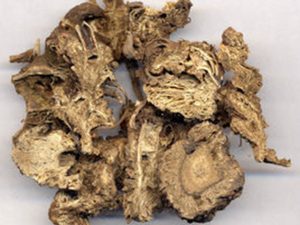
This product is cylindrical or irregularly shaped. The surface is purplish-red or reddish-brown, and the cross-section exhibits a dense grain. It is hard and oily. It has a faintly fragrant odor and a slightly bitter taste.
Properties of Processed Slices
It consists of irregular small fragments or extremely thin slices. The surface is purplish-red to reddish-brown, with a dense grain. It is hard and rich in oil. The powder is purplish-red or purplish-brown. It has a fragrant odor and a slightly bitter taste.
Botanical Information
Botanical Classification
Pterocarpus alatus, a species of the genus Pterocarpus in the family Fabaceae.
Morphological Characteristics
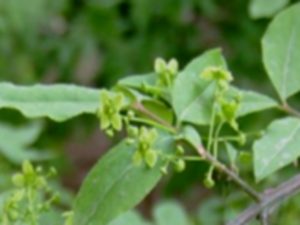
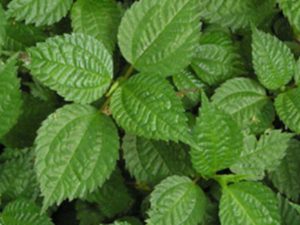
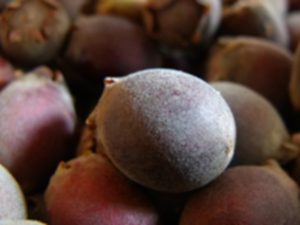
A tree reaching 10–15 m in height; except for the young parts, inflorescences, and ovaries, which are slightly covered with short soft hairs, the rest of the plant is glabrous. Twigs bear pale, densely clustered lenticels. Odd-pinnate compound leaves are 12–25 cm long, with petioles 1.5–3 cm long;9–13 leaflets (rarely 7), nearly leathery, ovate or elliptic, 4–7 cm long, 2–3 cm wide, with an acute apex, a blunt base, and a rounded or cuneate base. Panicles are axillary, 8–10 cm long including the main peduncle; bracts and bracteoles are broadly ovate, about 1 mm long;Flowers small and extremely numerous, ca. 5 mm long; calyx campanulate, ca. 2 mm long, with 5 lobes, the lower lobe longer; corolla pale yellow or milky white, standard nearly inversely heart-shaped with a slightly concave apex, wings oblong, keel semilunar, all petals with claws; stamens 9, monadelphous;The ovary is narrowly elliptic, with a short style. The pod is tongue-shaped and oblong, 4.5–8 cm long; the fruit valves are leathery and reticulate; each pod contains one seed, rarely two. Flowering occurs from March to April; fruiting occurs from October to November.
Distribution Area
Native to Hainan; cultivated in Yunnan.