Di Gu Liu, a name in traditional Chinese medicine. It refers to the aged roots of the plant Raphanus sativus L. (family Brassicaceae) harvested after flowering and seed set.Native to China, it is cultivated throughout the country and has a large number of cultivated varieties. It has the therapeutic effects of promoting qi circulation, eliminating food stagnation, resolving phlegm, quenching thirst, and promoting diuresis to reduce swelling. It is commonly used for food stagnation and qi stagnation, abdominal distension and fullness, dysentery, cough with excessive phlegm, diabetes, beriberi, and edema.

Di Gu Liu
Di Gu Liu, a name in traditional Chinese medicine. It refers to the aged roots of the plant Raphanus sativus L. (family Brassicaceae) harvested after flowering and seed set.Native to China, it is cultivated throughout the country and has a large number of cultivated varieties. It has the therapeutic effects of promoting qi circulation, eliminating food stagnation, resolving phlegm, quenching thirst, and promoting diuresis to reduce swelling. It is commonly used for food stagnation and qi stagnation, abdominal distension and fullness, dysentery, cough with excessive phlegm, diabetes, beriberi, and edema.
Chinese Name : 地骷髅
Aliases : Xianren Gu, Chuzi Radish, Old Radish Head, Elder’s Head, Di Ku Luo, Qi Radish, Ku Radish, Kong Lai Fu, Old Radish.
Nature, Flavor & Meridian Tropism : Sweet and slightly pungent in taste; neutral in nature. Enters the Spleen, Stomach, and Lung meridians
Benefits & Efficacy
Benefits
Promotes the flow of qi, eliminates food stagnation, resolves phlegm, quenches thirst, and promotes diuresis to reduce swelling.
Indications
Food stagnation and qi stagnation; abdominal distension and fullness; dysentery; cough with excessive phlegm; diabetes; beriberi; edema.
Usage and Dosage
Internal use: Decocted as a soup, 10–30 g; or incorporated into pills or powders.
Precautions
Not suitable for raw consumption by those with spleen and stomach deficiency-cold.
Relevant Discussions
The effects of Di Gu Liu are similar to those of Chinese radish, but it excels at regulating qi, promoting diuresis, and reducing edema. For food stagnation and qi stagnation, abdominal distension, and fullness, it is often used in combination with Shenqu, Zhike, and Sha Ren; for difficulty urinating, edema, and bloating, it can be combined with Chenpi, Fuling, and Dabu Pi.
Applications
Related Compatibility
1. For treating masses and lumps: One aged wood apple and 4 liang of Dikuilu. Decoct to extract the juice; take a small cupful frequently. Effective for both qi-induced and food-induced masses. (From *Supplements to the Compendium of Materia Medica*, citing *Compilation of Medical Classics*)
2. For treating jaundice that has progressed to ascites, shortness of breath, regurgitation, fullness and oppression in the chest and diaphragm, epigastric pain, as well as children’s malnutrition with accumulated heat, lockjaw dysentery, chest constriction due to typhoid fever, and various conditions of jaundice with swelling and jaundice with weakness:One liang of Ren Zhong Bai (calcined over fire and quenched with vinegar seven times), 5 qian each of Shenqu, white radish seeds, and Diguilu, 2 qian of Amomum villosum (all of the above roasted), and one aged citron. Grind all ingredients into a fine powder, then form into honey pills the size of a tung seed. Take 3, 5, or 7 pills per dose, either with lampwick decoction or with wine. (From *Supplement to the Compendium of Materia Medica*, citing the *Hai Chang Formulas*: Wan Ying Dan)
3. For treating diabetes insipidus: Take three seedless radishes, wash them thoroughly, slice them thinly, dry them in the sun, and grind into a powder. Take 2 qian per dose, mixed with clarified pork broth, after meals and before bedtime; take three doses daily. (Dusheng San from *Jianyao Jizhong Fang*)
4. For treating generalized edema: Seedless radish and floating wheat. Take these two ingredients (in any quantity) and steep them together in hot water to drink. (*Puji Fang*)
5. For beriberi, edema, ascites, and shortness of breath with chest fullness: 10g of dried radish, 8g of Areca catechu peel, 5g of tangerine peel, 10g of Poria cocos, 6g of Fructus Aurantii, and 10g of Raphanus sativus herb. Add 600ml of water and decoct until reduced to 200ml. Take in three divided doses daily. (From *Modern Practical Chinese Medicine*)
Notes
Both the leaves and seeds of this plant are used medicinally; see “Radish Leaves” and “Radish Seeds.”
Processing & Preparation
Harvesting & Processing
Once the seeds have ripened, uproot the plant along with its roots, trim off the above-ground parts, wash the roots thoroughly, sun-dry them, and store in a dry place.
Processing Methods
*Concise Formulas for the Benefit of the People*: “Wash thoroughly, slice thinly, sun-dry, and grind into powder.” Currently, take the raw herb, remove impurities, wash thoroughly, moisten thoroughly, cut into thick slices or segments, dry, and sift out any dust or debris.
Storage Methods
Store in a dry, airtight container in a well-ventilated, dry place to prevent insect infestation and mold.
Crude Drug Identification
Properties of Crude Drugs
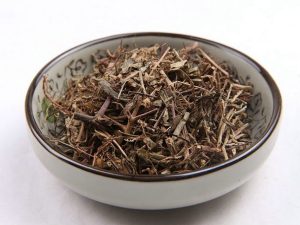
1. Characteristics of the Raw Herb: The root is cylindrical, 20–25 cm long and 3–4 cm in diameter, slightly flattened and somewhat twisted, purplish-red or grayish-brown in color. The surface is uneven, featuring wavy longitudinal wrinkles or a reticulate pattern; visible are transversely arranged yellowish-brown stripes and lateral roots or lateral root scars 2–3 cm long. The apical end bears a hollow stem base 1–4 cm long.Light in weight; the fracture surface is pale yellow and loose. Slight odor; slightly pungent taste.
2. Characteristics of the Prepared Herb: Irregular slices or segments; the surface is grayish-brown or purplish-red, with reticulate wrinkles and fibrous roots; the cross-section is off-white, with coarse fibrous reticulations and pitted fissures; light in weight, loose in texture; slight odor; slightly pungent and faintly sweet taste.
Botanical Information
Botanical Classification
Raphanus sativus, a plant of the Brassicaceae family.
Morphological Characteristics
Raphanus sativus, also known as radish. A biennial or annual herb, 30–100 cm tall. The taproot is fleshy, oblong, spherical, or conical, with green, white, or red skin. The stem is branched, glabrous, and slightly powdery.Basal and lower cauline leaves are broadly pinnately semi-lobed, 8–30 cm long and 3–5 cm wide; the apical lobe is ovate, and the lateral lobes (4–6 pairs) are oblong, bluntly toothed, and sparsely covered with coarse hairs; upper leaves are oblong, serrate or nearly entire.Inflorescences are racemes, terminal or axillary; sepals are oblong; petals are 4, white, purple, or pink, 1.5–2 cm in diameter, obovate, 1–1.5 mm long, with purple streaks, and bearing a 5-mm-long claw at the base; stamens are 6, with 4 long and 2 short; the pistil is 1, with a drill-shaped ovary and a columnar stigma.The silique is cylindrical, 3–6 cm long, constricted between seeds to form spongy transverse septa, with a 1–1.5 mm long beak at the apex; there are 1–6 seeds, which are ovate, slightly flattened, about 3 mm long, reddish-brown, and finely reticulate. Flowering occurs from April to May, and fruiting from May to June.
Distribution Area
Native to China, it is cultivated throughout the country and has a large number of cultivated varieties.