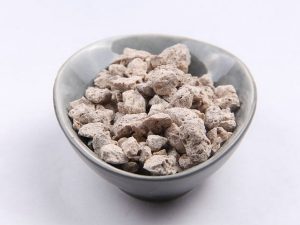
Goat Bone, a name for a traditional Chinese medicinal material. It consists of the bones of the goat (Capra hircus Linnaeus) or sheep (Ovis aries Linnaeus) from the Bovidae family. It has the effects of tonifying the kidneys, strengthening tendons and bones, and stopping bleeding.It is primarily used to treat consumptive weakness and emaciation, weakness in the lower back and knees, cramping and pain in the tendons and bones, deafness, loose teeth, purulent urinary discharge, leukorrhea, chronic diarrhea, chronic dysentery, menorrhagia, epistaxis, and bloody stools.

Sheep Bone
Goat Bone, a name for a traditional Chinese medicinal material. It consists of the bones of the goat (Capra hircus Linnaeus) or sheep (Ovis aries Linnaeus) from the Bovidae family. It has the effects of tonifying the kidneys, strengthening tendons and bones, and stopping bleeding.It is primarily used to treat consumptive weakness and emaciation, weakness in the lower back and knees, cramping and pain in the tendons and bones, deafness, loose teeth, purulent urinary discharge, leukorrhea, chronic diarrhea, chronic dysentery, menorrhagia, epistaxis, and bloody stools.
Chinese Name : 羊骨
Nature, Flavor & Meridian Tropism : Sweet in taste, warm in nature; enters the Kidney meridian
Benefits & Efficacy
Benefits
Tonifies the kidneys, strengthens tendons and bones, and stops bleeding.
Indications
Consumptive weakness and emaciation; weakness in the lower back and knees; cramping and pain in tendons and bones; deafness; loose teeth; purulent urinary discharge; leukorrhea; chronic diarrhea; chronic dysentery; menorrhagia; epistaxis; and bloody stools.
Usage and Dosage
Internal use: Decoct in soup or cook into congee, 1 set; or soak in wine; or calcine until charred and incorporate into pills or powders. External use: Apply an appropriate amount; calcine until charred, grind into powder, and sprinkle or rub onto the teeth.
Precautions
Those with a constitutionally hot constitution should use with caution.
Chemical Constituents
The chemical composition of goat or sheep bones varies depending on the body part and age of the animal. The most significant variations are in water content and lipid content. Bone tissue contains a large amount of inorganic matter, more than half of which is calcium phosphate; it also contains small amounts of calcium carbonate and magnesium phosphate, as well as trace amounts of fluorine, chlorine, sodium, potassium, iron, aluminum, and other elements. Although the fluorine content is very low, it is an important component of bone.The organic components of bone include collagen, osteopontin, and elastin-like substances, as well as neutral fats (present in relatively large amounts), phospholipids, and small amounts of glycogen.
Pharmacological Actions
Bone matrix gelatin (BMG) and bone morphogenetic protein (BMP) can be extracted from sheep bones. Both BMG and BMP possess bone-inducing properties.
Relevant Discussions
1. *The Supplementary Records*: “Spinal bones: Treat deficiency-related wasting, abdominal cold, and emaciation.”
2. *Thousand Gold Prescriptions: Dietary Therapy*: “Skull bones: Treat childhood convulsions and epilepsy.”
3. *The Newly Revised Materia Medica*: “Skull bones: Treat vertigo and wasting diseases.”
4. *Baoqing Bencao Zhezhong*: “Goat tibia: calcined while retaining its properties, then ground and mixed with medicine to treat intestinal wind and diseases caused by internal toxins.”
5. *Yinshan Zhengyao*: “Coccyx: Nourishes the kidneys and improves eyesight; tonifies deficiency and cold in the lower jiao.”
6. *Riyong Bencao*: “Tibia: Treats loose, loose-fitting, and painful teeth.”
7. *The Original Source of Materia Medica*: “Spinal bones: Treat persistent pus and fluid discharge from malnutrition-related ulcers. Shin bones: Nourish the bones; treat muscle atrophy, cramping and pain in tendons and bones, prolonged menstruation, toothache caused by damp-heat, and loose teeth.”
8. *Illustrated Compendium of Medicinal Plants of the Qinghai-Tibet Plateau*: “Bones of castrated animals aged three or four years: Tonifying; treat dizziness, blurred vision, and tinnitus.”
9. *Chinese Animal Medicines*: “Tonifies the kidneys and strengthens tendons and bones. Treats weakness in the lower back and knees.”
Applications
Related Compatibility
1. For treating weakness in the elderly: One set of white sheep vertebrae (chopped into pieces, boiled in water to extract the broth) and one dou of Goji root (chopped). Add five dou of water and boil until the liquid is reduced to one dou and five sheng. Combine this liquid with the bone broth and boil until reduced to five sheng. Remove the bones and store the liquid in a porcelain container. Take one he each time, mixed with a small amount of warm wine. (From *Compendium of Materia Medica*, citing *Miscellaneous Matters of Versatility*)
2. For kidney deficiency with cold, resulting in inability to move the lower back and spine: One set of sheep’s spine (tender). Pound it into pieces and simmer until tender; mix with minced garlic and consume on an empty stomach, accompanied by a small amount of wine.
3. For cold in the spleen and stomach, consumptive weakness and emaciation, and loss of appetite: One set of sheep’s spine (pounded into pieces), half a sheng of white rice.First, boil the bones to extract the broth; then add the rice, scallion whites, Sichuan pepper, ginger, and salt to make congee. Consume on an empty stomach. It may also be prepared as a soup. (Recipes 4–5 are from *The Mirror of Dietary Medicine*)
4. For treating debility-induced dizziness and deafness: One large sheep tailbone. Boil in five bowls of water until reduced by half; add five scallion whites, a handful of Chinese mint, one liang of aged tangerine peel, and three liang of flour.Boil until tender, strain the broth, shape the flour into rope-shaped cakes, and simmer them with four liang of mutton until cooked. Season with the five flavors and consume. (From *Compendium of Materia Medica*, citing *Miscellaneous Matters of Versatility*)
5. For fatty dysuria, discomfort and fullness below the navel, and difficulty in urination: Burn sheep bones to ash, grind finely, and sift into a powder. Before each meal, take two qian of the powder mixed with decoction of white elm bark. (*Formulas for Divine Beneficence*)
6. For treating spleen damage caused by excessive worry, resulting in the spleen’s failure to retain essence and leading to leukorrhea: Magnolia bark (peeled, inner wood only, stir-fried with ginger juice) 2 liang; sheep shin bone (calcined over charcoal until red-hot, retaining its properties) 1 liang. Grind the ingredients into a fine powder, mix with a paste of white flour and water to form pills the size of a tung seed. Take 100 pills each time on an empty stomach with rice water. (From *Yan’s Formulas for Saving Lives*: Sheep Shin Bone Ash Pills)
7. For treating persistent diarrhea and dysentery in children that does not resolve, with a complete lack of appetite for breast milk or solid food: Sheep shin bone (burned to ash) and deer antler (burned to ash), one liang each. Grind the ingredients into a fine powder, mix with refined honey to form pills the size of a tung seed. Dissolve three pills in hot water for each dose; take three to four doses daily, adjusting the amount according to the child’s age. (From *Formulas for Universal Relief*: Sheep Shin Ash Powder)
8. For treating prolonged menstruation: Take one left front leg tibia of a sheep, wrap it in paper, seal it with mud, and let it dry; then calcine it until red-hot, and mix with an equal part of palm ash. Take one qian per dose, washed down with warm wine. (*Compendium of Materia Medica*)
9. For unstoppable nosebleeds: Two liang of charred sheep shin bone (crushed, mixed with vinegar, and burned until completely red) and thirty sheets of old paper (preferably aged, burned to ash). Finely grind the ingredients into a powder and take three qian mixed with freshly drawn water. (*Shenghui Fang*)
10. For thrombocytopenic purpura and aplastic anemia: 1–2 raw sheep shins (crushed), 10–20 red dates, and an appropriate amount of glutinous rice. Boil together into a thin porridge and take in divided doses 2–3 times daily. One treatment course lasts 15 days. (*Food, Chinese Herbs, and Simple Formulas*)
Processing & Preparation
Harvesting & Processing
Harvest the bones fresh during sheep slaughter, or store them in the refrigerator or dry them.
Crude Drug Identification
Botanical Information
Morphological Characteristics
1. Goat: Body length 1–1.2 m, weight 10–35 kg. Long head, short neck, large ears, and a narrow, elongated muzzle. Both males and females have a pair of horns on the forehead, with males having larger horns; the base of the horns is slightly triangular, the tips curve slightly backward, and the horns are hollow with a horny texture, featuring ring-like patterns on the surface or tubercles on the front. Males have a long, tufted beard under the jaw.The limbs are slender, and the tail is short and does not hang down much. The entire body is covered with coarse, straight, short hair, and coat colors vary widely, including white, black, gray, and black-and-white patterns. 2. Sheep: Sheep were among the earliest domesticated livestock. Their body weight varies by breed, ranging from a minimum of 20 kg to a maximum of 150–200 kg. Physical characteristics also vary widely. In some breeds, both males and females have horns; in others, neither has horns;in others, only the males have horns. Horn shape and tail structure also vary by breed. The coat of breeds closer to their wild ancestors consists of two layers: an outer layer of coarse hair that repels rain, and an inner layer of fine undercoat that retains heat. However, improved breeds retain only the inner undercoat. There is a gland between the two toes of the front and hind limbs, opening toward the front. They also possess tear glands.
Distribution Area
1. Goats: Found throughout the country. 2. Sheep: Found almost everywhere in the country, with the highest concentrations in the northern and northwestern regions.