Five-Fingered Hairy Peach, a name in traditional Chinese medicine, refers to the roots of the Ficus retusa, a plant in the Moraceae family. It is primarily produced in Yunnan, Guizhou, Guangxi, Guangdong, and Fujian.This herb has the effects of strengthening the spleen and tonifying the lungs, regulating qi and draining dampness, and relaxing tendons and activating meridians. It is primarily used to treat spleen deficiency with edema, poor appetite and weakness, pulmonary tuberculosis with cough, night sweats, leukorrhea, lack of lactation after childbirth, rheumatic arthralgia, edema, ascites due to liver cirrhosis, hepatitis, and trauma-induced injuries.

Five-Fingered Peach
Five-Fingered Hairy Peach, a name in traditional Chinese medicine, refers to the roots of the Ficus retusa, a plant in the Moraceae family. It is primarily produced in Yunnan, Guizhou, Guangxi, Guangdong, and Fujian.This herb has the effects of strengthening the spleen and tonifying the lungs, regulating qi and draining dampness, and relaxing tendons and activating meridians. It is primarily used to treat spleen deficiency with edema, poor appetite and weakness, pulmonary tuberculosis with cough, night sweats, leukorrhea, lack of lactation after childbirth, rheumatic arthralgia, edema, ascites due to liver cirrhosis, hepatitis, and trauma-induced injuries.
Chinese Name : 五指毛桃
Aliases : Five-Finger Milk, Earth Astragalus, Earth Acanthopanax Bark, Five-Claw Dragon (*Manual of Commonly Used Folk Herbs in Guangxi*), Sow’s Milk (*Manual of Commonly Used Chinese Herbs*, Guangzhou)
Authentic Producing Area : Yunnan, Guizhou, Guangxi, Guangdong, Fujian
Nature, Flavor & Meridian Tropism : Sweet in taste, neutral in nature; enters the Spleen, Lung, and Liver meridians
Benefits & Efficacy
Benefits
Strengthens the spleen and nourishes the lungs; regulates qi and drains dampness; relaxes tendons and activates meridians.
Indications
Five-Fingered Peach is primarily used to treat spleen deficiency with edema, poor appetite and weakness, pulmonary tuberculosis with cough, night sweats, leukorrhea, lack of lactation after childbirth, rheumatic arthralgia, edema, ascites due to liver cirrhosis, hepatitis, and trauma.
Usage and Dosage
Internal use: Decoct 60–90 g.
Precautions
Not yet established.
Applications
Clinical Applications
1. For postpartum lack of milk: 60g of five-fingered milk. Stew with pig’s feet and consume. (Handbook of Commonly Used Folk Herbs in Guangxi)
2. For leukorrhea: 30g of five-fingered milk and 60g of “one piece of silk.” Decoct in water and take orally. (Handbook of Commonly Used Folk Herbs in Guangxi)
3. For edema due to qi deficiency in the elderly: 90g of five-fingered milk and 30g of Qianjinba,decoct in water and drink. Alternatively, take 90g of Five-Fingered Peach and stew with pork spine bones; consume the mixture. (*Manual of Commonly Used Folk Herbs in Guangxi*)
4. For neurasthenia: Five-Fingered Peach root is commonly combined with 50g each of Gourd Tea and Mimosa pudica; steep in 60ml of alcohol for 10 days before use. Take 20ml three times daily. (*Compendium of Chinese Ethnic Medicines*)
5. For chronic bronchitis: 150 g of Rhododendron purpureum, 100 g of Ilex pubescens, and 100 g of Schisandra chinensis. Take one dose daily, decocted in water. Effects are generally observed on the sixth day of treatment. (*Compendium of Chinese Ethnic Medicines*)
Notes
Patients requiring treatment with Chinese herbal medicine should first consult a licensed Traditional Chinese Medicine (TCM) hospital to receive a prescription following a professional TCM differential diagnosis.
Processing & Preparation
Harvesting & Processing
Harvest throughout the year; wash, slice, and sun-dry.
Processing Methods
Take the raw herbal material and remove impurities. For specimens from the origin that have not been sliced, wash them, moisten thoroughly, cut into thick slices, and dry.
Storage Methods
Store in a dry container in a dry, well-ventilated area.
Crude Drug Identification
Properties of Crude Drugs
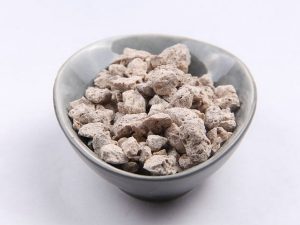
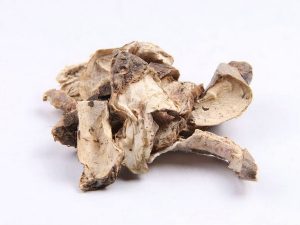
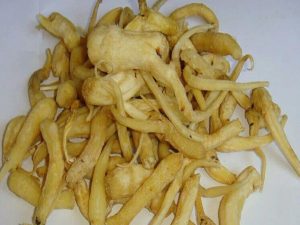
The roots are slightly cylindrical, branched, and vary in length, with a diameter of 0.2–2.5 cm. The surface is grayish-brown or brown, with longitudinal wrinkles; distinct transverse lenticels and traces of fibrous roots are visible. Where the cork layer has partially peeled off, the yellow cortex is exposed. The texture is hard and difficult to break; the fracture surface is fibrous.The prepared slices are typically 1–1.5 cm thick, with a thin bark; the wood is yellowish-white, featuring numerous concentric rings and visible radial striations; the bark and wood separate easily. It has a faintly fragrant odor and a sweet taste.
Properties of Processed Slices
It consists of thick, round slices with a narrow bark layer that tears easily and has a fibrous texture; the wood layer is broad and pale yellow. The periphery is grayish-yellow or brownish-yellow. It is hard in texture. It has a faint odor and a bland taste.
Botanical Information
Botanical Classification
Ficus retusa, a species of the genus Ficus in the Moraceae family.
Morphological Characteristics
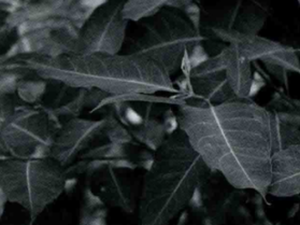
A shrub or deciduous small tree, 1–2 m tall, with the entire plant covered in yellowish-brown, appressed, short, stiff hairs and exuding latex.Leaves are alternate; leaf blades are papery, polymorphic, oblong-lanceolate or narrowly-broad ovate, 8–25 cm long, 4–10(–18) cm wide, with an acute or acuminate apex, a rounded or cordate base, often bearing 3–5 deep lobes, with slightly wavy serrations or entire margins, rough on both surfaces, and 3–7 basal veins;with petioles 2–7 cm long; stipules ovate-lanceolate, 0.8–2 cm long. Cyathium, situated in the axils of leaves or the axils of fallen leaves, globose, 5–10 mm in diameter, with an umbilicate protrusion formed by bracts at the apex, particularly prominent when young; basal bracts ovate-lanceolate. Covered with appressed soft hairs;The peduncle is short, 5 mm long, or absent; male flowers and gall flowers are borne within the same receptacle; male flowers are located near the apex, with 4 linear-lanceolate perianth segments and 1–2 stamens; the perianth segments of gall flowers are similar to those of male flowers, with the style lateral; female flowers are borne within another receptacle, with 4 perianth segments, and the achene is elliptical.Flowering period: May–July; fruiting period: August–October.
Distribution Area
Distributed in Fujian, Guangdong, Hainan, Guangxi, Guizhou, Yunnan, and other areas.