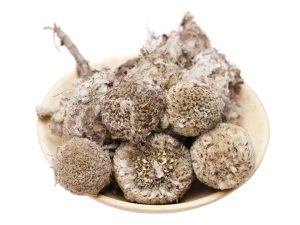
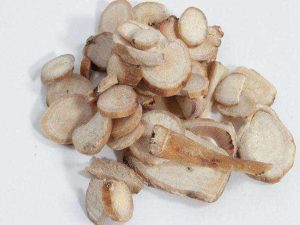
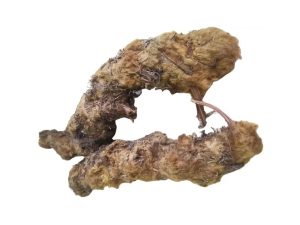
Bawangbian is the name of a traditional Chinese medicine. It belongs to the Euphorbiaceae family, genus Euphorbia. It is distributed in Guangxi, Sichuan, Yunnan, and other regions. The white milky sap from the stems, leaves, or stem pith is used medicinally; it has a bitter and astringent taste and is effective in dispelling wind, detoxifying, killing parasites, and relieving itching. It is commonly used to treat toxic sores, tinea, and edema.

Bawangbian
Bawangbian is the name of a traditional Chinese medicine. It belongs to the Euphorbiaceae family, genus Euphorbia. It is distributed in Guangxi, Sichuan, Yunnan, and other regions. The white milky sap from the stems, leaves, or stem pith is used medicinally; it has a bitter and astringent taste and is effective in dispelling wind, detoxifying, killing parasites, and relieving itching. It is commonly used to treat toxic sores, tinea, and edema.
Chinese Name : 霸王鞭
Aliases : Vajra Pestle, Cold Water Golden Elixir, Vajra Scepter, Prickly Vajra
Nature, Flavor & Meridian Tropism : Taste: astringent; Nature: cold
Benefits & Efficacy
Benefits
It has the effects of dispelling wind, detoxifying, killing parasites, and relieving itching.
Indications
It is primarily used to treat toxic sores, tinea, and edema.
Usage and Dosage
External use: Apply an appropriate amount of the sap to the affected area.
Precautions
1. This product is toxic; unauthorized use is strictly prohibited. Its clinical application must strictly follow a physician’s prescription and be conducted under the guidance of a professional. Use strictly according to the dosage and treatment duration prescribed by the doctor; avoid making changes on your own. 2. The white latex in the stems and leaves is toxic; its toxic components consist primarily of triterpenoid compounds, which irritate the gastrointestinal tract. If absorbed into the bloodstream, these toxins can also affect the nervous system. Therefore, the crude drug should only be used externally and must not be taken internally.
Chemical Constituents
The stems and sap contain triterpenoid components such as taraxasterol, mucromycenol, euphorbol, and cycloeucalenol. The flowers contain coniferic acid. The entire plant contains euphorbol, 2,3-dimethoxyconiferic acid, succinic acid, and euphorbol di-terpenol.
Relevant Discussions
1. *Herbal Medicine of Southern Yunnan*: “Bitter in taste, slightly toxic; primarily treats all cases of isolated abdominal distension, edema, and hematomas. Burn to ash, grind into powder, and take with cold water.”
2. *Yuefang Herbal*: “Jingangzuan is a purely yang herb.”
3. *Supplement to the Compendium of Materia Medica*: “Highly toxic.”
Applications
Clinical Applications
For severe sores and severe toxicity, as well as tinea: Apply an appropriate amount of the sap from the “Bawangbian” plant topically to the affected area (*Commonly Used Folk Herbs of Kunming*).
Notes
Patients requiring treatment with Chinese herbal medicine should first consult a licensed Traditional Chinese Medicine (TCM) hospital to receive a prescription following a professional TCM differential diagnosis.
Processing & Preparation
Harvesting & Processing
Can be harvested year-round; use immediately after harvesting.
Crude Drug Identification
Botanical Information
Botanical Classification
Euphorbiaceae plant: Ba Wang Bian.
Morphological Characteristics
A fleshy shrub containing abundant latex. The stem grows 5–7 meters tall with a diameter of 4–7 centimeters; the upper part has several branches, and young branches are green. The stem and branches have 5–7 ridges, each with a slightly raised ridge crest bearing wavy teeth.Leaves are alternate, densely clustered at the tips of branches; oblanceolate to spatulate, 5–15 cm long, 1–4 cm wide, with a blunt or nearly truncate apex, a gradually narrowing base, and entire margins; lateral veins are inconspicuous, and the leaves are fleshy; stipules are spiny, 3–5 mm long, arranged in pairs on either side of the leaf scar, and persistent.Inflorescences are dichotomous corymbs arising from the depressions between nodes and often located at the tips of branches; the base of the inflorescence is pedunculate, approximately 5 mm long; the involucre is cup-shaped, approximately 2.5 mm in both height and diameter, yellow; there are 5 glands, transversely circular, dark yellow.The capsule is trigonal, 1.5 cm in diameter and 1.0–1.2 cm long, smooth and glabrous, grayish brown. The seeds are cylindrical, 3–3.5 mm long and 2.5–3 mm in diameter, brown, with grooves on the ventral surface; they lack a seed scar. Flowering and fruiting occur from May to July.
Distribution Area
Native to Guangxi (western part), Sichuan, and Yunnan; it often forms extensive stands in the Jinsha River and Red River valleys of Yunnan and Sichuan. It is also distributed in northern India, Pakistan, and countries in the Himalayan region.
Growth Habits
It prefers warm conditions and ample sunlight; it is drought-tolerant but not cold-hardy. It is not particular about soil type but cannot tolerate waterlogging; when grown in pots, the soil should be kept on the drier side, and waterlogging must be strictly avoided. It grows well in loose, fertile sandy loam. When fertilizing potted plants, use dilute fertilizer; avoid applying concentrated fertilizer.
Propagation Methods
Propagation is typically done by cuttings.
Cultivation Techniques
Take tender stems as cuttings, let the cut ends air-dry in the shade until a dry film forms over the cut surface, then insert them into a sand bed.Do not water; simply keep the air humid, maintain the growing medium moist, and ensure the cuttings do not wilt. Roots will form and the cuttings will take root in about one month. Alternatively, after cutting the stems, insert them into dry wood ash to allow the ash to absorb the sap from the cut surface, then plant them in a sand bed and place them in partial shade to encourage rooting. The main purpose of this method is to prevent excessive moisture at the cut surface, which can cause rot.