Dog’s Spine, a name in traditional Chinese medicine. It is the dried rhizome of Cibotium barometz (L.) J. Sm., a plant belonging to the genus Cibotium in the family Polypodiaceae. It has the effects of dispelling wind-dampness, tonifying the liver and kidneys, and strengthening the lower back and knees. It is primarily used to treat rheumatic arthralgia, soreness and weakness in the lower back and knees, and weakness in the lower limbs.

Dog’s Spine
Dog’s Spine, a name in traditional Chinese medicine. It is the dried rhizome of Cibotium barometz (L.) J. Sm., a plant belonging to the genus Cibotium in the family Polypodiaceae. It has the effects of dispelling wind-dampness, tonifying the liver and kidneys, and strengthening the lower back and knees. It is primarily used to treat rheumatic arthralgia, soreness and weakness in the lower back and knees, and weakness in the lower limbs.
Chinese Name : 狗脊
Latin Name : Cibotii Rhizoma
Aliases : Bai Zhi, Gou Qing, Qiang Lu, Fu Gai, Fu Jin, Gou Ji, Golden-Haired Dogspine, Golden Dogspine, Yellow Dog’s Head, Golden-Haired Lion, Hairy Dog, Golden Silk Hair, Golden Tendon-Support, Golden Kitten, Old Monkey’s Hair
Authentic Producing Area : Sichuan, Zhejiang, Fujian, Jiangxi
Nature, Flavor & Meridian Tropism : Taste: bitter, sweet; Nature: warm; Enters the Liver and Kidney meridians
Benefits & Efficacy
Benefits
Dispels wind-dampness, tonifies the Liver and Kidney, and strengthens the lower back and knees.
Indications
Rheumatic pain, soreness and weakness in the lower back and knees, weakness in the lower limbs.
Usage and Dosage
1. Internal use: Decoct 10–15 g in water; or steep in wine. 2. External use: Apply an appropriate amount of the fresh herb, pounded into a paste.
Precautions
1. Use with caution in cases of kidney deficiency with heat, difficulty urinating, or scanty,涩, yellowish-red urine, as well as a bitter taste in the mouth and dry tongue. 2. Dogspine should not be used in combination with Rhamnus officinalis or Cyperus species.
Chemical Constituents
This herb primarily contains essential oils (such as hexadecanoic acid and arachidonic acid), pterostilbene-like compounds (including pterostilbene, pterostilbene-2'-O-glucoside,pterin-2'-O-allose glycoside, and pterin iridoside, among others), organic acids (such as protocatechuic acid), as well as large amounts of starch and pterin.
Pharmacological Actions
This product has anti-inflammatory, analgesic, hemostatic, myocardial blood flow-enhancing, and anti-osteoporotic effects.
Relevant Discussions
1. *Shennong’s Classic of Materia Medica*: “It treats stiffness in the lower back and waist, relieves joint stiffness and spasms, alleviates generalized arthralgia, and treats knee pain caused by cold and dampness; it is particularly beneficial for the elderly.”
2. *Commentary on the Materia Medica*: “It warms and nourishes the liver and kidneys, unblocks and regulates the hundred vessels, strengthens the lower back and knees, fortifies the spine, and improves joint mobility, thereby dispelling chronic arthralgia and restoring function in cases of atrophy and paralysis; it also consolidates and regulates the Chong and Dai meridians, strengthens the Du and Ren meridians, and treats menstrual disorders, leukorrhea, and urinary incontinence in women. Its efficacy is vast; it is truly a staple for the weak and the elderly. Moreover, it warms the middle without causing dryness and circulates without causing diarrhea, offering particular benefits without drawbacks, and exhibits a character of warmth, moderation, and balance.”
Applications
Clinical Applications
1. To treat lower back pain and stiffness of the spine caused by deficiency of the liver and kidneys, complicated by pathogenic factors of wind, cold, and dampness, resulting in an inability to bend forward or backward, it is often combined with Eucommia ulmoides, Dipsacus asper, and Cissus quadrangularis, as in the Gouji Decoction (from *The Great Dictionary of Chinese Medicine*); it is also used in combination with Smilax glabra and Cuscuta chinensis to treat lower back pain, as in the Gouji Pills (from *Shenghui Fang*).
2. To treat liver and kidney deficiency manifested as soreness and weakness in the lower back and knees, and weakness in the lower limbs, it can be combined with Eucommia ulmoides, Achyranthes bidentata, Rehmannia glutinosa, and deer antler gelatin.
3. To treat frequent urination and enuresis caused by kidney deficiency and instability, it can be combined with Yizhiren, Poria, and Eucommia; if there is cold deficiency in the Chong and Ren meridians with excessive, thin, and watery leukorrhea, it should be used with Deer Antler, Bai Lian, and Artemisia leaves, as in the Bai Lian Pills (from *Formulas for Universal Relief*).
Related Compatibility
1. Dogspine combined with Smilax: Dogspine dispels wind and relieves pain, while tonifying the kidneys and strengthening the lower back; Smilax dispels wind and alleviates numbness and stiffness, and promotes the drainage of dampness and fluid retention. When combined, these two herbs not only dispel wind-dampness and relieve pain but also tonify the kidneys and strengthen the lower back. This combination is suitable for the elderly or those with weak constitutions who experience lower back and shoulder soreness, weakness in the lower back and knees, and generalized heaviness and pain caused by wind-dampness.
2. Dogspine combined with Dipsacus: Both herbs dispel wind-dampness, tonify the liver and kidneys, and strengthen tendons and bones. Dogspine excels at dispelling wind, relieving arthralgia, and alleviating pain, while Dipsacus excels at tonifying the kidneys, strengthening tendons and bones, and promoting blood circulation. When used in combination, their efficacy is significantly enhanced. This combination is suitable for lower back and spinal pain, as well as weakness and soreness in the feet and knees, caused by deficiency of the liver and kidneys complicated by wind-dampness.
3. Dogspine combined with Psoralea: Dogspine dispels wind and dampness while strengthening tendons and bones; Psoralea warms and tonifies kidney yang. When used together, this combination is suitable for cold-induced pain in the lower back and knees due to deficiency, as well as weakness and lack of strength in the feet and knees.
4. Dogspine combined with Eucommia: Dogspine strengthens bones, dispels wind, and relieves pain; Eucommia tonifies the kidneys and nourishes the liver, strengthens the lower back and legs while eliminating cold and dampness, and also helps stabilize blood pressure.When used together, this combination is suitable for treating cold-damp arthralgia, lower back pain, and impaired mobility in the lower limbs in the elderly caused by a relative deficiency of the liver and kidneys.
5. Dogspine combined with Gonglao Leaf: Dogspine tonifies the liver and kidneys, strengthens the lower back and knees, dispels wind and dampness, and fortifies tendons and bones; Gonglao Leaf tonifies the liver and kidneys, nourishes true yin, fortifies tendons and bones, and relieves aches and pains.When combined, these two herbs tonify the liver and kidneys, strengthen tendons and bones, and enhance the ability to relieve aching pain. This combination is suitable for treating dizziness, tinnitus, aching in the lower back and knees, and weakness in the feet caused by liver and kidney deficiency, as well as rheumatic conditions characterized by aching in the lower back and back, and weakness in the knees and feet.
Medicinal Identification
1. Dogspine and Scorched Dogspine: These are two different processed forms of Dogspine. Raw Dogspine is hard in texture and covered with golden-yellow downy hairs along the edges that are difficult to remove; it is primarily used to dispel wind-dampness and promote joint mobility, and is indicated for wind-cold-dampness bi syndrome, joint pain, and restricted flexion and extension.After being stir-fried with sand, Dogspine becomes crisp and brittle, making it easier to pulverize and extract its active ingredients, as well as to remove any remaining downy hairs. It primarily tonifies the liver and kidneys and strengthens tendons and bones, and is used for symptoms such as soreness and weakness in the lower back and knees, weakness in the lower limbs, nocturnal emissions, enuresis, and leukorrhea in women resulting from deficiency of the liver and kidneys or cold deficiency in the Chong and Ren meridians.
2. Dogspine and Mulberry Parasite: Both belong to the category of herbs that dispel wind-dampness and strengthen tendons and bones; they have a bitter and sweet nature and enter the Liver and Kidney meridians. Both can dispel wind and dampness, strengthen tendons and bones, and tonify the Liver and Kidney. They are primarily used to treat Liver and Kidney deficiency, soreness in the lower back and legs, rheumatic arthralgia, numbness in the hands and feet, and weakness of tendons and bones; they are particularly suitable for cases of Liver and Kidney deficiency complicated by rheumatic arthralgia.However, Sangjisheng has a neutral nature and is slightly more effective at dispelling wind and dampness; it also nourishes the blood and stabilizes the fetus, strengthening the Chong and Ren meridians to prevent miscarriage. It is used for conditions such as spontaneous vaginal bleeding during pregnancy and fetal restlessness. Dogspine, on the other hand, has a warm nature and is more effective at tonifying the liver and kidneys; it provides warming and astringent support. It is used for conditions such as enuresis, frequent urination, and excessive leukorrhea caused by liver and kidney yang deficiency or unstable kidney qi.
3. Dogspine and Acanthopanax Bark: Both belong to the category of herbs that dispel wind-dampness and strengthen the tendons and bones. They not only tonify the liver and kidneys and fortify the tendons and bones but also eliminate wind-dampness. Therefore, they are commonly used for lower back and leg pain, as well as weakness in the feet and knees, caused by liver and kidney deficiency or pathogenic factors of wind, cold, and dampness.However, although Dogspine is warm in nature, it is warming without being drying; therefore, it can also be used for liver and kidney deficiency characterized by yin failing to contain yang. Moreover, its primary indication is stiff and painful sensations in the lower back and spine. Dogspine is effective at warming, tonifying, and consolidating, and can also be used for conditions such as enuresis, frequent urination, and excessive vaginal discharge caused by unstable kidney qi.Wu Jia Pi tonifies the liver and kidneys to support yang qi; therefore, it is commonly used for conditions caused by yang deficiency, such as impotence, scrotal dampness, vaginal itching in women, cold pain in the lower back and knees, and delayed walking in children. It can also promote diuresis and reduce swelling, making it suitable for conditions such as edema and beriberi.
Related Medicines
Lumbar Strengthening and Kidney-Nourishing Pills, Meridian-Activating and Body-Strengthening Liquid, Golden-Haired Dogspine Pills, Kidney-Tonifying and Body-Strengthening Capsules (Tablets), and Bone and Joint Strengthening Pills.
Related Prescriptions
Dogspine Wine (*Pu Ji Fang*), Dogspine Pills (*Sheng Hui Fang*), Dogspine Powder (*Sheng Hui Fang*).
Medicinal Diet Therapy
Goji Berry, Dogspine, and Pork Tail Soup
1. Effects: Tonifies the kidneys and strengthens the lower back. Treats soreness and weakness in the lower back and knees, frequent urination, occasional dizziness or blurred vision, nocturnal emission, and enuresis.
2. Ingredients: 1 pork tail, 6 g goji berries, 30 g dogspine.
3. Preparation: Rinse the goji berries and dog’s spine. Scrape the hair off the pig’s tail, wash it thoroughly, and cut it into small pieces. Place the cut pig’s tail and the other ingredients in a pot, add an appropriate amount of water, bring to a boil over high heat, then reduce to low heat and simmer for 1.5 hours. Season to taste before serving.
4. Usage: Serve as a side dish with meals.
Notes
Patients requiring treatment with Chinese herbal medicine should first consult a licensed Traditional Chinese Medicine (TCM) hospital, where a TCM practitioner will conduct a professional pattern differentiation and prescribe an herbal formula.
Processing & Preparation
Harvesting & Processing
Harvest in the fall and winter seasons; remove dirt and sand, then dry; or remove the hard roots, petioles, and golden-yellow downy hairs, cut into thick slices, and dry to produce “Raw Dogspine Slices”; steam and then sun-dry until 60–70% dry, cut into thick slices, and dry to produce “Cooked Dogspine Slices.”
Processing Methods
1. Dogspine: Take the raw herb and remove impurities. For unsliced material, remove the downy hairs, soak briefly, wash thoroughly, moisten thoroughly, cut into thick slices, and dry.
2. Blanched Dogspine: Place clean sand in a pot and stir-fry over high heat until hot. Add the cleaned Dogspine slices and stir-fry until they puff up and the downy hairs turn dark brown. Remove from the pot, sift out the sand, allow to cool, and remove any remaining downy hairs.
3. Steamed Dogspine: Place the cleaned Dogspine slices in a steamer basket and steam over high heat for 4–6 hours. Turn off the heat and let stand for 6–8 hours. Remove and dry.
4. Wine-Steamed Dogspine: Take the cleaned Dogspine slices, mix thoroughly with rice wine, and let them absorb the liquid completely. Place them in a steamer basket and steam over high heat for 4–6 hours. Turn off the heat and let stand for 6–8 hours. Remove and dry.For every 100 kg of Dogspine slices, use 15 kg of rice wine.
5. Salted Dogspine: Take cleaned Dogspine slices, add an appropriate amount of salt water and mix well. Let them soak for about 3 hours until the salt water is fully absorbed, then steam for 3 hours. Remove and sun-dry. For every 100 kg of Dogspine slices, use 2 kg of table salt.
6. Roasted Dogspine: Take the Dogspine slices and roast them until slightly charred, then remove and let cool.
Storage Methods
Store in a dry container; salted and rice wine-treated Dogspine should be kept in airtight containers and stored in a cool, dry place.
Crude Drug Identification
Identification
1. Cross-section of this product: A single layer of epidermal cells with remnants of golden-yellow non-glandular trichomes. Inside, there are more than 10 layers of brownish-yellow thick-walled cells with distinct pore spaces. The xylem is arranged in a ring and consists of tracheids; both the inner and outer sides are surrounded by phloem and endodermis. The cortex and pith are composed of parenchyma cells filled with starch granules; some contain yellowish-brown substances.
2. Take 2 g of the powdered sample, add 50 mL of methanol, subject to ultrasonic treatment for 30 minutes, filter, and evaporate the filtrate to dryness. Dissolve the residue in 1 mL of methanol to prepare the test solution.Separately, take 2 g of the reference material (Canis spina) and prepare a reference solution using the same method. Perform thin-layer chromatography (General Chapter 0502): pipette 3–6 μL of the test solution and 4 μL of the reference solution onto the same silica gel G plate, spreading them into bands. Develop the plates using a mobile phase of toluene–chloroform-ethyl acetate-formic acid (3:5:6:1) as the developing agent, develop the plate, remove it, air-dry, and spray with a 2% ferric chloride solution–1% potassium ferricyanide solution (1:1) (prepared immediately before use); allow to stand until the spots are clearly visible.In the chromatogram of the test sample, spots of the same color appear at positions corresponding to those in the chromatogram of the reference herbal material.
Properties of Crude Drugs
The rhizome is irregularly elongated, 10–30 cm long and 2–10 cm in diameter. The surface is dark brown and densely covered with glossy, golden-yellow downy hairs; the upper part bears several reddish-brown petiole remnants, while the lower part is clustered with numerous brownish-black fine roots. It is hard in texture and difficult to break. It is odorless and has a slightly astringent taste.
Properties of Processed Slices
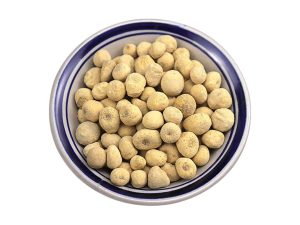
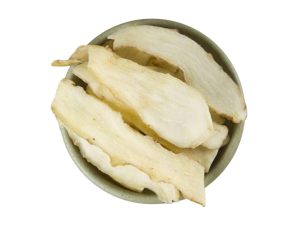
1. Raw Dogspine Slices: Irregularly elongated or circular longitudinal slices, 5–20 cm long, 2–8 cm wide, and 1.5–5 mm thick; with irregular edges; the outer surface is dark brown, occasionally with residual golden-yellow downy hairs; the cross-section is light brown, with a raised brownish-yellow ring or stripe of woody tissue 2–5 mm from the outer bark.The texture is hard and brittle; it breaks easily and is powdery.
2. Cooked Dogspine Slices: Dark brown in color, hard in texture, with distinct woody ring patterns.
3. Blanched Dogspine: The surface is brownish-black, slightly bulging, with a slightly crumbly texture and no downy hairs.
4. Steamed Dogspine: Dark brown.
5. Wine-Infused Dogspine: Dark brown, with a faint aroma of wine.
6. Salted Dogspine Slices: Dark brown, with a slightly salty taste.
7. Roasted Dogspine: Dark brown, slightly charred.
Botanical Information
Botanical Classification
Golden Dogspine (Dogspine Fern), a species of the genus *Dogspine Fern* in the family *Polypodiaceae*.
Morphological Characteristics
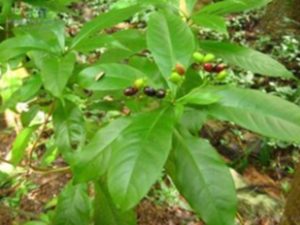
A large native fern, with plants reaching 2–3 m in height. The rhizome is prostrate, stout, 4–8 cm in diameter, densely covered with golden-yellow, nodular, long hairs that are glossy and resemble the head of a golden-haired dog. Leaves are clustered; petioles are 1–1.2 m long, 2–3 cm thick at the base, with shallow longitudinal grooves on the adaxial surface and a purplish-brown color toward the base;the leaf blades are leathery or thick papery, broadly ovate, 1–1.4 m long and 80–110 cm wide, deeply three-pinnately lobed, with 10–15 pairs of pinnae that are alternate, petiolate, narrowly oblong, 50–60 cm long, and 20–25 cm wide;Second-order pinnae: 18–24 pairs, alternate, short-petiolate, linear-lanceolate, 13–15 cm long, 2–3 cm wide; terminal segments: 23–25 pairs, alternate, narrowly oblong or slightly sickle-shaped, 1–1.8 cm long, 3–5 mm wide, with blunt teeth along the margins; when young, sparsely covered with long yellow hairs, which gradually fall off;The venation is pinnate, with lateral veins branching. Sporangia are located along the lower margin of the lobes, arising at the tips of minor veins; the indusia are two-lobed, clamshell-shaped, and oblong.
Distribution Area
Distributed in southern and southwestern China, as well as Zhejiang, Jiangxi, Fujian, Taiwan, and Hunan.