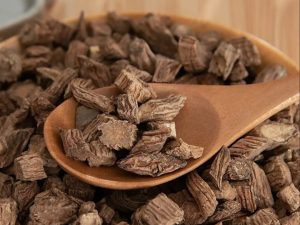
Huaxuedan, a name in traditional Chinese medicine. It is the whole plant of Melasmaarvense (Benth.) Hand. Mazz., a member of the Scrophulariaceae family. It is distributed in Taiwan, Guangdong, Guangxi, and Yunnan. It has the effects of clearing heat, draining dampness, promoting blood circulation, and dispersing blood stasis. It is used for jaundice-type hepatitis, hepatosplenomegaly, trauma, and dysmenorrhea.

Hua Xue Dan
Huaxuedan, a name in traditional Chinese medicine. It is the whole plant of Melasmaarvense (Benth.) Hand. Mazz., a member of the Scrophulariaceae family. It is distributed in Taiwan, Guangdong, Guangxi, and Yunnan. It has the effects of clearing heat, draining dampness, promoting blood circulation, and dispersing blood stasis. It is used for jaundice-type hepatitis, hepatosplenomegaly, trauma, and dysmenorrhea.
Chinese Name : 化血胆
Latin Name : Melasmaarvense (Benth.) Hand. Mazz.
Aliases : Red-Root Grass
Authentic Producing Area : Taiwan, Guangdong, Guangxi, Yunnan
Nature, Flavor & Meridian Tropism : Slightly bitter in taste, cool in nature; enters the Liver meridian
Benefits & Efficacy
Benefits
Clears heat and drains dampness; promotes blood circulation and dispels blood stasis.
Indications
Used for jaundice-type hepatitis, hepatosplenomegaly, trauma, and dysmenorrhea.
Usage and Dosage
Internal use: Decoct 10–15 g. External use: Pound an appropriate amount of the fresh herb and apply as a poultice.
Precautions
Not yet established.
Pharmacological Actions
Laxative and antitumor effects.
Relevant Discussions
*Compendium of Chinese Herbal Medicines*: “Dispels dampness, calms the liver, and promotes blood circulation to disperse stasis. Mainly used for jaundice-type hepatitis, hepatosplenomegaly, bruises and contusions with swelling due to blood stasis, and dysmenorrhea.”
Applications
Related Compatibility
For treating contusions and bruises: Hua Xue Dan, Ze Lan, and Oxalis (each in appropriate amounts); pound into a paste, add an appropriate amount of alcohol, and apply to the affected area. (*Selected Medicinal Herbs of Simao, Yunnan*)
Processing & Preparation
Harvesting & Processing
Harvest in fall or winter; use fresh or sun-dry.
Crude Drug Identification
Botanical Information
Botanical Classification
Black capsule of a plant in the Scrophulariaceae family.
Morphological Characteristics
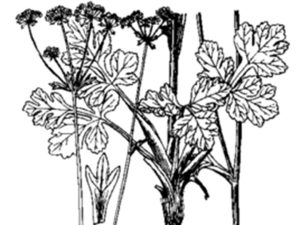
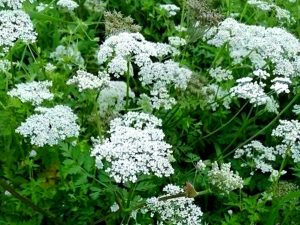
An annual herb, 10–50 cm tall. Turns black when dried. The stem is erect, simple or with a few branches, pubescent, and lignified at the base.Leaves are opposite; sessile or nearly sessile; leaf blades are papery; broadly ovate to ovate-lanceolate, 2–3 cm long, with a bluntly rounded to acuminate apex, a cuneate base, and 2–6 pairs of triangular, sparse serrations along the mid-margin; both surfaces are densely covered with short hairs, and older leaves are sometimes covered with spiny hairs. Inflorescence is a raceme, with flowers densely clustered at the apex;Bracteoles are linear-oblong, narrow, and hairy; the calyx is 5 mm long, membranous, and bearded; the calyx teeth are triangular, gradually tapering to a point, and equal in length to the calyx tube; the corolla is yellow, 6–8 mm long, with a broadly campanulate tube enclosed within the calyx; the anterior corolla lobe is slightly larger than the others, which are nearly equal in size, subcircular, and spreading;There are 4 stamens, diadelphous, attached below the middle of the corolla tube; the posterior pair of filaments is covered with multicellular, long glandular hairs; the style is long, with a ligulate stigma covered with short, velvety glandular hairs. The capsule is globose, smooth and glabrous, enclosed within the persistent calyx, with the back of the locule 2-lobed.Seeds are cylindrical, less than 1 mm long, and enclosed in a cup-shaped reticulate membrane. Flowering and fruiting occur from August to November.
Distribution Area
Distributed in Taiwan, Guangdong, Guangxi, and Yunnan.