Pseudospermopsis, a name in traditional Chinese medicine. It refers to the root of Physospermopsis delavayi (Franch.) Wolff [Arracacia delavayi Franch.; Pleurospermum delavayi Franch. Hiroe], a plant in the Apiaceae family.Physospermopsis delavayi is distributed in Yunnan and other regions. It has the therapeutic effects of dispelling wind and dampness, relieving pain, and detoxifying. It is commonly used to treat colds, coughs, rheumatic bone pain, muscle pain, migraines, and abscesses.
Pseudospermopsis
Pseudospermopsis, a name in traditional Chinese medicine. It refers to the root of Physospermopsis delavayi (Franch.) Wolff [Arracacia delavayi Franch.; Pleurospermum delavayi Franch. Hiroe], a plant in the Apiaceae family.Physospermopsis delavayi is distributed in Yunnan and other regions. It has the therapeutic effects of dispelling wind and dampness, relieving pain, and detoxifying. It is commonly used to treat colds, coughs, rheumatic bone pain, muscle pain, migraines, and abscesses.
Chinese Name : 拟囊果芹
Nature, Flavor & Meridian Tropism : Pungent and bitter in taste; neutral in nature
Benefits & Efficacy
Benefits
Dispels wind and removes dampness; relieves pain and detoxifies.
Indications
Used for colds, coughs, rheumatic bone pain, muscle pain, migraines, and abscesses.
Usage and Dosage
Internal use: Decoct 3–9 g. External use: Apply an appropriate amount, pounded into a paste; or use the decoction for washing.
Applications
Processing & Preparation
Harvesting & Processing
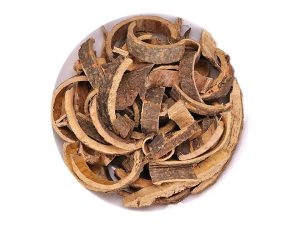
Harvest the roots by digging them up in spring or summer; remove the stems and leaves, wash thoroughly, and use fresh or sun-dry.
Crude Drug Identification
Botanical Information
Botanical Classification
A plant of the Apiaceae family, Yunnan Chuanxiong.
Morphological Characteristics
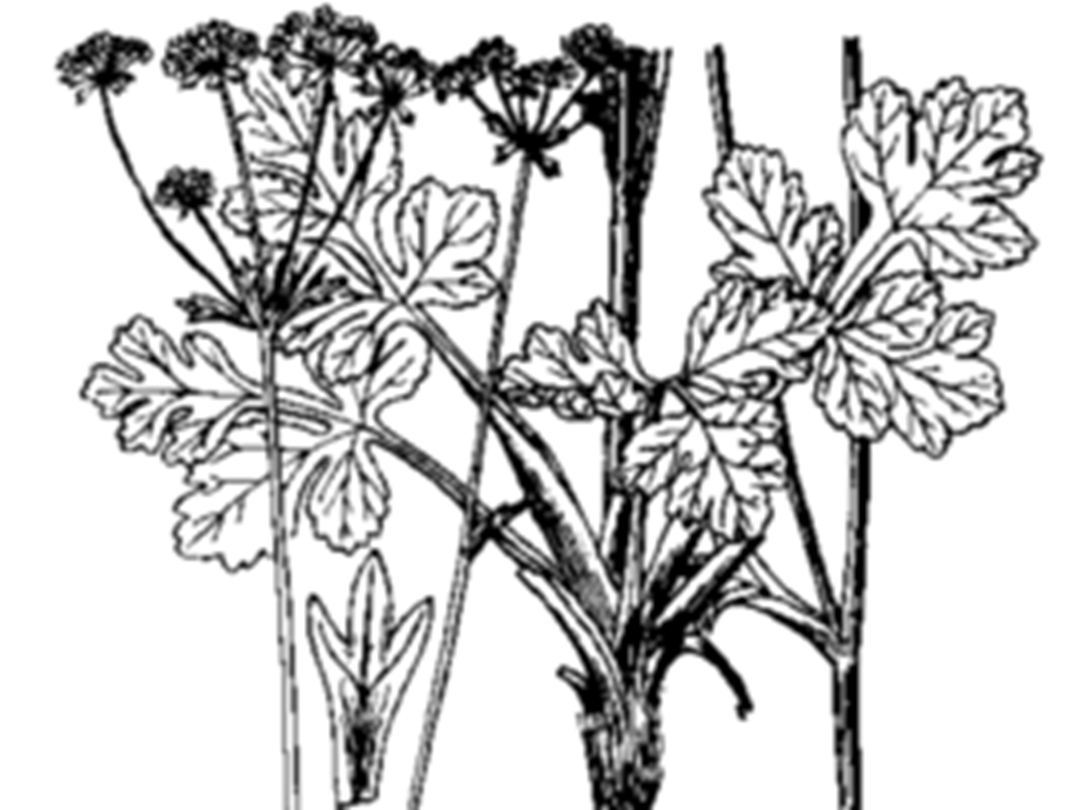
A perennial herb, 55–75 cm tall. The root is stout and spindle-shaped, with a surface ranging from pale brownish-gray to purplish-brown. The stem is glabrous with longitudinal striations; fibrous leaf sheaths often remain at the base. Basal leaves have petioles 4–7.5 cm long with narrow wings;leaf blades 3.5–6 cm long and 2.5–5.5 cm wide, once pinnately lobed to deeply 3-lobed; pinnae 1–3 pairs, 2–3 cm long and 1–2.5 cm wide, with irregularly 3-lobed apices, cuneate bases, and notched-serrate margins; the terminal or middle lobes are larger, with apices often 3-lobed to deeply lobed.Compound umbels are terminal or lateral; bracts 4–5, leaf-like, 7–13 mm long, apex often 2–3-lobed, lobes slightly purplish; rays 5–8, those on lateral branches slightly shorter;minor bracts 3–4, ovate-lanceolate or oblanceolate, 4–6 mm long, entire or 3-lobed at the apex, with 1 vein; small umbels bearing 7–14 flowers; calyx teeth nearly semicircular; petals white, with a short claw at the base, bearing 1 vein; style base cylindrical, style short and straight when young, spreading outward during fruiting.Fruit broadly ovate, 2–3 mm long, 2.5–4 mm wide; with 5 principal ridges; 2 oil tubes in the dorsal groove and 3 in the lateral grooves. Flowering and fruiting period: May–September.
Distribution Area
Distributed in Yunnan and other areas.