Mi Gu, a name in traditional Chinese medicine. It refers to the bones of the sika deer (Elaphurus davidianus Milne-Edwards) of the Cervidae family. After the animal is hunted, the skin is removed, the meat is scraped off, and the bones are collected; they are used fresh or dried.Its diet consists primarily of grasses and aquatic plants. This species is endemic to China; it was already being bred in Nanyuan, Beijing, during the Qing Dynasty but no longer exists in the wild. It was later transported to the United Kingdom, resulting in its extinction in China. In the late 1980s, the British government returned the species to China, and it is now bred in Beijing and Jiangsu. It is a Class I nationally protected animal. It feeds on grasses and aquatic plants.It sheds its antlers twice a year; summer antlers grow from June to July and are shed from November to December, after which a pair of winter antlers grow and are shed after March of the following year. It has a sweet and salty taste and a warm nature. It enters the Lung and Kidney meridians. It has the efficacy of tonifying deficiency. It is primarily used to treat conditions such as consumptive diseases, internal injuries, emaciation, and sallow complexion.

Mile Bone
Mi Gu, a name in traditional Chinese medicine. It refers to the bones of the sika deer (Elaphurus davidianus Milne-Edwards) of the Cervidae family. After the animal is hunted, the skin is removed, the meat is scraped off, and the bones are collected; they are used fresh or dried.Its diet consists primarily of grasses and aquatic plants. This species is endemic to China; it was already being bred in Nanyuan, Beijing, during the Qing Dynasty but no longer exists in the wild. It was later transported to the United Kingdom, resulting in its extinction in China. In the late 1980s, the British government returned the species to China, and it is now bred in Beijing and Jiangsu. It is a Class I nationally protected animal. It feeds on grasses and aquatic plants.It sheds its antlers twice a year; summer antlers grow from June to July and are shed from November to December, after which a pair of winter antlers grow and are shed after March of the following year. It has a sweet and salty taste and a warm nature. It enters the Lung and Kidney meridians. It has the efficacy of tonifying deficiency. It is primarily used to treat conditions such as consumptive diseases, internal injuries, emaciation, and sallow complexion.
Chinese Name : 麋骨
Nature, Flavor & Meridian Tropism : Sweet, salty, and warm. Lung and Kidney meridians
Benefits & Efficacy
Benefits
Tones deficiency.
Indications
Conditions such as consumptive disease, internal injury, emaciation, and sallow complexion.
Usage and Dosage
Internal use: Boil to extract the juice and use it to brew wine; take in appropriate amounts.
Applications
Related Compatibility
Musk Deer Bone Wine: Treats yin deficiency and kidney weakness; long-term use promotes a plump and fair complexion. Boil the musk deer bones to extract the juice, then brew wine with it using yeast and rice as usual.
Processing & Preparation
Harvesting & Processing
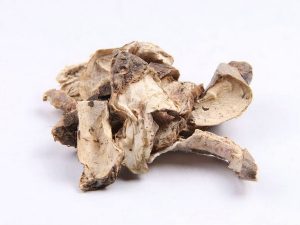
After hunting and killing the animal, remove the skin and flesh, extract the bones, and use them fresh or air-dried.
Crude Drug Identification
Botanical Information
Botanical Classification
The sika deer (Cervus nippon) belongs to the Cervidae family.
Morphological Characteristics
The sika deer is a hybrid between the sika deer and the reindeer; its size is similar to that of the European red deer, with a body length of about 2 m and a height of just over 1 m. Males weigh about 200 kg, while females weigh about 100 kg.The tail is about 70 cm long. Its head resembles a horse but is not a horse; its antlers resemble those of a deer but are not deer antlers; its body resembles a donkey but is not a donkey; and its hooves resemble those of a cow but are not cow hooves. Hence, it is called the “Four-Not-Like” animal. Males have antlers, while females do not. The main antler shaft forks into two branches—a front branch and a rear branch. The front branch further divides into two prongs, while the rear branch is long and straight, without further branching.Its limbs are thick and robust, with broad, splayed main hooves and prominent side hooves. Its coat is light brown, slightly darker on the back and lighter on the belly, with a white diagonal stripe above the nostrils. In winter, the coat becomes long and shaggy, appearing reddish-brown; young animals have white spots that begin to fade three months after birth.
Distribution Area
This species is endemic to China. It was already being raised in Nanyuan, Beijing, during the Qing Dynasty but did not occur in the wild. It was later transported to the United Kingdom, after which it became extinct in China. In the late 1980s, the British government returned the animals to China, and they are now kept in Beijing and Jiangsu. They are classified as a Class I Nationally Protected Animal.