Qingye Dan is the name of a traditional Chinese medicine. It is the whole plant of Swertia vacillana (Hance) Maxim., a member of the Gentianaceae family. It is distributed in Yunnan, Guangdong, and other regions. It has the effects of clearing heat and detoxifying, as well as soothing the liver and strengthening the stomach. It is commonly used to treat wind-heat exogenous syndromes, pharyngitis, tonsillitis, frequent, urgent, and painful urination, and damp-heat jaundice.

Qingye Dan
Qingye Dan is the name of a traditional Chinese medicine. It is the whole plant of Swertia vacillana (Hance) Maxim., a member of the Gentianaceae family. It is distributed in Yunnan, Guangdong, and other regions. It has the effects of clearing heat and detoxifying, as well as soothing the liver and strengthening the stomach. It is commonly used to treat wind-heat exogenous syndromes, pharyngitis, tonsillitis, frequent, urgent, and painful urination, and damp-heat jaundice.
Chinese Name : 青叶丹
Latin Name : Swertiavacillana (Hance) Maxim.
Aliases : Simao Deer’s-tooth Herb
Authentic Producing Area : Yunnan, Guangdong
Nature, Flavor & Meridian Tropism : Bitter in taste, cold in nature; enters the Lung, Liver, Stomach, and Bladder meridians
Benefits & Efficacy
Benefits
Clears heat and detoxifies; soothes the liver and strengthens the stomach.
Indications
External invasion of wind-heat, pharyngitis, tonsillitis, and frequent, urgent, or painful urination; damp-heat jaundice.
Usage and Dosage
Internal use: Decoct 9–15 grams.
Precautions
Not yet established.
Relevant Discussions
*Selected Medicinal Herbs of Simao, Yunnan*: “Clears heat and detoxifies; soothes the liver and strengthens the stomach; reduces inflammation and kills bacteria. Used to treat acute jaundice-type hepatitis, pharyngitis, tonsillitis, cystitis, urethritis, influenza, the common cold, and malaria.”
Applications
Processing & Preparation
Harvesting & Processing
Harvested in summer and fall, then sun-dried.
Crude Drug Identification
Botanical Information
Botanical Classification
A plant of the Gentianaceae family, known as “Yuebei Zhangyacai.”
Morphological Characteristics
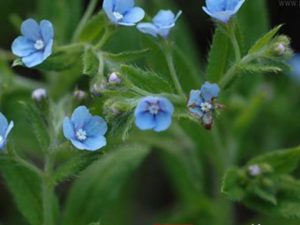
An erect herb, 20–50 cm tall. The stem is solitary, quadrangular, green or purplish-red. Leaves are opposite; lower leaves are oblong-lanceolate, upper leaves are lanceolate, entire, 1.8–5 cm long, 2–6 mm wide, with a short acute apex, three basal veins, and sessile.Cymose inflorescence; pedicels approximately as long as the flowers; calyx lobes lanceolate, slightly short-pointed; corolla nearly white, deeply 4-lobed, lobes erect, oblong-elliptic, with black dots on the inner surface; stamens about half the length of the corolla, fused at the base into a ring. Flowering period: July.
Distribution Area
Distributed in Yunnan, Guangdong, and other areas.