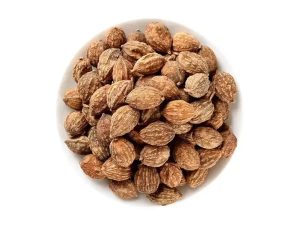
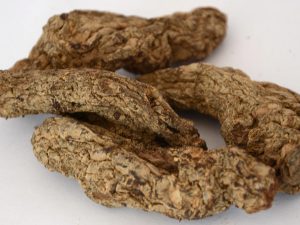
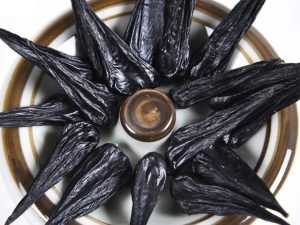
Red Dogwood Fruit, a name in traditional Chinese medicine. It is the fruit of Swida alba Opiz, a plant in the Cornaceae family. It is distributed in Northeast China, North China, and regions including Shaanxi, Gansu, Qinghai, Shandong, Jiangsu, Zhejiang, and Jiangxi. It has the efficacy of nourishing the kidneys and strengthening the body. It is commonly used to treat lower back pain caused by kidney deficiency and general weakness and emaciation.

Red Dogwood Fruit
Red Dogwood Fruit, a name in traditional Chinese medicine. It is the fruit of Swida alba Opiz, a plant in the Cornaceae family. It is distributed in Northeast China, North China, and regions including Shaanxi, Gansu, Qinghai, Shandong, Jiangsu, Zhejiang, and Jiangxi. It has the efficacy of nourishing the kidneys and strengthening the body. It is commonly used to treat lower back pain caused by kidney deficiency and general weakness and emaciation.
Chinese Name : 红瑞木果
Latin Name : Swida alba Opiz
Authentic Producing Area : Northeast China, North China, Shaanxi, Gansu, Qinghai, Shandong, Jiangsu, Zhejiang, Jiangxi
Nature, Flavor & Meridian Tropism : Taste: sour and astringent; nature: neutral
Benefits & Efficacy
Benefits
Nourishes the kidneys and strengthens the body.
Indications
Lower back pain due to kidney deficiency; physical weakness and emaciation.
Usage and Dosage
Internal use: Decoct 3–9 g; or steep in wine.
Precautions
Use with caution in cases of stagnant fire or damp-heat.
Applications
Processing & Preparation
Harvesting & Processing
Harvest when the fruit ripens in the fall; sun-dry.
Crude Drug Identification
Botanical Information
Botanical Classification
Red Dogwood, a plant of the Cornus family.
Morphological Characteristics
Red Dogwood, also known as Red Cornelian Cherry. A deciduous shrub, 3 m tall. Bark purplish-red; old branches blood-red, glabrous, often covered with a white powdery coating; pith very wide, white. Leaves opposite; petioles 1–2 cm long; leaf blades ovate to elliptical, 4–9 cm long, 2.5–5.5 cm wide; 5–6 pairs of lateral veins.Terminal corymbose cymes; flowers small, yellowish-white; calyx cup-shaped, with 4 lobes and triangular teeth; petals 4, ovate-elliptic; stamens 4, attached to the outer edge of the disk, filaments slightly flattened, anthers pale yellow, 2-celled, attached in a T-shape;the disk is cushion-like; the ovary is nearly obovate, sparsely covered with appressed short soft hairs; the stigma is disc-shaped and wider than the style. The drupe is obliquely ovoid, with the style persistent; when mature, it is white or slightly bluish-purple; the style is persistent; the drupe is prismatic, with three vein-like lines on each side. Flowering period: June–July; fruiting period: August–October.
Distribution Area
Distributed in Northeast China, North China, and the provinces of Shaanxi, Gansu, Qinghai, Shandong, Jiangsu, Zhejiang, and Jiangxi.