Rehmannia, a name in traditional Chinese medicine, refers to the fresh or dried tuberous roots of Rehmannia glutinosa Libosch., a plant in the Scrophulariaceae family. It is primarily produced in Henan. It is harvested in the fall; the crown, fibrous roots, and soil are removed for fresh use, or the tuberous roots are slowly dried until about 80% dry. The former is commonly known as “fresh Rehmannia,” and the latter as “raw Rehmannia.”Fresh Rehmannia has the effects of clearing heat, generating body fluids, cooling the blood, and stopping bleeding. It is primarily used to treat heat-related yin deficiency, a crimson tongue with restlessness and thirst, rashes caused by warm toxins, hemoptysis and epistaxis, and swelling and pain in the throat;Raw Rehmannia has the effects of clearing heat, cooling the blood, nourishing yin, and promoting fluid production. It is primarily used to treat heat invading the营血 (ying-blood), rashes caused by warm toxins, hemoptysis and epistaxis, yin depletion due to febrile diseases, a crimson tongue with intense thirst, constipation due to fluid depletion, fever due to yin deficiency, bone-consumptive fever, and internal heat-induced diabetes.

Rehmannia
Rehmannia, a name in traditional Chinese medicine, refers to the fresh or dried tuberous roots of Rehmannia glutinosa Libosch., a plant in the Scrophulariaceae family. It is primarily produced in Henan. It is harvested in the fall; the crown, fibrous roots, and soil are removed for fresh use, or the tuberous roots are slowly dried until about 80% dry. The former is commonly known as “fresh Rehmannia,” and the latter as “raw Rehmannia.”Fresh Rehmannia has the effects of clearing heat, generating body fluids, cooling the blood, and stopping bleeding. It is primarily used to treat heat-related yin deficiency, a crimson tongue with restlessness and thirst, rashes caused by warm toxins, hemoptysis and epistaxis, and swelling and pain in the throat;Raw Rehmannia has the effects of clearing heat, cooling the blood, nourishing yin, and promoting fluid production. It is primarily used to treat heat invading the营血 (ying-blood), rashes caused by warm toxins, hemoptysis and epistaxis, yin depletion due to febrile diseases, a crimson tongue with intense thirst, constipation due to fluid depletion, fever due to yin deficiency, bone-consumptive fever, and internal heat-induced diabetes.
Chinese Name : 地黄
Latin Name : Rehmanniae Radix
Authentic Producing Area : Henan
Nature, Flavor & Meridian Tropism : Fresh Rehmannia has a sweet and bitter taste, a cold nature, and enters the Heart, Liver, and Kidney meridians; Raw Rehmannia has a sweet taste, a cold nature, and enters the Heart, Liver, and Kidney meridians
Benefits & Efficacy
Benefits
1. Fresh Rehmannia: Clears heat and generates body fluids; cools the blood and stops bleeding. 2. Raw Rehmannia: Clears heat and cools the blood; nourishes yin and generates body fluids.
Indications
1. Fresh Rehmannia: Used for heat-related diseases causing yin deficiency, a crimson tongue with intense thirst, rashes caused by warm toxins, hemoptysis and epistaxis, and sore throat. 2. Dried Rehmannia: Used for heat invading the营血 (ying blood), rashes caused by warm toxins, hemoptysis and epistaxis, heat-related diseases causing yin deficiency, a crimson tongue with intense thirst, constipation due to fluid depletion, fever due to yin deficiency, bone-consumptive fever, and thirst caused by internal heat.
Usage and Dosage
1. Fresh Rehmannia: 12–30 g, decocted in water and taken orally. 2. Dried Rehmannia: 10–15 g, decocted in water and taken orally.
Precautions
Patients requiring treatment with Chinese herbal medicine should first consult a licensed Traditional Chinese Medicine (TCM) hospital, where a TCM practitioner will conduct a professional pattern differentiation and prescribe an herbal formula.
Relevant Discussions
1. *Shennong Bencao Jing*: “Treats fractures, torn tendons, internal injuries, expels blood stasis and arthralgia, replenishes bone marrow, promotes muscle growth, and when made into a decoction, eliminates cold and heat accumulations and relieves arthralgia. The fresh form is particularly effective.”
2. *Zhenzhu Nang*: “Cools the blood, generates blood, and tonifies the true yin of kidney water.”
3. *Commentary on the Classic of Materia Medica*: “This is an essential herb in kidney tonification and a superior-grade herb for nourishing yin and blood.”
4. *Original Source of the Classic of Materia Medica*: “Internally, it specializes in cooling the blood and nourishing yin; externally, it moisturizes the skin and promotes radiance. It is suitable for patients who are deficient yet have internal heat.”
Applications
Related Compatibility
1. Rehmannia combined with Moutan Bark: Rehmannia clears heat, nourishes yin, and cools the blood, with an emphasis on nourishing yin to promote the generation of yin and facilitate the resolution of fever; Moutan Bark excels at cooling the blood and removing blood stasis, while also possessing dispersing properties, which, once the fever subsides, facilitates the restoration of yin. When used together, these two herbs enhance the effects of cooling the blood, dispersing blood stasis, clearing heat, and nourishing yin.This combination is suitable for hemoptysis and epistaxis caused by yin deficiency with blood heat, as well as for night fever with morning coolness occurring in the late stages of febrile diseases, where pathogenic heat has not yet been fully resolved and yin fluids have already been depleted.
2. Rehmannia root combined with prepared Rehmannia root: Rehmannia root is sweet, cold, and moist in nature, primarily serving to clear heat, cool the blood, nourish yin, and generate body fluids; prepared Rehmannia root is sweet and slightly warm, primarily serving to nourish blood, replenish essence, and tonify the liver and kidneys.When used together, these two herbs enhance the effects of nourishing and cooling the blood, as well as nourishing yin and generating body fluids. They are indicated for metrorrhagia and menorrhagia caused by blood deficiency complicated by blood heat; soreness and weakness in the lower back and knees, as well as seminal emission resulting from deficiency of essence and blood in the liver and kidneys; and conditions such as excessive thirst and constipation caused by yin deficiency and essence deficiency.
3. Rehmannia (地黄) combined with Scrophularia (玄参): Rehmannia excels at clearing heat, generating body fluids, cooling the blood, and stopping bleeding; Scrophularia excels at nourishing yin, reducing fire, cooling the blood, and detoxifying.When used together, their ability to clear heat, cool the blood, nourish yin, and generate body fluids is enhanced. This combination is suitable for hemoptysis and epistaxis caused by heat invading the blood, fever with delirium, restlessness and thirst resulting from yin depletion during febrile illnesses, sore throat caused by ascending deficient fire, and polydipsia due to yin deficiency with internal heat.
4. Rehmannia combined with Black Plum: Rehmannia is sweet, cold, and moist in nature, capable of clearing heat and nourishing yin; Black Plum is sour and neutral in nature, capable of generating body fluids and quenching thirst. When used together, the sour and sweet flavors transform into yin, enhancing the effects of nourishing yin and generating body fluids. This combination is indicated for polydipsia due to yin deficiency with internal heat, as well as thirst, excessive drinking, and restlessness caused by summer heat injuring yin.
5. Rehmannia combined with Eclipta prostrata: Rehmannia clears heat, cools the blood, nourishes yin, and generates body fluids; Eclipta prostrata nourishes yin, purges heat, cools the blood, and stops bleeding. When used together, they enhance the effects of clearing heat, nourishing yin, cooling the blood, and stopping bleeding. This combination is indicated for hemoptysis due to pulmonary tuberculosis and bleeding syndromes caused by uncontrolled blood flow due to blood heat.
Medicinal Identification
1. Fresh Rehmannia vs. Dried Rehmannia: Both herbs have a bitter-sweet taste, a cold nature, and a moist texture. They can clear heat, cool the blood, nourish yin, generate body fluids, moisten the intestines, and promote bowel movements. They are primarily used to treat high fever and mental confusion caused by heat invading the营血 (ying-blood) stage in warm diseases, as well as rashes caused by warm toxins; hemoptysis, epistaxis, hematochezia, metrorrhagia, and dark purple rashes resulting from uncontrolled blood flow due to blood heat; and bone-steaming fever, tidal fever, internal heat-induced thirst, and constipation due to yin deficiency and intestinal dryness caused by chronic illness damaging yin.However, fresh Rehmannia is juicy, with a taste that is more bitter than sweet; it is highly effective at clearing heat, cooling the blood, and generating body fluids, and is therefore often used for conditions where severe heat has depleted body fluids. Dried Rehmannia is moist in nature, with a taste that is more sweet than bitter; while its ability to clear heat is slightly weaker, it excels at nourishing yin, and is therefore often used for conditions involving yin deficiency with blood heat, as well as bone-steaming fever and tidal fevers.
2. Rehmannia and Anemarrhena: Both herbs have a bitter and sweet taste and a cold nature. They can clear heat, nourish yin, generate body fluids, and moisten dryness. They are used to treat febrile diseases with restlessness and thirst, bone-steaming tidal fever, yin deficiency with excessive thirst, and intestinal dryness with constipation.However, Rehmannia belongs to the category of herbs that clear heat and cool the blood; it excels at clearing heat, cooling the blood, nourishing yin, and promoting fluid production. It is frequently used for warm-heat diseases, cases where heat has entered the营血 (ying-blood) layer, rashes and symptoms such as vomiting blood or nosebleeds caused by uncontrolled blood heat, or conditions involving both yin and blood deficiency combined with blood heat.Anemarrhena is a herb that clears heat and purges fire; it excels at clearing excess heat in the Qi aspect of the Lung and Stomach to relieve restlessness and quench thirst. It is primarily used to treat exogenous febrile diseases characterized by high fever and intense thirst. It can also clear and purge Lung fire, nourish Yin, and moisten the Lungs, treating coughs due to Lung heat with yellow, viscous phlegm, or dry coughs due to Yin deficiency with scant phlegm.
Related Medicines
Jinlian Heat-Clearing Granules, Zanglian Pills, Tiaoyueling Tablets, Weixuening Granules (compound), and Yangxin Dingji Ointment (oral solution).
Related Prescriptions
Qingying Decoction (*Treatise on the Differentiation of Warm Diseases*), Qinghao Biejia Decoction (*Treatise on the Differentiation of Warm Diseases*), Daoqi Powder (*Direct Decisions on Pediatric Medicines and Syndromes*), Qingwei Powder (*Treatise on the Spleen and Stomach*).
Processing & Preparation
Harvesting & Processing
Harvest in the fall; remove the root crown, fibrous roots, and soil, and use fresh; or slowly roast the Rehmannia root until it is about 80% dry. The former is commonly known as “fresh Rehmannia,” and the latter as “raw Rehmannia.”
Processing Methods
Remove impurities, wash thoroughly, steam to soften, cut into thick slices, and dry.
Storage Methods
Fresh Rehmannia should be buried in sandy soil to protect it from freezing; raw Rehmannia should be stored in a well-ventilated, dry place to prevent mold and insect infestation.
Crude Drug Identification
Properties of Crude Drugs
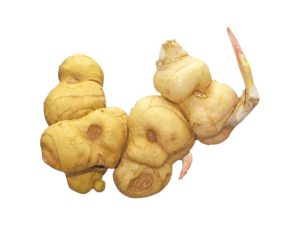
1. Fresh Rehmannia: Spindle-shaped or rod-like, 8–24 cm long and 2–9 cm in diameter. The outer skin is thin; the surface is pale reddish-yellow, featuring curved longitudinal wrinkles, bud scars, transverse, long, lenticular protrusions, and irregular scars.Fleshy and brittle; the cross-section shows a pale yellowish-white cortex with visible orange-red oil dots, while the xylem is yellowish-white with radially arranged vessels. It has a faint odor and a slightly sweet and slightly bitter taste.
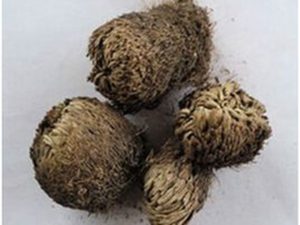
2. Raw Rehmannia: Typically irregularly lumpy or oblong in shape, swollen in the middle and slightly tapered at both ends; some specimens are small, elongated, slightly flattened, and twisted, measuring 6–12 cm in length and 2–6 cm in diameter.The surface is brownish-black or brownish-gray, extremely shriveled, with irregular transverse wrinkles. It is heavy, relatively soft yet tough, and not easily broken. The cross-section ranges from brownish-yellow to black or jet-black, glossy, and sticky. It has a faint odor and a slightly sweet taste.
Properties of Processed Slices
It is cut into roundish or irregular thick slices. The outer surface is brownish-black or brownish-gray, extremely wrinkled, with irregular transverse furrows. The cross-section is brownish-yellow to black or jet-black, glossy, and sticky. It has a faint odor and a slightly sweet taste.
Botanical Information
Botanical Classification
Rehmannia, a plant of the genus Rehmannia in the Scrophulariaceae family.
Morphological Characteristics
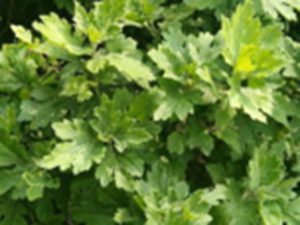
Rehmannia, a perennial herb, grows 10–40 cm tall. The entire plant is covered with grayish-white, long, soft hairs and glandular hairs. The root is thick, fleshy, tuberous, cylindrical, or spindle-shaped. The stem is erect, solitary, or branched at the base.Basal leaves are clustered; the leaf blades are obovate-lanceolate, 3–10 cm long and 1.5–4 cm wide, with a blunt apex, a gradually narrowing base extending into a long petiole, a wrinkled upper surface, and irregularly serrated margins; cauline leaves are smaller. The flower stalk is erect and hairy, bearing a raceme at the upper part of the stem; bracts are leaf-like, well-developed or reduced;the calyx is bell-shaped, 5-lobed at the apex, with triangular lobes covered in multicellular long soft hairs and white long hairs, and 10 veins; the corolla is broadly tubular, slightly curved, 3–4 cm long, dark purple on the outside, mottled with yellow on the inside, with distinct purple streaks, and 5-lobed at the apex, forming a slightly bilabiate shape;There are 4 stamens, in two whorls, with forked anthers at the base; the ovary is superior, ovate, and 2-chambered, becoming 1-chambered after flowering; the style is single, with an enlarged stigma. The capsule is ovate or oblong-ovate, tapering to a point at the apex, bearing a persistent style, and enclosed externally by the persistent calyx. Seeds are numerous. Flowering occurs from April to May, and fruiting from May to June.
Distribution Area
Distributed in Hebei, Henan, Shandong, Shanxi, Inner Mongolia, Jiangsu, Anhui, Zhejiang, Hubei, Hunan, Shaanxi, Sichuan, and other regions.