Yizhiren is the name of a traditional Chinese medicine. It is the fruit of Alpinia oxyphylla Miq., a plant belonging to the genus Alpinia in the Zingiberaceae family. It has the effects of warming the spleen, stopping diarrhea, and reducing excessive salivation, as well as warming the kidneys, reducing urination, and consolidating essence. It is primarily used to treat spleen and stomach deficiency-cold, vomiting, diarrhea, cold pain in the abdomen, excessive salivation, kidney deficiency-induced enuresis, frequent urination, nocturnal emission, and leukorrhea.

Yizhi Seed
Yizhiren is the name of a traditional Chinese medicine. It is the fruit of Alpinia oxyphylla Miq., a plant belonging to the genus Alpinia in the Zingiberaceae family. It has the effects of warming the spleen, stopping diarrhea, and reducing excessive salivation, as well as warming the kidneys, reducing urination, and consolidating essence. It is primarily used to treat spleen and stomach deficiency-cold, vomiting, diarrhea, cold pain in the abdomen, excessive salivation, kidney deficiency-induced enuresis, frequent urination, nocturnal emission, and leukorrhea.
Chinese Name : 益智仁
Latin Name : Alpinae Oxyphyllae Fructus
Aliases : Yizhizi, Zhaiezi, Yizhi
Authentic Producing Area : Mainly produced in Hainan and Guangdong.
Nature, Flavor & Meridian Tropism : Pungent in taste, warm in nature; enters the Spleen and Kidney meridians
Benefits & Efficacy
Benefits
Warms the spleen to stop diarrhea and reduce excessive saliva; warms the kidneys to reduce urination and secure essence.
Indications
Used for spleen and stomach deficiency-cold, vomiting, diarrhea, cold pain in the abdomen, excessive salivation, kidney deficiency with enuresis, frequent urination, nocturnal emission, and cloudy leukorrhea.
Usage and Dosage
Internal use: Decocted as a soup, 3–9 g; or incorporated into pills or powders.
Precautions
1. Contraindicated for those with yin deficiency with excessive fire or for those suffering from seminal emission, vaginal discharge, or metrorrhagia caused by heat. 2. Avoid consuming irritating foods such as scallions, ginger, and garlic.
Chemical Constituents
It primarily contains essential oils, such as caryophyllene, myrtenol, myrcene, α-pinene, β-pinene, and 1,8-cineole; it also contains yizhirenone A and B, among others.
Pharmacological Actions
This product has antidiuretic, memory-enhancing, gastrointestinal function-improving, anti-fatigue, and sex hormone-like effects.
Relevant Discussions
1. *Yi Wu Zhi*: “Yizhi resembles coix seed; its fruit is about one cun long, like the fruit of the zhi-du tree, with a pungent and spicy taste; it is best consumed with alcohol.”
2. *Description of Southern Plants and Trees*: “Yizhi seeds resemble brush hairs, measuring seven or eight fen in length. The plant blooms in the second lunar month with flowers resembling lotus blossoms; it bears fruit that ripens in the fifth or sixth lunar month. The taste is pungent, with a blend of five flavors and a fragrant aroma; they may also be sun-dried with salt. They are produced in Jiaozhi and Hepu. In the eighth year of the Jian’an era, Zhang Jin, the Governor of Jiaozhou, once presented Yizhi and palm leaves as tribute to Emperor Wu of Wei.”
Applications
Clinical Applications
1. For treating nocturnal emissions: 2 liang of Yizhi seeds (stir-fried with 2 liang of salt, then salt removed) and 2 liang of Wuyao. Grind the ingredients into a powder. Use 1 liang of Chinese yam to make a paste. Mix to form pills the size of a wuzi. Take 50 pills each time on an empty stomach before bedtime with salted water; coat the pills with cinnabar. (Sanxian Pills from *Prescriptions for the Rescue of the World’s Physicians*)
2. For treating red and turbid urine: 2 liang each of Yizhi seeds and Poria sclerotium; half a jin each of Polygala root and licorice (boiled in water). Grind into a powder, mix with wine paste to form pills the size of a Chinese jujube. Take 50 pills on an empty stomach with ginger soup. (Compendium of Materia Medica)
3. For treating hernia pain accompanied by lower abdominal cramping and incessant crying out: Yizhi seeds, dried ginger (roasted),roasted licorice, and stir-fried fennel—each 3 qian; processed Aconite (roasted, peeled) and fresh ginger—each half liang; and green tangerine peel (white pith removed)—2 qian. Finely chop all ingredients. Take 4 qian per dose; add 2 zhan of water and a pinch of salt, then decoct until reduced to seven-tenths of the original volume. Strain and drink warm on an empty stomach before meals. (Yizhi Ren Decoction from *Jisheng Fang*)
Related Compatibility
1. Amomum Seed Combined with Atractylodes: Amomum Seed excels at warming the kidneys, strengthening yang, consolidating essence, and reducing urination; Atractylodes is effective at tonifying qi, strengthening the spleen, drying dampness, and promoting diuresis. When combined, these two herbs enhance the effects of warming the kidneys, assisting yang, tonifying qi, and strengthening the spleen. This combination is suitable for conditions such as spleen-kidney yang deficiency, cold pain in the abdomen, vomiting and diarrhea, excessive salivation, and acid regurgitation.
2. Yizhiren combined with Dangshen: Yizhiren excels at warming the spleen and controlling excessive salivation; Dangshen excels at tonifying the spleen and replenishing qi. When combined, these two herbs enhance the effects of tonifying the spleen and controlling excessive salivation. This combination is suitable for spleen-stomach deficiency-cold, intermittent excessive salivation, or spontaneous drooling.
3. Yizhiren combined with Xiaohuixiang: Yizhiren excels at warming the kidneys, warming the spleen, and stopping diarrhea; Xiaohuixiang excels at warming the middle burner, invigorating the spleen, and stimulating the appetite. When combined, these two herbs enhance the effects of warming the spleen, stimulating the appetite, dispelling cold, and stopping diarrhea. This combination is suitable for conditions such as diarrhea caused by spleen-stomach deficiency-cold.
4. Yizhiren Combined with Psoralea: Yizhiren excels at warming the kidneys, assisting yang, warming the spleen, and stopping diarrhea, with a stronger effect on warming the spleen; Psoralea excels at replenishing fire, assisting yang, warming the spleen, and stopping diarrhea, with a stronger effect on tonifying the kidneys. When combined, these two herbs enhance the effects of tonifying the kidneys, warming the spleen, assisting yang, and stopping diarrhea. This combination is suitable for conditions such as diarrhea and seminal emission caused by yang deficiency of the spleen and kidneys.
5. Yizhiren Combined with Sang Piaoxiao: Yizhiren is pungent and warm, with a focus on tonification; it warms the kidneys, strengthens yang, consolidates essence, and reduces urination. Sang Piaoxiao is sweet, salty, and neutral, with a focus on astringency; it tonifies the kidneys, assists yang, consolidates essence, and reduces urination. When combined, these two herbs enhance the effects of consolidating essence and reducing urination. This combination is suitable for conditions such as enuresis and frequent urination caused by kidney yang deficiency.
6. Yizhiren Combined with Hezi: Yizhiren excels at warming the kidneys, strengthening yang, consolidating essence, and reducing urination; Hezi excels at astringing the lungs to stop coughing and astringing the intestines to stop diarrhea. When combined, these two herbs enhance the effects of warming the kidneys, strengthening yang, and astringing the intestines to stop diarrhea. This combination is suitable for conditions such as persistent diarrhea and dysentery caused by kidney yang deficiency.
7. Yizhiren Combined with Poria: Yizhiren excels at warming the kidneys, strengthening yang, consolidating essence, and reducing urination; Poria excels at strengthening the spleen, draining dampness, and promoting urination. When combined, these two herbs enhance the effects of warming the kidneys, strengthening yang, and strengthening the spleen to drain dampness. This combination is indicated for lower jiao deficiency-cold, dysfunction of qi transformation, dribbling and difficult urination, cloudy urine, and diarrhea caused by spleen-kidney yang deficiency.
Medicinal Identification
1. Raw Yizhiren and Salted Yizhiren: There are currently two processed forms of Yizhiren: raw Yizhiren and salted Yizhiren. Raw Yizhiren is pungent, warm, and drying; it is primarily used to warm the spleen, stop diarrhea, and control excessive salivation, and is often employed for abdominal pain accompanied by vomiting and diarrhea, as well as involuntary drooling.Salted Yizhi Seed has a milder pungent and drying nature; it specifically targets the Lower Jiao and excels at consolidating essence and reducing urination. It is frequently used for conditions such as seminal emission and premature ejaculation due to kidney qi deficiency with cold, as well as frequent urination, enuresis, and cloudy urine.
2. Psoralea and Yizhiren: Both are pungent and warm in nature and enter the Kidney and Spleen meridians. They share the functions of warming and tonifying the Spleen and Kidney, consolidating essence, reducing urination, and stopping diarrhea. They are similarly used to treat kidney deficiency-induced seminal emission, frequent urination, and diarrhea caused by Spleen and Kidney yang deficiency.However, Psoralea (Bu Gu Zhi) has a sweet taste and tends to focus on warming and tonifying kidney yang; it is particularly effective for treating impotence, nocturnal emissions, and cold pain in the lower back and knees. It can also anchor qi and relieve wheezing, making it suitable for kidney-deficiency-induced wheezing and coughing, and is used topically to treat vitiligo. Amomum Seed (Yi Zhi Ren) tends to focus on warming and tonifying spleen yang and is even more potent at stopping diarrhea and reducing excessive salivation; therefore, it is used to treat abdominal pain, diarrhea, and excessive salivation caused by spleen yang deficiency.
3. Shan Yao and Yi Zhi Ren: Both enter the Spleen and Kidney meridians and possess the functions of strengthening the spleen to stop diarrhea and tonifying the kidneys to secure essence; both can be used for diarrhea due to spleen deficiency and seminal emission due to kidney deficiency. However, Shan Yao is sweet and neutral in nature and also enters the Lung meridian; it is a herb that harmoniously tonifies both yin and yang, capable of both tonifying lung qi and nourishing lung yin, making it suitable for wheezing and cough due to lung deficiency, as well as consumptive cough.Yizhiren is pungent, warm, and aromatic; it excels at warming Spleen yang, dispelling cold, and controlling excessive salivation. It is frequently used for abdominal pain and diarrhea due to Spleen yang deficiency, as well as excessive salivation.
4. Peilan and Yizhiren: Both can treat conditions characterized by excessive salivation. However, Peilan is an aromatic herb that transforms dampness; it has the function of transforming dampness and invigorating the Spleen, making it suitable for damp-heat in the Spleen and Stomach, where damp turbidity rises to the surface, causing excessive salivation and a sweet taste in the mouth.Yizhiren is a warm, yang-tonifying herb that warms the spleen and stomach; it is suitable for excessive salivation caused by spleen-stomach deficiency-cold that fails to retain fluids.
5. Wuyao and Yizhiren: Both have a pungent and warm nature and enter the Spleen and Kidney meridians. They both warm the kidneys, assist yang, stop enuresis, and reduce frequent urination; they are suitable for conditions such as kidney yang deficiency, a cold and deficient bladder, frequent urination, and enuresis in children.However, Wuyao is a herb that regulates qi and relieves pain; it warms the kidneys, dispels cold, and removes cold qi from the bladder. It is suitable for conditions such as frequent urination and abdominal pain due to cold hernia caused by kidney yang deficiency and a cold, deficient bladder. Yizhiren is a warm, yang-tonifying herb and is an excellent remedy for lower jiao deficiency-cold, frequent urination, childhood enuresis, and seminal emission or premature ejaculation.
Related Medicines
Bu Nao Wan, Bi Xie Fen Qing Wan, Gu Shen Ding Chuan Wan.
Related Prescriptions
Suquan Pills (from *Wei’s Family Prescriptions*), Bi Xie Fen Qing Decoction (from *Yang’s Family Prescriptions*), and Yizhi Powder (from *Formulas of the Bureau of Medicinal Preparations*).
Medicinal Diet Therapy
Yizhi Blood-Nourishing Porridge:
1. Benefits: Nourishes the blood and moisturizes the skin; warms the spleen and harmonizes the stomach; strengthens the kidneys and enhances yang energy. Regular consumption of this porridge by middle-aged and elderly people helps nourish the blood, strengthen the body, improve sexual function, and delay aging.
2. Ingredients: Yizhi seeds, Angelica sinensis, and prepared Rehmannia root—15g each; Polygonum multiflorum—20g; Albizia flower—10g; japonica rice—100g;fine salt and MSG to taste.
3. Preparation: Decoct the above five Chinese herbal ingredients in water twice, then set the decoction aside. Rinse the japonica rice thoroughly, place it in a clay pot, and add the decoction along with an appropriate amount of water. Simmer over low heat until the porridge is cooked. When ready, add fine salt and MSG, then stir well.
4. Usage: One dose per day, to be consumed in two separate servings. One course of treatment consists of seven doses.
Notes
Patients requiring treatment with Chinese herbal medicine should first consult a licensed Traditional Chinese Medicine (TCM) hospital to receive a prescription following a professional TCM differential diagnosis.
Processing & Preparation
Harvesting & Processing
Harvest the fruit in summer or fall when it turns from green to red, then sun-dry or dry at low temperatures. The best quality is characterized by large, plump seeds with a strong aroma.
Processing Methods
1. Yizhi Seeds: Take the raw herb, remove impurities and the outer shell, and crush it before use. When used raw, it has a relatively drying nature and is primarily used to warm the spleen, stop diarrhea, and reduce excessive saliva.
2. Roasted Yizhi Seeds: Take the cleaned Yizhi seeds, place them in a wok, and roast over high heat until the outer shell turns dark brown and puffs up, and the kernel turns yellow. Remove and grind to remove the shell.
3. Salt-Processed Yizhi Seeds: Take the Yizhi seeds, mix them thoroughly with salt water, let them sit briefly, then place them in a pan. Heat over low heat until dry, remove, and let cool. Use 2 kg of table salt for every 100 kg of Yizhi seeds. Salt-processing moderates the pungent and drying nature of the herb, directs its action to the Kidney meridian, and enhances its ability to tonify the kidneys, reduce urination, and prevent seminal emission.
Storage Methods
Store in a dry place.
Crude Drug Identification
Identification
1. Cross-section of this variety’s seed: Paratecum parenchyma cells are sometimes present. The seed coat epidermal cells are subcircular, subsquare, or rectangular, slightly radially elongated, with relatively thick walls; the hypodermis consists of a single layer of parenchyma cells containing yellowish-brown substances;a single row of oil cells, which are square-like or rectangular and contain yellow oil droplets; the pigment layer consists of several rows of yellow-brown cells, interspersed with 1–3 rows of larger, round-like oil cells containing yellow oil droplets; the inner seed coat comprises a single row of palisade-like thick-walled cells, yellow-brown or reddish-brown in color, with extremely thick inner and lateral walls, small cell cavities, and siliceous bodies within.The outer endosperm cells are filled with starch clumps formed by aggregates of fine starch granules. The inner endosperm cells contain糊粉粒 and fat oil droplets.
The powder is yellowish-brown. On the surface, the epidermal cells of the seed coat appear elongated, with a diameter of up to 29 μm; their walls are slightly thick and are often arranged perpendicular to the upper and lower layers of the hypodermis. The cells of the pigment layer are shriveled, with indistinct boundaries; they contain reddish-brown or dark brown material, often fragmented into irregular pigment clumps. Oil cells are square or rectangular and are scattered among the cells of the pigment layer.The thick-walled cells of the inner seed coat are yellowish-brown or brown; viewed from the surface, they are polygonal with thick, non-lignified walls, and their cell cavities contain siliceous bodies; viewed in cross-section, the cells are arranged in a single row in a lattice pattern, with extremely thick inner and lateral walls, and the cell cavity is shifted toward the outer side, containing siliceous bodies.The outer endosperm cells are filled with starch clusters formed by small starch granules, while the inner endosperm cells contain糊粉粒 and fat oil droplets.
2. Take 1 g of the powdered sample, add 5 mL of anhydrous ethanol, subject to ultrasonic treatment for 30 minutes, filter, and use the filtrate as the test solution.Separately, take 1 g of the reference Yizhi herbal material and prepare a reference herbal material solution using the same method. Test according to the thin-layer chromatography method (General Rules 0502). Pipette 10 μL of each of the two solutions and apply them separately onto the same silica gel G thin-layer plate. Develop with a mobile phase of petroleum ether (60–90 °C)-acetone (5:2) as the developing agent, remove the plate, allow it to air-dry, spray with a 5% vanillin-sulfuric acid solution, and heat at 105°C until the spots become clearly visible. Examine the plates under natural light and under ultraviolet light (365 nm), respectively.In the chromatogram of the test sample, spots of the same color or fluorescent spots appear at positions corresponding to those in the chromatogram of the reference herbal material.
Properties of Crude Drugs
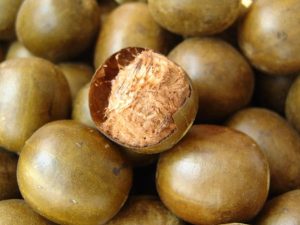
The dried fruit is spindle-shaped or oval, 1.5–2 cm long and 1–1.2 cm in diameter. The outer skin is reddish-brown to grayish-brown, with 13–18 discontinuous longitudinal ridges.The pericarp is thin and slightly tough, adhering closely to the seeds. The seeds are clustered together, divided into three sections separated by a thin membrane, with 6–11 seeds in each section.The seeds are irregularly flattened and round, with slightly blunt edges, approximately 3 mm in diameter and 1.5 mm thick, with a grayish-brown or grayish-yellow surface; the seed scar is located in the center of the ventral surface and is slightly depressed; a groove-like seed ridge runs from the seed scar to the point of union on the dorsal surface; when split open, the interior is white and starchy. It has a distinctive odor and a pungent, slightly bitter taste.
Properties of Processed Slices
1. Yizhi Seed: See the “Characteristics of the Medicinal Material” section.
2. Roasted Yizhi Seed: Resembles Yizhi Seed in appearance, but is dark brown with scorched spots.
3. Salted Yizhi Seed: Resembles Yizhi Seed in appearance, but is brown or dark brown with scorched spots and has a slightly salty taste.
Botanical Information
Botanical Classification
Eupatorium, a plant of the genus Eupatorium in the Zingiberaceae family.
Morphological Characteristics
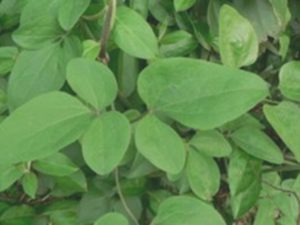
Yizhi is a perennial herb reaching 1–3 m in height. The petioles are short; the leaf blades are lanceolate, 20–35 cm long and 3–6 cm wide, with a caudate-acuminate apex, a broadly cuneate base, margins bearing deciduous minute bristles, and a finely serrate basal scar; both surfaces are glabrous;The leaf sheath is membranous, bifid, 1–2 cm long (occasionally up to 3 cm), and covered with pale brown soft hairs. The raceme is terminal, 8–15 cm long, and enclosed within sheath-like raceme bracts while still in bud; the rachis is covered with very short soft hairs;Floral pedicels 1–2 mm long; bracts membranous, brown; calyx tubular, ca. 1.2 cm long, apically 3-lobed with shallow teeth, deeply cleft on one side, externally covered with short soft hairs; corolla tube nearly as long as the calyx tube, with 3 lobes, oblong, ca. 1.8 cm long, the upper lobe slightly larger, apex slightly pouch-like, white, externally covered with short soft hairs;the labellum is obovate, about 2 cm long, pink with red stripes, and has a corrugated margin at the apex; the lateral rudimentary stamens are conical, about 2 mm long; there is one stamen with a flat, linear filament about 1.2 cm long; the anther is 6–7 mm long, and the tip of the connective bears a rounded, cockscomb-like appendage; the ovary is inferior and densely covered with tomentum.The capsule is spherical or elliptical, becoming spindle-shaped when dry, with distinct longitudinal vascular bundle stripes on the pericarp; it is 1.2–2 cm long and about 1 cm in diameter, indehiscent, and yellow-green or creamy yellow when ripe. The seeds are numerous, irregularly flattened-round, and covered with a pale yellow aril. Flowering occurs from February to April, and fruiting from May to August.
Distribution Area
Native to Guangdong and Hainan; also cultivated in Fujian, Guangxi, and Yunnan.
Growth Habits
It prefers a warm, humid climate. Loose, fertile, well-drained sandy loam is the ideal soil type.
Propagation Methods
Propagated by division.
Cultivation Techniques
1. Prepare the site 2–3 months before planting. Dig drainage ditches and prepare planting holes 33 cm in diameter and 33 cm deep, spaced 1 × 1 m apart.
2. Between June and August, on a cloudy day or in the early morning or evening, select healthy, disease-free 1- to 2-year-old offshoots that have not yet flowered or fruited (or use wild plants) for transplanting. Take care not to damage the rhizomes, and trim some of the leaves appropriately.Before planting, apply a moderate amount of base fertilizer to each hole. Plant 4–5 plants per hole, ensuring they are not planted too deeply. Cover with soil to a depth of about 7 cm, firm the soil, and water once daily for 10 days.
3. Cultivate the soil and remove weeds once each year after harvesting the fruit in June and once before flowering in November–December. At the same time, apply human urine or potassium sulfate, and cut off suckers that have already borne fruit.