Cold Fern, a name in traditional Chinese medicine. It refers to the whole plant of Polystichum moupinense (Franch.) Bedd., a species of the family Polystichaceae. It is distributed in Shaanxi, Gansu, Sichuan, Yunnan, and other regions. It has the effects of harmonizing the stomach and detoxifying. It is commonly used to treat stomach disorders and food poisoning.

Cold Fern
Cold Fern, a name in traditional Chinese medicine. It refers to the whole plant of Polystichum moupinense (Franch.) Bedd., a species of the family Polystichaceae. It is distributed in Shaanxi, Gansu, Sichuan, Yunnan, and other regions. It has the effects of harmonizing the stomach and detoxifying. It is commonly used to treat stomach disorders and food poisoning.
Chinese Name : 冷蕨
Latin Name : Polystichum moupinense (Franch.) Bedd.
Aliases : Baoxing Ear Fern, Muping Ear Fern, Muping Alpine Ear Fern, Re'na'er
Authentic Producing Area : Shaanxi, Gansu, Sichuan, Yunnan
Nature, Flavor & Meridian Tropism : Bitter in taste, cold in nature; enters the Stomach meridian
Benefits & Efficacy
Benefits
Harmonizes the stomach, detoxifies.
Indications
Stomach disorders, food poisoning.
Usage and Dosage
Oral use: Decoct 5–10 g.
Precautions
Not yet established.
Relevant Discussions
*Xinhua Bencao Gangyao*: “Used for stomach disorders and food poisoning.”
Applications
Processing & Preparation
Harvesting & Processing
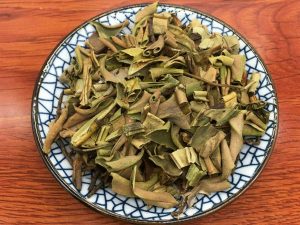
Can be harvested year-round; wash thoroughly and use fresh or sun-dry.
Crude Drug Identification
Botanical Information
Botanical Classification
Baoxing ear fern, a plant of the Polystichaceae family.
Morphological Characteristics
Baoxing Ear Fern, also known as Muping Ear Fern or Muping Alpine Ear Fern. The plant grows to a height of 12–20 cm.The rhizome is erect and densely covered with broad-lanceolate brown scales. Leaves are clustered; petioles are 4–9 cm long, with a basal diameter of 1–2 mm; the lower petioles are persistent, straw-colored, sometimes with a brownish tinge at the base; the adaxial surface has longitudinal grooves and is covered with ovate and lanceolate brown scales;The leaf blade is linear-lanceolate, 12–22 cm long and 1.2–2.2 cm wide, with a gradually tapering apex, a slightly narrowing base, and twice pinnately divided;Pinnules 20–30 pairs, alternate, nearly spreading, slightly spaced apart, sessile, ovate or triangular-ovate; the upper ones narrower; the middle ones 6–10 mm long, 4–6 mm wide, with a blunt apex, a rounded-cuneate or nearly truncate base, and auriculate projections on both sides—sometimes the upper one slightly longer—pinnately dissected to the middle;Lobules 3–5 pairs, but only 1–2 pairs deeply lobed near the rachis; alternate, slightly obliquely ascending, closely appressed, broadly ovate to obovate, apex acute, margin entire or slightly toothed; lobules with pinnate venation, indistinct on both surfaces. Leaves firm-papery, adaxially glabrous, abaxially bearing narrow-lanceolate pale brown scales;The adaxial surface of the rachis bears a longitudinal groove; both surfaces bear lanceolate and linear pale brown scales. Sporangia are clustered on the pinnae above the middle, located on either side of the main vein of each lobule, with one or two per side, or arranged in a single row on either side of the rachis; indusia are circular, shield-shaped, with notched margins.
Distribution Area
Distributed in Shaanxi, Gansu, Sichuan, Yunnan, and other areas.