Eshan is the name of a traditional Chinese medicinal herb. It is the dried root of Anthriscus sylvestris (L.) Hoffm., a plant belonging to the genus Anthriscus in the Apiaceae family.It is distributed in Liaoning, Hebei, Inner Mongolia, Gansu, Xinjiang, Shanxi, Shaanxi, Jiangsu, Anhui, Zhejiang, Jiangxi, Henan, Hubei, Hunan, Sichuan, Yunnan, and other regions. It has the effects of tonifying qi and strengthening the spleen, as well as promoting blood circulation and relieving pain. It is primarily used to treat spleen deficiency with abdominal distension, fatigue and poor appetite, lung deficiency with coughing and wheezing, general weakness with spontaneous sweating, frequent nocturnal urination in the elderly, qi deficiency with edema, lumbago due to overwork, headaches, dysmenorrhea, and bruises and swelling from falls or blows.

Eshan
Eshan is the name of a traditional Chinese medicinal herb. It is the dried root of Anthriscus sylvestris (L.) Hoffm., a plant belonging to the genus Anthriscus in the Apiaceae family.It is distributed in Liaoning, Hebei, Inner Mongolia, Gansu, Xinjiang, Shanxi, Shaanxi, Jiangsu, Anhui, Zhejiang, Jiangxi, Henan, Hubei, Hunan, Sichuan, Yunnan, and other regions. It has the effects of tonifying qi and strengthening the spleen, as well as promoting blood circulation and relieving pain. It is primarily used to treat spleen deficiency with abdominal distension, fatigue and poor appetite, lung deficiency with coughing and wheezing, general weakness with spontaneous sweating, frequent nocturnal urination in the elderly, qi deficiency with edema, lumbago due to overwork, headaches, dysmenorrhea, and bruises and swelling from falls or blows.
Chinese Name : 峨参
Latin Name : Anthrisci Radix
Aliases : Tianqi, Jinshan Tianqi, Wild Angelica, Guangdong Sanqi, Carrot-Root Sanqi, Southern Tianqi, Aquatic Tianqi, Wild Angelica, Wild Tianqi
Authentic Producing Area : Sichuan, Hunan, Jiangsu, Yunnan
Nature, Flavor & Meridian Tropism : Sweet and pungent in taste; slightly warm in nature; enters the Spleen, Stomach, and Lung meridians
Benefits & Efficacy
Benefits
Tonifies qi and strengthens the spleen; promotes blood circulation and relieves pain.
Indications
Used for spleen deficiency with abdominal distension, fatigue, and poor appetite; lung deficiency with cough and wheezing; general weakness with spontaneous sweating; frequent nocturnal urination in the elderly; qi deficiency with edema; lumbago due to overwork; headaches; dysmenorrhea; and bruises and swelling from falls or blows.
Usage and Dosage
1. Internal use: Decoct 9–15 g; or grind into powder and take 3–5 g per dose; or steep in wine. 2. External use: Apply an appropriate amount of the powdered preparation as a poultice.
Precautions
Patients requiring treatment with Chinese herbal medicine should first consult a licensed Traditional Chinese Medicine (TCM) hospital, where a TCM practitioner will conduct a professional pattern differentiation and issue a herbal prescription.
Chemical Constituents
Emei Ginseng contains lignans (such as Emei ginsenoside and iso-Emei ginsenoside),coumarins (such as Xanthium glycoside and Scopolin), flavonoids (such as Shinyang watercress ketone, apigenin, and quercetin), and essential oils (such as α-pinene, β-myrcene, D-limonene, and p-cymene), among other chemical components.
Pharmacological Actions
Modern research indicates that Emei Ginseng possesses anticancer, antiviral, anti-inflammatory, anti-allergic, antioxidant, immunomodulatory, anti-aging, and insecticidal effects.
Relevant Discussions
1. *Commonly Used Chinese Herbs of Sichuan*: “Tonifies the middle and boosts qi. Treats spleen deficiency with abdominal distension, weakness in the limbs, lung deficiency with cough and wheezing, nocturia in the elderly, and edema.”
2. *Compendium of Chinese Herbs*: “Tonifies the middle and boosts qi; removes blood stasis and promotes the generation of new blood.Primarily used to treat trauma and contusions, low back pain, cough and wheezing due to lung deficiency, coughing up blood, abdominal distension due to spleen deficiency, weakness in the limbs, and frequent urination in the elderly.”
3. *Compendium of Hubei Medicinal Herbs*: “Strengthens the spleen and nourishes the kidneys; relieves cough and alleviates pain. Used for cough and wheezing due to lung deficiency, headache, stomach pain, abdominal pain, abdominal distension, food stagnation, insomnia, and mouth sores in children.”
Applications
Clinical Applications
1. For spleen deficiency with abdominal distension and weakness in the limbs: 9–15 g of (Emei Ginseng) root. Stew with an appropriate amount of pork and consume. (*Compendium of Medicinal Plants of Zhejiang*)
2. For food stagnation: 9 g of Emei Ginseng, 6 g each of Qingpi and Chenpi. Decoct in water and take orally. (*Compendium of Hubei Medicinal Herbs*)
3. For treating cough due to lung deficiency: 12 g each of Emei Ginseng, Lily bulb, and Asparagus root, and 9 g of Sichuan Fritillary bulb. Decoct in water and take orally. (*Medicinal Herbs of Wanxian*)
4. For treating concurrent spleen and lung deficiency, cough, shortness of breath, fatigue, and tuberculosis: 60 g of Emei Ginseng, 15 g of Rock Cabbage, 15 g of Polygonatum, and 15 g of Auspicious Grass root.Decoct in water and take orally, or stew with lean pork and consume. (*Sichuan Chinese Herbal Medicine*)
5. For frequent urination in the elderly: 12 g of Emei Ginseng, 9 g each of Mulberry Cuttlefish Bone and Amomum Seed. Decoct in water and take orally. (*Wanxian Chinese Herbal Medicine*)
6. For traumatic injuries: ① Grind Emei Ginseng into powder and take 3–5g each time with wine. (*Hunan Pharmacopoeia*) ② 9–15g of Emei Ginseng. Soak in wine and consume. (*Zhejiang Flora*)
7. For insomnia: 9g of Emei Ginseng, 3 red thorns. Decoct in water and drink. (*Hubei Herbal Medicine*)
Notes
References: 1. *Encyclopedia of Chinese Materia Medica* 2. *Seven Medicinal Herbs of China* 3. *Encyclopedia of Chinese Medicine: Traditional Chinese Medicine, Materia Medica Resources*
Processing & Preparation
Harvesting & Processing
Harvest 2–3 years after planting. Dig up the roots in spring or fall, trim off the fibrous tails, scrape off the outer bark, blanch in boiling water, then sun-dry or dry over low heat.
Processing Methods
Take the raw herbal material, remove impurities, soak in water until thoroughly moistened, slice thinly, and dry.
Storage Methods
Store in a dry container in a well-ventilated, dry place to prevent moisture absorption.
Crude Drug Identification
Properties of Crude Drugs
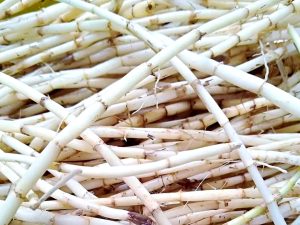
The root is conical, slightly curved, and highly branched; it tapers gradually toward the base, is translucent, 3–12 cm long, and 1–1.5 cm in diameter at the middle.The surface is yellowish-brown or grayish-brown, with irregular longitudinal wrinkles; the upper part has fine, dense ring patterns, and raised, elongated transverse lenticels are visible; some specimens have scar-like marks on the sides. The texture is firm and heavy; the cross-section is yellow or yellowish-brown and horn-like. It has a faint odor and a slightly pungent, slightly numbing taste.
Botanical Information
Botanical Classification
A plant of the genus Eupatorium in the family Apiaceae.
Morphological Characteristics
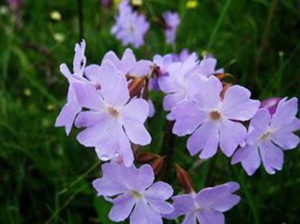
A biennial or perennial herb, growing up to 1.5 m tall. The taproot is thick and robust. The stem is stout and highly branched, nearly glabrous or with fine soft hairs on the lower part.Basal leaves have long petioles, 5–20 cm long, with broad sheaths at the base; the leaf blade is ovate in outline, twice pinnately lobed, 10–30 cm long; the first-order pinnae are long-petiolate, ovate to broadly ovate, with 3–4 pairs of second-order pinnae;the second-order pinnae are short-petiolate, ovate-lanceolate in outline, pinnately entire or deeply lobed; the terminal segments are ovate or elliptic-ovate, coarsely serrate, 1–3 cm long and 0.5–1.5 cm wide, with sparse soft hairs on the underside; upper stem leaves are short-petiolate or sessile, with a sheathing base, sometimes hairy along the margins.Compound umbels 2.5–8 cm in diameter, with 4–15 rays; bracteoles 5–8, ovate to lanceolate, acuminate at the apex, reflexed; flowers white, usually tinged with green or yellow; style twice as long as the style base.The fruit is oblong to linear-oblong, 5–10 mm long and 1–1.5 mm wide, smooth or sparsely dotted with small tubercles; the apex tapers gradually into a beak-like tip; the fused face is distinctly constricted; the tip of the fruit stalk often bears a ring of small white bristles; the cross-section of the schizocarp is nearly circular, with inconspicuous oil tubes and a deeply grooved endosperm. Flowering and fruiting occur from April to May.
Distribution Area
It is distributed in Liaoning, Hebei, Inner Mongolia, Gansu, Xinjiang, Shanxi, Shaanxi, Jiangsu, Anhui, Zhejiang, Jiangxi, Henan, Hubei, Hunan, Sichuan, Yunnan, and other regions.
Growth Habits
It prefers high-altitude, cold, and humid environments and is highly cold-tolerant. It is best cultivated in shaded or partially shaded areas on mid-mountain or high-mountain slopes; it grows best in well-drained, humus-rich, fertile, and loose sandy loam soil.
Propagation Methods
Propagate by seed or division.
Cultivation Techniques
1. Propagation by seed: Harvest mature seeds in August–September, air-dry them, and sow directly. Fall sowing is done in September–October, and spring sowing in March–April. Fall sowing results in faster emergence and a higher germination rate. Dig holes with row and hole spacings of approximately 27 cm each. Mix the seeds thoroughly with human or animal manure water and wood ash, then sow them individually, covering each with a handful of wood ash.
2. Propagation by Division: At harvest time, select young seedlings and plant them before new growth emerges. Plant 3–4 seedlings per hole, and apply a mixture of soil and organic fertilizer after planting.
Pest and Disease Control
Pests include fruit borers, which damage young fruit, and aphids, which damage young leaves.