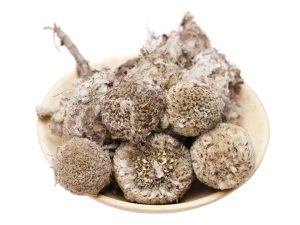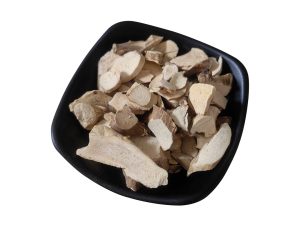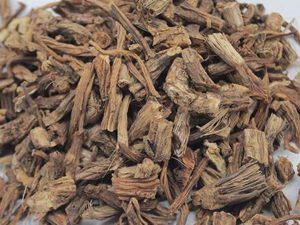
Perilla Calyx, a name in traditional Chinese medicine. It refers to the persistent calyx of plants in the Lamiaceae family, including Perilla frutescens (L.) Britt. var. arguta (Benth.) Hand.-Mazz. and wild Perilla (P. frutescens (L.) Britt. var. purpurascens (Hayata) H.W.Li). It has the efficacy of relieving exterior syndromes. It is primarily used to treat common colds caused by blood deficiency.
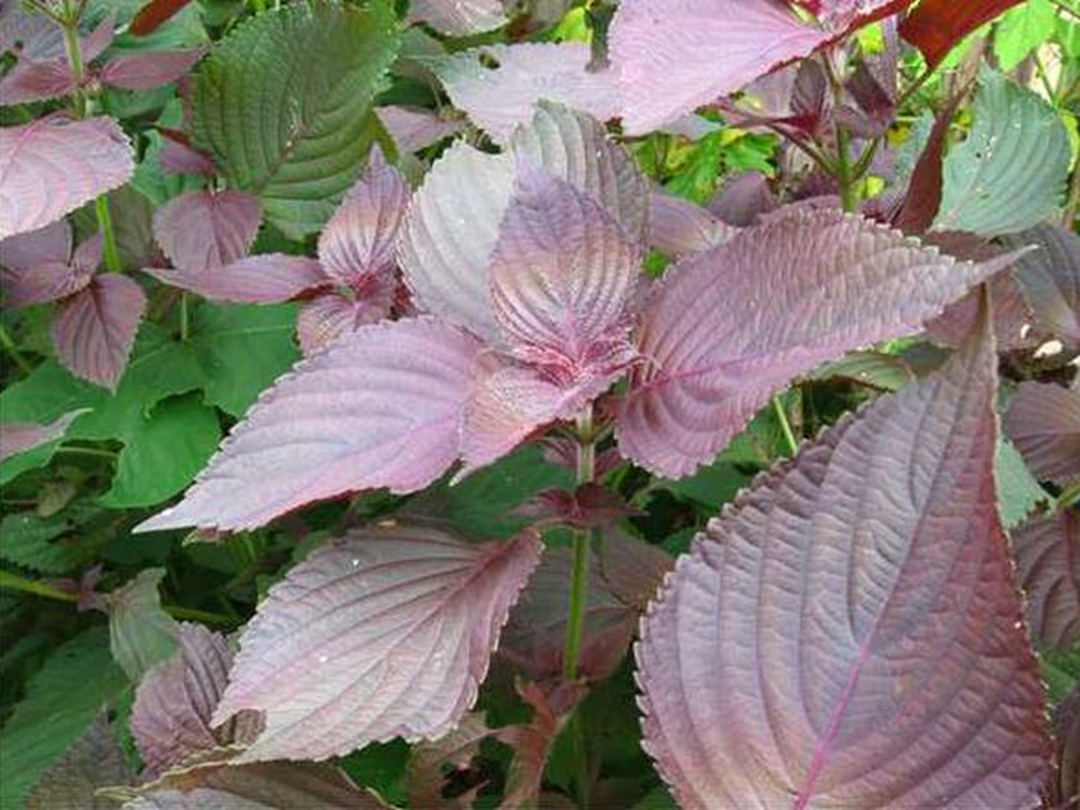
Perilla Bud
Perilla Calyx, a name in traditional Chinese medicine. It refers to the persistent calyx of plants in the Lamiaceae family, including Perilla frutescens (L.) Britt. var. arguta (Benth.) Hand.-Mazz. and wild Perilla (P. frutescens (L.) Britt. var. purpurascens (Hayata) H.W.Li). It has the efficacy of relieving exterior syndromes. It is primarily used to treat common colds caused by blood deficiency.
Chinese Name : 紫苏苞
Nature, Flavor & Meridian Tropism : Slightly pungent in taste, neutral in nature; enters the Lung meridian
Benefits & Efficacy
Benefits
Relieves exterior symptoms.
Indications
Blood-deficiency-induced common cold.
Usage and Dosage
Internal use: Decocted as a soup, 3–9 g.
Relevant Discussions
From *Benjing Fengyuan*: “For patients with severe blood deficiency due to blood loss, as well as for pregnant women and postpartum women requiring diaphoretic treatment, Perilla buds are the best choice, as their aroma, taste, and density are all mild, and they do not cause excessive sweating that could damage the middle jiao.”
Applications
Processing & Preparation
Harvesting & Processing
Collect the persistent calyx and sun-dry it.
Crude Drug Identification
Botanical Information
Botanical Classification
Plants of the Lamiaceae family, such as Perilla frutescens and Perilla erubescens.
Morphological Characteristics
1. Perilla: An annual herb, 30–200 cm tall. Possesses a distinctive aroma. The stem is erect, highly branched, purple, purplish-green, or green, bluntly quadrangular, and densely covered with long soft hairs. Leaves are opposite; petioles are 3–5 cm long, purplish-red or green, and covered with long, jointed hairs;leaf blades are broadly ovate, ovate-orbicular, or ovate-triangular, 4–13 cm long and 2.5–10 cm wide, with an acuminate or abruptly pointed apex, sometimes with a short tail-like extension; the base is rounded or broadly cuneate; the margins are coarsely serrate, sometimes with deep serrations or shallow lobes; both surfaces are purple or purple only on the underside; both surfaces are sparsely pubescent, with denser pubescence along the veins;the underside of the leaf bears fine oil glandular dots; lateral veins 7–8 pairs, those in the lower part slightly closer together, ascending obliquely. Inflorescences are verticillate, consisting of 2 flowers arranged asymmetrically on one side to form a pseudo-raceme, terminal and axillary. Inflorescences are densely covered with long soft hairs; bracts are ovate, ovate-triangular, or lanceolate, entire, ciliate, with glandular dots on the outer surface, and membranous margins;flower pedicels 1–1.5 mm long, densely pubescent; calyx campanulate, ca. 3 mm long, 10-veined, densely covered with long soft hairs and yellow glandular dots on the lower part of the outer surface, 5-lobed at the apex, 2-lipped, the upper lip broad with 3 lobes, the lower lip with 2 lobes, enlarging at fruiting, the base saccate; corolla labiate, 3–4 mm long.White or purplish red; the corolla tube bears a ring of hairs inside and is pubescent on the outside; the upper lip is slightly concave; the lower lip is 3-lobed, with nearly circular lobes, the middle lobe being larger; 4 stamens, diadelphous, attached to the middle of the corolla tube, almost not protruding beyond the corolla; anthers 2-celled; the disk is swollen at the front; 1 pistil, ovary 4-lobed, style attached at the base, stigma 2-lobed.The nutlets are nearly spherical, grayish-brown or brown, 1–1.3 in diameter, reticulate, with a calyx approximately 10 mm long. Flowering occurs from June to August; fruiting from July to September. 2. Wild Perilla: This variety differs from Perilla frutescens in that the calyx is small, 4–5.5 mm long, sparsely pubescent on the underside, and bears glandular dots; the stem is covered with short soft hairs;the leaves are smaller, ovate, 4.5–7.5 cm long and 2.8–5 cm wide, with sparse soft hairs on both surfaces. The nutlets are smaller, earthy yellow, and 1–1.5 mm in diameter. Flowering occurs from June to August, and fruiting from July to September.
Distribution Area
1. Perilla: Widely cultivated throughout China. 2. Wild Perilla: Distributed in East China, South China, Southwest China, as well as Hebei, Shanxi, Shaanxi, and Taiwan.
Growth Habits
It prefers a warm, humid climate and grows vigorously with high yields in full sun. It is best cultivated in loose, fertile loam with convenient irrigation and drainage.
Propagation Methods
Propagated by seed.
Cultivation Techniques
Seeds can be sown directly or grown as seedlings and transplanted. When harvesting seeds, select those with leaves that are purple on both sides. Direct seeding: Mid- to late April in the north; late March in the south. Both row seeding and hole seeding are acceptable.For row sowing, space rows 50 cm apart and make shallow furrows 0.5–1 cm deep; use approximately 11.25 kg of seed per hectare. For hole sowing, space rows and plants at 30 cm × 50 cm. Seedling Transplanting Method: Sow seeds in March in the south and in April in the north to raise seedlings, then transplant in early May.
Pest and Disease Control
1. Leaf spot: Control by dusting with 70% mancozeb suspension concentrate dry powder at the onset of disease. 2. Rust: Control by spraying a 1,000-fold dilution of 25% triazole at the onset of disease. 3. Silver-striped cutworm: Control by spraying a 100-fold dilution of 90% crystal diazinon or by dusting with 5% carbaryl powder.