Alpine Horseradish, a name in traditional Chinese medicine. It refers to the dried roots and rhizomes of Pegaeophyton scapiflorum (Hook.f. et Thoms.) Marq. et Shax, a plant in the Brassicaceae family. It is distributed in Qinghai, southwestern Sichuan, northwestern Yunnan, and Tibet.It has the effects of clearing heat and detoxifying, clearing the lungs and relieving cough, and stopping bleeding and reducing swelling. It is used for fever associated with warm diseases, cough due to lung heat, hemoptysis, traumatic bleeding, and edema of the limbs.

Alpine Horseradish
Alpine Horseradish, a name in traditional Chinese medicine. It refers to the dried roots and rhizomes of Pegaeophyton scapiflorum (Hook.f. et Thoms.) Marq. et Shax, a plant in the Brassicaceae family. It is distributed in Qinghai, southwestern Sichuan, northwestern Yunnan, and Tibet.It has the effects of clearing heat and detoxifying, clearing the lungs and relieving cough, and stopping bleeding and reducing swelling. It is used for fever associated with warm diseases, cough due to lung heat, hemoptysis, traumatic bleeding, and edema of the limbs.
Chinese Name : 高山辣根菜
Latin Name : Pegaeophyti Radix et Rhizoma
Aliases : Suoluogaobao, Qiaguipuso
Authentic Producing Area : Qinghai, Sichuan, Yunnan, Tibet
Nature, Flavor & Meridian Tropism : Bitter and pungent in taste; cold in nature; enters the Lung and Liver meridians
Benefits & Efficacy
Benefits
Clears heat and detoxifies; clears the lungs and relieves cough; stops bleeding; reduces swelling.
Indications
Used for fever in warm-diseases, lung-heat cough, hemoptysis, traumatic bleeding, and edema of the limbs.
Usage and Dosage
3–6 g; or incorporated into pills or powders. For external use, apply an appropriate amount as a powder poultice.
Precautions
Use with caution in patients with spleen-stomach deficiency-cold.
Applications
Processing & Preparation
Harvesting & Processing
Harvest in the fall; remove fibrous roots and soil, then sun-dry.
Crude Drug Identification
Properties of Crude Drugs
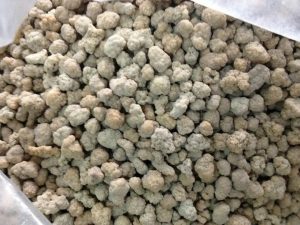
The apical portion of the rhizome has several branches with dense transverse rings, on which are remnants of leaf petioles. The root is cylindrical, 5–16 cm long, and 0.6–1.5 cm in diameter.The surface is yellowish-brown to grayish-yellowish-brown, rough, with distinct wrinkles and longitudinal grooves. The texture is loose and spongy; it breaks easily, with an irregular fracture surface. The cortex is pale brown to yellowish-brown, and the xylem is pale yellowish-white to light yellowish-brown, with a mottled pattern of grayish-white and yellow at the periphery and center. It has a faintly fragrant odor and a slightly bitter taste.
Botanical Information
Botanical Classification
A plant of the Brassicaceae family, stemless shepherd’s purse.
Morphological Characteristics
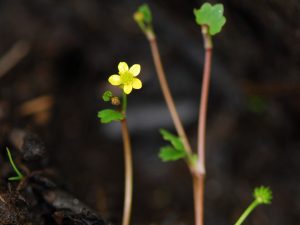
Alpine horseradish, a perennial stemless herb. The apical part of its rhizome has several branches with dense transverse rings, bearing remnants of leaf petioles. The root is cylindrical, 5–400px long and 0.6–37.5px in diameter. The surface is yellowish-brown to grayish-yellowish-brown, rough, with distinct wrinkles and longitudinal grooves.The texture is loose and spongy; it breaks easily, with an irregular fracture surface. The phloem is pale brown to yellowish-brown, and the xylem is pale yellowish-white to light yellowish-brown, with a mottled pattern of grayish-white and yellow around the periphery and in the center. It has a faintly fragrant odor and a slightly bitter taste. It commonly grows on moist mountain slopes, alpine meadows, in forest streams, and on riverbanks at elevations of 3,500–5,400 m.
Distribution Area
It is distributed in Qinghai, southwestern Sichuan, northwestern Yunnan, and Tibet.