Beautiful Lespedeza Flower, a name in traditional Chinese medicine. It is the flower of Lespedeza formosa (Vog.) Koehne, a plant in the Fabaceae family. It is distributed in North China, East China, Southwest China, as well as Guangdong and Guangxi. It has the efficacy of clearing heat and cooling the blood. It is primarily used to treat coughing up blood due to lung heat and bloody stools.

Beautiful Lespedeza Flower
Beautiful Lespedeza Flower, a name in traditional Chinese medicine. It is the flower of Lespedeza formosa (Vog.) Koehne, a plant in the Fabaceae family. It is distributed in North China, East China, Southwest China, as well as Guangdong and Guangxi. It has the efficacy of clearing heat and cooling the blood. It is primarily used to treat coughing up blood due to lung heat and bloody stools.
Chinese Name : 美丽胡枝子花
Nature, Flavor & Meridian Tropism : Bitter in taste, neutral in nature
Benefits & Efficacy
Benefits
Clears heat and cools the blood.
Indications
Mainly used to treat hemoptysis due to lung heat and hematochezia.
Usage and Dosage
Internal use: Decocted as a soup; use 1–2 liang of fresh herb.
Precautions
Patients requiring treatment with Chinese herbal medicine should first consult a licensed Traditional Chinese Medicine (TCM) hospital, where a TCM practitioner will conduct a professional pattern differentiation and issue a herbal prescription.
Applications
Processing & Preparation
Harvesting & Processing
Harvested in the fall.
Crude Drug Identification
Botanical Information
Botanical Classification
A plant of the Fabaceae family, known as Beautiful Laburnum.
Morphological Characteristics
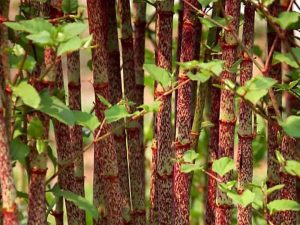
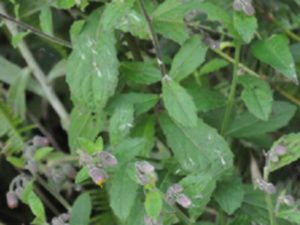
Beautiful Laburnum, also known as “Horse Broom” or “Horse Brush.” An erect shrub, 1–2 meters tall. Young branches are covered with fine hairs.Compound leaves consist of three leaflets, which are ovate, ovate-elliptic, or elliptic-lanceolate, 1.5–9 cm long and 1–5 cm wide, with an acute apex that is rounded, blunt, or slightly concave with a small tip; the base is cuneate, and the underside is densely covered with short soft hairs. Racemes are axillary, occurring singly or in clusters arranged in a conical shape, 6–15 cm long;the peduncle is 1–4 cm long and densely covered with short soft hairs; the bracteoles are ovate-lanceolate, narrowly oblong, or linear, about 4 mm long, and covered with long soft hairs; the calyx teeth are nearly as long as or longer than the calyx tube, densely covered with yellowish-green short soft hairs, with lobes that are ovate, acuminate, or lanceolate;Corolla purplish-red or white, 1–1.2 cm long; keel petal longer than or nearly equal in length to the standard petal when the flower is fully open; pedicel short and hairy. Pod ovate, oblong, obovate, or lanceolate, slightly asymmetrical, 5–12 mm long, with a short apex, densely covered with rust-colored short soft hairs.Flowering period: July–September. Fruiting period: September–October.
Distribution Area
Distributed in North China, East China, Southwest China, and regions such as Guangdong and Guangxi.