White Chalk, a name for a traditional Chinese medicine. It refers to clay rock kaolin or bentonite; the former primarily contains kaolinite, a silicate mineral of the kaolinite group, while the latter primarily contains montmorillonite, a mineral of the montmorillonite group. It has the therapeutic effects of warming the middle burner and kidneys, astringing the intestines to stop diarrhea, stopping bleeding, and promoting wound healing.It is primarily used to treat regurgitation, diarrhea and dysentery, male seminal emission, irregular menstruation in women, infertility, hemoptysis, hematochezia, epistaxis, redness and ulceration of the eyelids, leg sores, and itchy heat rash.
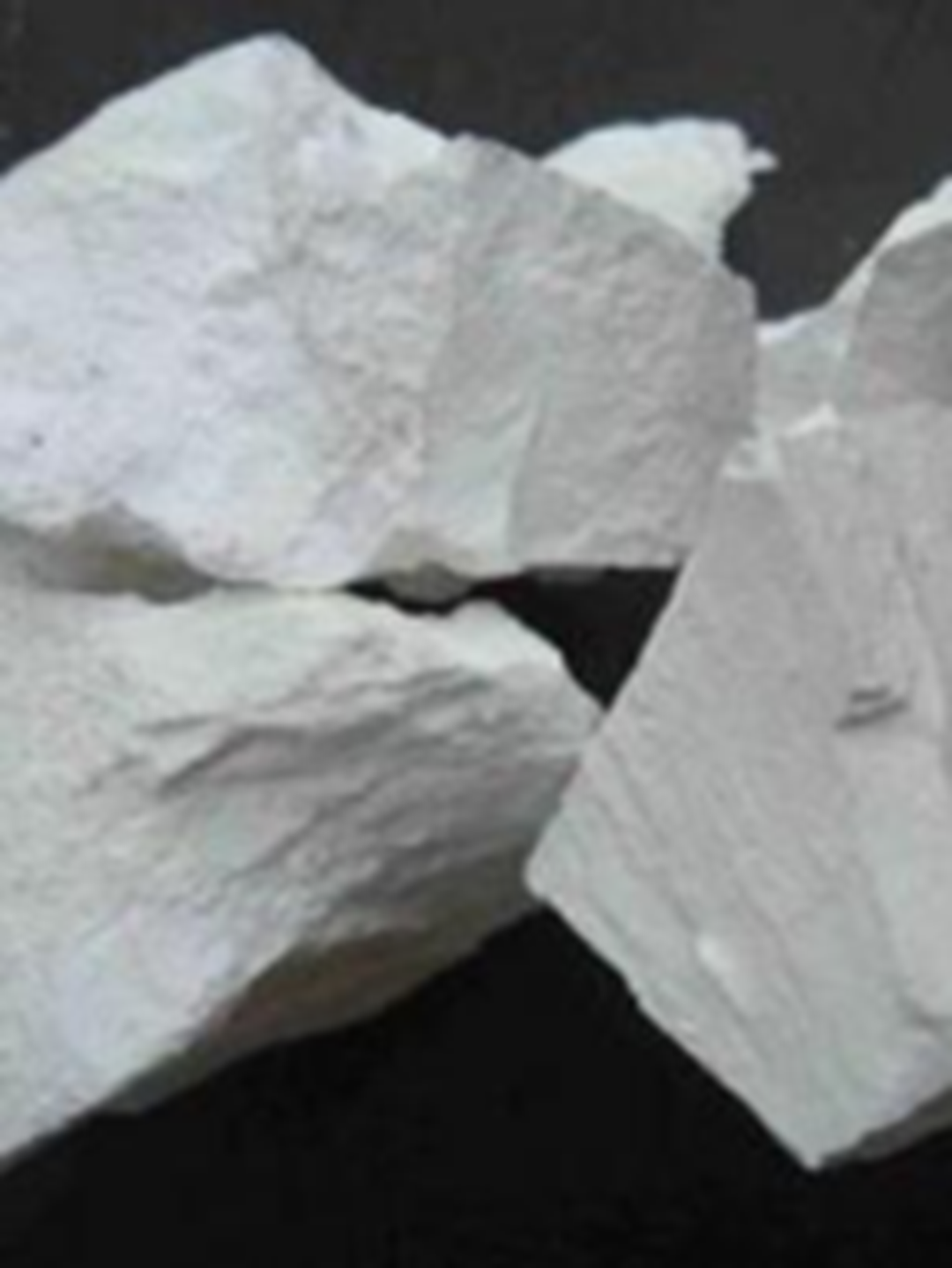
Chalk
White Chalk, a name for a traditional Chinese medicine. It refers to clay rock kaolin or bentonite; the former primarily contains kaolinite, a silicate mineral of the kaolinite group, while the latter primarily contains montmorillonite, a mineral of the montmorillonite group. It has the therapeutic effects of warming the middle burner and kidneys, astringing the intestines to stop diarrhea, stopping bleeding, and promoting wound healing.It is primarily used to treat regurgitation, diarrhea and dysentery, male seminal emission, irregular menstruation in women, infertility, hemoptysis, hematochezia, epistaxis, redness and ulceration of the eyelids, leg sores, and itchy heat rash.
Chinese Name : 白垩
Aliases : White Plaster, White Pagoda, White Virtue, White Evil, White Virtue Soil, White Soil Seed, Painting Powder, White Soil
Nature, Flavor & Meridian Tropism : Bitter in taste, warm in nature; enters the Lung and Kidney meridians
Benefits & Efficacy
Benefits
Warms the middle burner and kidneys, astringes the intestines to stop diarrhea, stops bleeding, and promotes wound healing.
Indications
Gastric reflux, diarrhea and dysentery, male seminal emission, irregular menstruation in women, infertility, hemoptysis, hematochezia, epistaxis, redness and ulceration of the eyelids, leg sores, and itchy heat rash.
Usage and Dosage
1. Internal use: Incorporated into pills or powders, 4.5–9 g. 2. External use: Apply an appropriate amount as a powder or as a paste.
Precautions
Do not use for prolonged periods, as it may damage the five viscera and cause emaciation.
Chemical Constituents
The main component is silicate; it also contains elements such as iron, titanium, barium, strontium, vanadium, chromium, and copper.
Pharmacological Actions
This herb possesses astringent, anti-inflammatory, and antidiarrheal properties.
Relevant Discussions
1. *Shennong Bencao Jing*: “Treats women’s fever and chills, masses and masses, amenorrhea, and abdominal masses.”
2. *Yao Xing Lun*: “Treats blood stasis in women and menstrual obstruction; it can astring the intestines and stop dysentery.”
3. *Rihua Zi Bencao*: “Treats diarrhea and dysentery, hemorrhoids and fistulas, seminal emission, cold uterus in women, cold water organs in men, nosebleeds, and hemoptysis.”
4. *Bencao Congxin*: “Dries dampness and warms the water organs. Treats sudden, severe coughs and wind-induced redness and ulceration of the eyes.”
5. *Compendium of Medical Essentials*: “Nourishes the lungs and generates metal; quenches thirst and clears summer heat. Treats lung abscesses and atrophy; stops red and white dysentery; harmonizes the spleen and stomach. Treats abdominal pain caused by cholera.”
Applications
Clinical Applications
1. For treating deficiency-heat-induced gastric reflux: One jin of white chalk, one jin of rice vinegar. Calcine the chalk until red, then add it to the vinegar; repeat the calcination and addition process until the vinegar is completely absorbed. Take two liang of the chalk mixture and combine with one qian of roasted ginger to form a powder. Take one qian per dose with rice water; for severe cases, take two qian, up to a total of four liang. (*Effective Formulas for Women*: White Chalk Powder)
2. For watery diarrhea with undigested grains, persisting day and night: One liang of white chalk (calcined), one liang of roasted dried ginger, and two liang of paper mulberry leaves (raw, finely ground). Pound the three ingredients into a fine powder, mix with wheat flour paste to form pills the size of mung beans. Take twenty pills on an empty stomach with rice water. (*Shengji Zonglu*: White Chalk Pills)
3. For treating wind-induced redness and ulceration of the eyes, as well as ingrown eyelashes and curled eyelashes: 1 liang of white clay, 1 qian of copper green. Grind into a powder; use half a qian to soak in hot water for washing the affected area. (Formula by Hua Tuo, cited in *Compendium of Materia Medica*)
4. For treating sudden-onset cough: 1 liang of white shan powder, 1 liang of white alum. Grind the above ingredients into a fine powder. Each time, use ginger juice to form pills the size of a paulownia seed. Take twenty pills each time, with ginger soup before bedtime. (From *Pu Ji Fang*: “Two Whites Pills”)
5. For treating headache: Equal parts of white chalk and Wanggu. Grind into a powder. Dissolve 2 qian in hot water and take. (From *Ben Cao Yan Yi*)
Notes
Patients requiring treatment with Chinese herbal medicine should first consult a licensed Traditional Chinese Medicine (TCM) hospital, where a TCM practitioner will conduct a professional pattern differentiation and prescribe an herbal formula.
Processing & Preparation
Harvesting & Processing
After extraction, remove all impurities.
Processing Methods
When using white chalk, do not use specimens that are bluish in color or have a white base. First, pound it alone until fine, sift it three times, then grind it further in a mortar. Next, wash it with salt water and sun-dry it. For every two liang of white chalk prepared, use one fen of white salt. Dissolve the salt in one dou of water and bring it to a boil more than ten times in a copper vessel. Then, use this boiling water to wash the white chalk to prevent it from becoming sticky and causing intestinal discomfort.
Crude Drug Identification
Properties of Crude Drugs
1. Kaolin: Irregular in shape. White or light grayish-white in color. The surface is fine and smooth to the touch. It is absorbent and feels sticky on the tongue when licked. It is relatively light and soft; a fingernail can scratch a mark into it. It has low plasticity and weak binding properties. It has a faint earthy odor and a mild taste.
2. Bentonite: Generally white, pink, or light gray in color. It has a waxy luster. It expands in volume upon absorbing water. It possesses plasticity and good binding properties.
Botanical Information
Morphological Characteristics
1. Kaolin: A cryptocrystalline, earthy mass that is white or may be tinged with pale green, yellow, or other hues. It has an earthy luster and a hardness similar to that of a fingernail; in areas containing residual feldspar or quartz, its hardness exceeds that of a pocket knife.Relative density: 2.5–2.7 (specific gravity). The primary mineral components affecting its properties include kaolinite, sericite-hydromica, and montmorillonite. Among these, kaolinite is the main mineral component of kaolin. It is insoluble in water but disperses in it; it possesses the ability to adsorb impurities and exchange cations. When exposed to hydrochloric acid, it does not foam but merely disperses or has some components dissolved.
2. Bentonite: A clay whose main component is montmorillonite. Montmorillonite has a monoclinic crystal structure. It commonly appears as a cryptocrystalline, earthy mass, though it may sometimes be in the form of small scales or granules. It is white, or may be light gray, light red, light green, or other colors.Streak: white. Earthy luster. No complete cleavage planes are visible to the naked eye. Hardness: 1–2. The mass is soft and slippery to the touch. Relative density: 2–2.7. It swells when water is added, increasing in volume severalfold and turning into a paste. It possesses strong adsorption and ion-exchange capacities.
Distribution Area
Found in Hebei, Shanxi, Jiangsu, Anhui, Fujian, Jiangxi, Hubei, Hunan, Guangdong, and other regions.