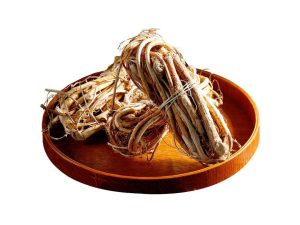
Qinpi is the name of a traditional Chinese medicine. It consists of the dried bark or dry bark of the following plants in the genus Fraxinus of the Oleaceae family: Fraxinus rhynchophylla Hance (bitter ash), Fraxinus chinensis Roxb. (Chinese ash), Fraxinus szaboana Lingelsh. (pointed-leaf ash), or Fraxinus stylosa Lingelsh. (stylose ash).It has the effects of clearing heat and drying dampness, astringing to stop dysentery, stopping leukorrhea, and improving vision. It is primarily used to treat damp-heat diarrhea and dysentery, red and white leukorrhea, redness, swelling, and pain in the eyes, and corneal opacities.
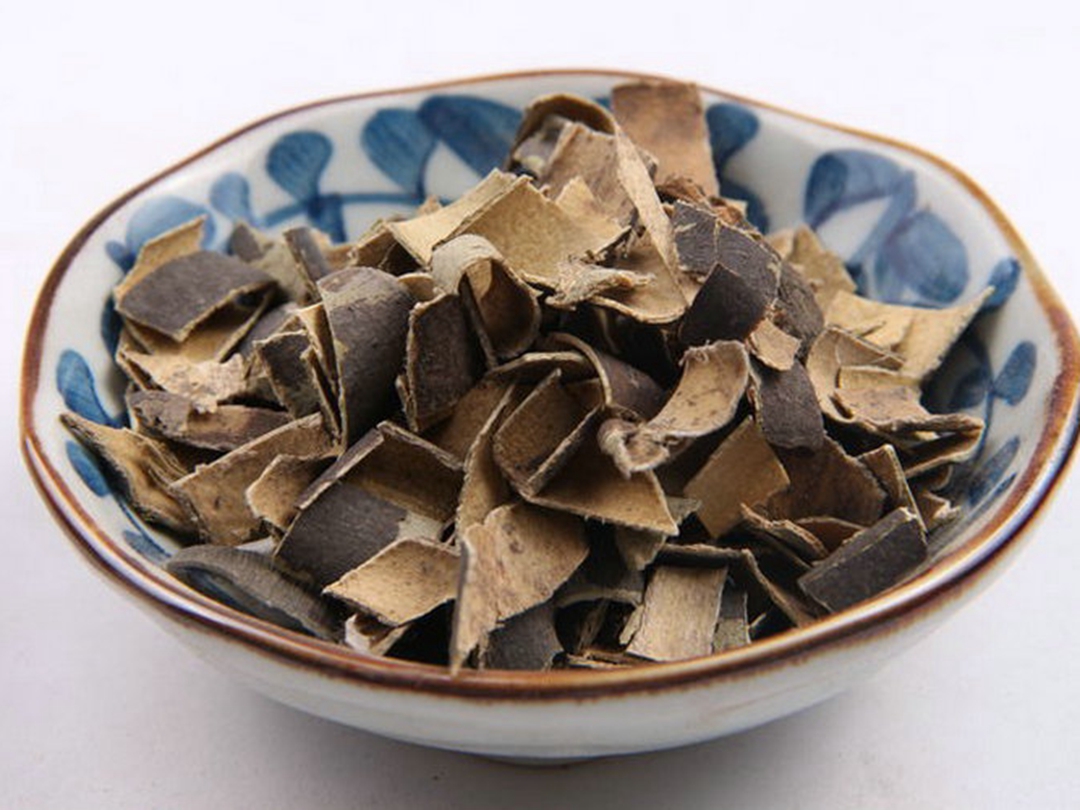
Qinpi
Qinpi is the name of a traditional Chinese medicine. It consists of the dried bark or dry bark of the following plants in the genus Fraxinus of the Oleaceae family: Fraxinus rhynchophylla Hance (bitter ash), Fraxinus chinensis Roxb. (Chinese ash), Fraxinus szaboana Lingelsh. (pointed-leaf ash), or Fraxinus stylosa Lingelsh. (stylose ash).It has the effects of clearing heat and drying dampness, astringing to stop dysentery, stopping leukorrhea, and improving vision. It is primarily used to treat damp-heat diarrhea and dysentery, red and white leukorrhea, redness, swelling, and pain in the eyes, and corneal opacities.
Chinese Name : 秦皮
Latin Name : Fraxini Cortex
Aliases : Cenpi, Dapi, Fanxupi, Qinbaipi, Guomupi, Laishupi
Authentic Producing Area : Shaanxi, Hebei, Jilin, Liaoning
Nature, Flavor & Meridian Tropism : Taste: bitter and astringent; nature: cold; enters the Liver, Gallbladder, and Large Intestine meridians
Benefits & Efficacy
Benefits
Clears heat and dries dampness; astringes to stop dysentery; stops leukorrhea; improves vision.
Indications
Dysentery caused by damp-heat; red and white vaginal discharge; redness, swelling, and pain in the eyes; and corneal opacities.
Usage and Dosage
1. Internal use: Decoct 6–12 g in water. 2. External use: Use an appropriate amount; decoct in water to wash the eyes or apply the juice directly to the eyes.
Precautions
Contraindicated for those with spleen and stomach deficiency-cold.
Chemical Constituents
It primarily contains coumarin compounds, such as qinpi A, qinpi B, qinpi, and qinpi glycoside; it also contains phenols, saponins, and tannins.
Pharmacological Actions
This herb primarily exhibits antimicrobial, anti-inflammatory, and anti-gout effects.
Relevant Discussions
1. *Shennong Bencao Jing*: “Clears heat; removes green opacities and white films from the eyes.”
2. *Mingyi Bielu*: “Treats low sperm count in men, leukorrhea in women, and epilepsy in children; alleviates fever; may be used as an eye-washing decoction.”
3. *Treatise on the Nature of Medicinal Substances*: “Improves vision; dispels chronic heat in the liver; treats redness, swelling, and pain in both eyes, as well as uncontrollable tearing due to wind. Treats fever in children when used as a bath decoction.”
4. *Herbal Formulas for Decoctions*: “Treats heat-induced diarrhea with a sensation of heaviness in the lower abdomen and deficiency of the lower jiao.”
Applications
Clinical Applications
1. For treating damp-heat diarrhea and dysentery, with tenesmus and a sensation of incomplete evacuation, it is often combined with herbs such as Whitehead (Bai Tou Weng), Coptis (Huang Lian), and Phellodendron (Huang Bai), as in the Whitehead Decoction (Shanghan Lun); for treating leukorrhea caused by damp-heat descending to the lower jiao, it may be combined with Peony Bark (Mu Dan Pi) and Chinese Angelica (Dang Gui) (Bencao Huiyan).
2. To treat redness, swelling, and pain in the eyes, as well as corneal opacities caused by stagnant fire in the Liver Meridian, it can be used alone by decocting it in water for eye washes; or combined with Gardenia and Bamboo Leaf for oral administration, as in Qinpi Decoction (*Wai Tai Mi Yao*). When combined with Qin Jiao and Fangfeng, it treats wind-heat in the Liver Meridian manifesting as redness and corneal opacities, as in Qinpi Decoction (*Yan Ke Long Mu Lun*).
Related Compatibility
1. Qinpi Combined with Huanglian: Qinpi excels at clearing heat, drying dampness, stopping dysentery, and clearing the liver to improve vision; Huanglian excels at clearing heat, drying dampness, purging fire, and detoxifying. When used together, the effects of clearing heat, drying dampness, stopping dysentery, and clearing the liver to improve vision are enhanced. This combination is suitable for dysentery caused by damp-heat stagnation in the stomach and intestines, as well as red, swollen, and painful eyes due to liver fire rising.
2. Qinpi Combined with Baitoong: Qinpi clears heat and dries dampness, while also having astringent properties to stop dysentery; Baitoong clears heat and detoxifies, cools the blood, and stops dysentery. When used together, these two herbs complement each other. This combination is suitable for heat-toxin dysentery caused by heat-toxin deeply penetrating the blood and descending to the large intestine, presenting with abdominal pain, tenesmus, anal burning, and bloody or purulent stools.
3. Qinpi Combined with Diyu: Qinpi clears heat and dries dampness, while also astringing to stop dysentery; Diyu cools the blood, dispels heat, and astringes to stop bleeding. When used together, the effects of astringing to stop dysentery and cooling the blood to stop bleeding are enhanced. This combination is indicated for dysentery with red and white stools caused by the accumulation of damp-heat in the large intestine, particularly in cases of bloody dysentery that has persisted for a long time without resolution.
Medicinal Identification
1. Qinpi and Huanglian: Both are herbs that clear heat and dry dampness; both are bitter and cold in nature and can clear heat, dry dampness, purge fire, and eliminate toxins; both can be used to treat conditions such as damp-heat diarrhea and dysentery, as well as red and white vaginal discharge.However, Qinpi also has astringent properties to stop dysentery and vaginal discharge, and is particularly effective for treating dysentery caused by heat toxins and red and white vaginal discharge. Furthermore, it can clear liver fire, improve vision, and dispel corneal opacities; it is commonly used to treat redness, swelling, and pain in the eyes, as well as corneal opacities caused by stagnant fire in the liver meridian.Coptis (Huanglian) is bitter and cold in nature; it excels at clearing damp-heat in the middle jiao, purging excess fire from the heart and stomach, and resolving heat toxins. It is also used for feverish conditions with mental confusion, restlessness and insomnia, stomach heat with thirst, excessive hunger despite good digestion, and abscesses, swellings, and carbuncles.
2. Qinpi and Chrysanthemum: Both treat redness, swelling, and pain in the eyes, as well as the formation of opacities. However, Qinpi excels at clearing liver fire, brightening the eyes, and dispelling opacities; it is suitable for treating redness, swelling, heat, and pain in both eyes—or the formation of opacities—caused by stagnant fire in the liver and gallbladder ascending to the eyes. It also has astringent properties to stop dysentery and vaginal discharge, and is used for damp-heat-induced diarrhea and dysentery, as well as red and white vaginal discharge.Chrysanthemum excels at dispersing wind-heat, calming the liver, and improving vision; it is suitable for treating redness, swelling, pain, photophobia, and tearing caused by wind-heat in the liver meridian. It can also clear heat and eliminate toxins, making it useful for treating boils, abscesses, and toxic swellings.
Related Medicines
Xielining Tablets.
Related Prescriptions
Baitouweng Decoction (*Treatise on Cold Damage*).
Medicinal Diet Therapy
Qinpi and Black Plum Decoction
1. Efficacy: Clears heat, drains dampness, and kills parasites. Primarily treats trichomoniasis, characterized by yellow, foul-smelling vaginal discharge and vaginal itching.
2. Ingredients: 12 grams of Qinpi, 30 grams of black plum.
3. Preparation: Decoct the two herbs in an appropriate amount of water. Strain out the residue and retain the liquid; add an appropriate amount of white sugar to taste just before consumption.
4. Dosage: Take twice daily, in the morning and evening on an empty stomach.
Notes
Patients requiring treatment with Chinese herbal medicine should first consult a licensed Traditional Chinese Medicine (TCM) hospital to receive a prescription following a professional TCM differential diagnosis.
Processing & Preparation
Harvesting & Processing
Harvest in spring or autumn and sun-dry.
Processing Methods
Take the raw herbal material, remove impurities, wash thoroughly, moisten thoroughly and flatten, cut crosswise into strips, dry, and sift out ash and debris.
Storage Methods
Store in a dry container in a well-ventilated, dry place.
Crude Drug Identification
Identification
1. Take this product and soak it in hot water; the extract exhibits a turquoise-blue fluorescence when exposed to sunlight.
2. Cross-section of this product: The cork layer consists of 5–10 or more rows of cells. The inner cork layer consists of several rows of polygonal thick-walled cells.The cortex is relatively wide, with fibers and stone cells occurring singly, scattered, or in clusters. Around the stele sheath, there is a ring-like band composed of stone cells and fiber bundles, occasionally interrupted. The phloem rays are 1–3 cell rows wide; fiber bundles and a few stone cells are arranged in layers, intersecting the rays to form a “well” pattern. Parenchyma cells contain calcium oxalate sand crystals.
3. Take 1 g of the powdered sample, add 10 mL of methanol, heat and reflux for 10 minutes, allow to cool, filter, and use the filtrate as the test solution. Separately, take reference standards of Qinpi A, Qinpi B, and Qinpi C, dissolve them in methanol to prepare a mixed solution containing 2 mg of each per mL, and use this as the reference solution.Perform thin-layer chromatography as follows: Pipette 10 μL of each of the two solutions and apply them separately to the same silica gel G or GF254 thin-layer plate. Develop with a mobile phase of chloroform–methanol–formic acid (6:1:0.5), remove the plate, and allow it to air-dry.examine the silica gel GF254 plate under a UV lamp (254 nm); examine the silica gel G plate under a UV lamp (365 nm).In the chromatogram of the test sample, spots of the same color or fluorescent spots appear at positions corresponding to those in the reference standard chromatogram; when the silica gel GF254 plate is sprayed with a mixture of ferric chloride solution and potassium ferricyanide solution (1:1), the spots turn blue.
Properties of Crude Drugs
1. Branch bark: Rolled or trough-shaped, 10–60 cm long, 1.5–3 mm thick. The outer surface is grayish-white, grayish-brown to blackish-brown, or mottled with these colors; it is flat or slightly rough, with grayish-white, dot-like lenticels and fine oblique wrinkles; some specimens bear branch scars.The inner surface is yellowish-white or brown and smooth. It is hard and brittle; the fracture is fibrous and yellowish-white. It is odorless and has a bitter taste.
2. Dried Bark: Long, strip-shaped pieces, 3–6 mm thick. The outer surface is grayish-brown, with reticulate grooves and reddish-brown circular or oblong lenticels. It is hard; the fracture is distinctly fibrous.
Properties of Processed Slices
This product consists of thread-like strips of varying lengths. The outer surface is grayish-white, grayish-brown, or blackish-brown. The inner surface is yellowish-white or brown and smooth. The cross-section is fibrous, and the texture is hard. It has a faint odor and a bitter taste.
Botanical Information
Botanical Classification
Species of the genus Fraxinus in the family Oleaceae, including Fraxinus chinensis, Fraxinus chinensis var. chinensis, Fraxinus chinensis var. acutifolia, and Fraxinus chinensis var. suzhu.
Morphological Characteristics
1. Bitter-leaved White Ash: A deciduous large tree, 12–15 m tall. The bark is grayish-brown, smooth, and shallowly fissured with age. Winter buds are broadly ovate, with a pointed apex; they are blackish-brown, glossy, and densely covered with brown, curved soft hairs on the inner surface. Current-year branches are pale yellow, straight, and glabrous; last year’s branches are dark brown with scattered lenticels.The upper surface of the petiole has shallow grooves; the leaf axils are jointed, and the nodes are sometimes clustered with brown, curved soft hairs; the leaves are odd-pinnate and opposite; there are 5–7 leaflets, which are leathery, broadly ovate, obovate, or ovate-lanceolate, 3–11 cm long and 2–6 cm wide; the leaflets on vegetative branches are larger; the terminal leaflet is significantly larger than the lateral ones,with the lowest pair being the smallest; apex acuminate, abruptly acute, or caudate, base obtuse-rounded, margin irregularly coarsely serrate with tooth tips slightly curved inward, sometimes wavy, and usually nearly entire toward the base. Panicles are terminal or axillary on the tips of current-year branches, approximately 10 cm long; bracts are long-lanceolate and early deciduous;flower pedicels are about 5 mm long; male and hermaphroditic flowers are on separate plants; the calyx is shallowly cup-shaped, with triangular, glabrous sepals; there is no corolla; hermaphroditic flowers have 2 stamens, about 4 mm long; the pistil has a short style, and the stigma is deeply bifid; in male flowers, the calyx is small, and the filaments are slender, up to 3 mm long. The samara is linear; the persistent calyx is present.Flowering period: April–May; fruiting period: September–October.
2. Acute-leaved White Ash: This species differs from the Shandong White Ash in that the twigs, leaf rachis, and the undersides of the leaflets are hairy. There are 3–7 leaflets, with the tips of the leaflets long-acuminate to caudate; the undersides are often covered with white soft hairs at the base of the midrib.Flowers are corolla-less and bloom simultaneously with the leaves; the calyx is cup-shaped and loosely attached to the base of the nut.
3. White Ash: This species differs from the previous two in that the leaflets are ovate, obovate-oblong, or lanceolate, with acute to acuminate apices; the calyx is tubular and closely adnate to the base of the nut.
4. Persistent-styled Chinese wax tree: This species differs from the previous three in that the leaflets are sessile or nearly sessile, the leaf blades are ovate-lanceolate to broadly lanceolate, and the leaf rachis is slender and straight; the flowers have a corolla, and flowering occurs after leaf emergence; the calyx teeth are distinct.
Distribution Area
1. Bitter-leaved Chinese ash: Distributed in North China, Northeast China, the Yellow River Basin, the Yangtze River Basin, Zhejiang, Fujian, Guangdong, Guangxi, Guizhou, and Yunnan. 2. Acute-leaved Chinese ash: Distributed throughout southern China. 3. Chinese ash: Distributed throughout northern and southern China. 4. Persistent-stamen Chinese ash: Distributed in Henan, Sichuan, Shaanxi, and Gansu.
Growth Habits
It prefers a warm, humid climate with ample sunlight. It is not particular about soil type and can grow in loess, yellow-brown soil, and other similar soils.
Propagation Methods
Propagation is by seed or cuttings.
Cultivation Techniques
1. Seed Propagation: Before sowing in March, soak the seeds in warm water for 24 hours, or mix them with moist sand and germinate them indoors. Once the seeds begin to sprout, sow them in rows in a seedbed. Manage the seedbed by watering moderately, cultivating the soil, weeding, and fertilizing. Seedlings can reach a height of 30–40 cm in their first year.
2. Propagation by Cuttings: In early spring, before bud break, select healthy branches free of pests and diseases. Cut them into 16–20 cm sections. In the seedbed, dig furrows 12–15 cm deep with a row spacing of 30 cm. Plant one cutting every 6–10 cm, ensuring the terminal bud remains above the soil surface, then firm the soil.Water frequently after planting to keep the soil moist, and promptly remove any young buds at the base to ensure normal growth of the terminal bud. One-year-old seedlings can reach a height of 40–50 cm. Once seedlings reach 80–100 cm in height, they can be transplanted for afforestation.
Pest and Disease Control
1. Diseases include sooty mold; control measures should focus on ensuring good ventilation and light penetration.
2. Pests include aphids and scale insects, which can be controlled by spraying with lime-sulfur solution. For sugar maple scale, spray with a 1,000-fold dilution of 50% carbaryl in June–July.