Creeping Salvia is the name of a traditional Chinese medicinal herb. It is the whole plant of Salvia substolonifera Stib., a member of the Lamiaceae family. It has the effects of clearing lung heat, resolving phlegm, regulating menstruation, and stopping bleeding. It is primarily used to treat coughs caused by lung heat, excessive phlegm and shortness of breath, hemoptysis, coughs due to overwork, lower back pain caused by kidney deficiency, frequent urination, leukorrhea, menorrhagia, or prolonged, intermittent bleeding.

Creeping Salvia
Creeping Salvia is the name of a traditional Chinese medicinal herb. It is the whole plant of Salvia substolonifera Stib., a member of the Lamiaceae family. It has the effects of clearing lung heat, resolving phlegm, regulating menstruation, and stopping bleeding. It is primarily used to treat coughs caused by lung heat, excessive phlegm and shortness of breath, hemoptysis, coughs due to overwork, lower back pain caused by kidney deficiency, frequent urination, leukorrhea, menorrhagia, or prolonged, intermittent bleeding.
Chinese Name : 走茎丹参
Aliases : Wu Sha Cao, Huguang Cao, Salt Cough Remedy, Creeping Mouse-tail
Nature, Flavor & Meridian Tropism : Slightly bitter in taste, neutral in nature
Benefits & Efficacy
Benefits
Clears the lungs and resolves phlegm; regulates menstruation; stops bleeding.
Indications
Cough due to lung heat, excessive phlegm and shortness of breath, hemoptysis, cough from overwork, lower back pain due to kidney deficiency, frequent urination, leukorrhea, menorrhagia, or prolonged spotting.
Usage and Dosage
Internal use: Decoct 15–30 g; or stew with meat and consume. External use: Pound fresh herb and apply as a poultice.
Pharmacological Actions
Antitussive, bronchodilatory, and expectorant effects: Decoctions of Huguangcao at concentrations of 8 mg/mL and 17 mg/mL both relaxed histamine-induced contraction of isolated guinea pig trachea. Intraperitoneal injection of a 10 g/kg decoction into mice produced a significant antitussive effect against ammonia-induced cough; oral administration was ineffective.When a decoction at 20 g/kg was administered via gastric lavage, no significant changes were observed in respiratory tract secretions in rats.
Relevant Discussions
1. *Compendium of Sichuan Traditional Chinese Medicines* (1960 edition): “Clears heat and relieves cough. Treats wind-heat cough, excessive phlegm and shortness of breath, and stops hemoptysis.”
2. *Guizhou Herbal Medicine*: “Expels phlegm and relieves cough; cools the blood and detoxifies. Treats cough due to overwork and exertion, as well as wheezing cough, hemoptysis, and snakebite.”
3. *Compendium of Chinese Herbal Medicines*: “Clears heat and drains dampness; relieves wheezing and suppresses cough; regulates menstruation and stops bleeding. Mainly used to treat rheumatic cough, excessive phlegm and shortness of breath, hemoptysis, leukorrhea, frequent urination, low back pain, and menorrhagia.”
Applications
Related Compatibility
1. For kidney deficiency-induced lower back pain and leukorrhea: 15–30 g each of climbing sage, Fufang藤, radish root, dragon sprout grass, and wild buckwheat. Decoct in water and take orally. (*Flora of Medicinal Plants of Zhejiang*)
2. For acute exacerbations of chronic salpingitis: 30 g of fresh Huguang grass. Boil together with an egg and red dates, then consume. (*Compendium of Chinese Herbal Medicines*)
3. For treating snake-head carbuncles: Equal parts of Salt Cough Herb, Snake-Bubble Grass, and Tiger Mountain Leaf. Pound into a paste and apply to the affected area. (*Guizhou Herbal Medicine*)
Processing & Preparation
Harvesting & Processing
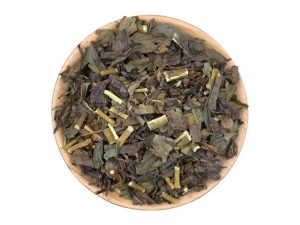
Harvest the whole plant in summer or fall and sun-dry it.
Crude Drug Identification
Botanical Information
Botanical Classification
Foguangcao, a plant of the Lamiaceae family.
Morphological Characteristics
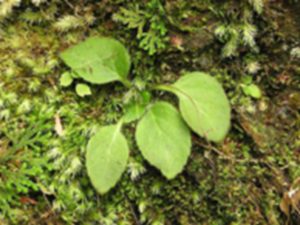
An annual herb, 10–40 cm tall. Fibrous roots grow in tufts. Stems are covered with short soft hairs or fine soft hairs. Basal leaves are mostly simple; cauline leaves are simple or trifoliate; simple leaves are ovate, and leaflets are ovate, with the terminal ones being larger. Whorled cymes bear 2–8 flowers, sparsely arranged, forming terminal and axillary pseudo-racemes; bracts are ovate;Calyx campanulate, externally covered with fine pubescence and glandular dots; upper lip entire, lower lip with 2 teeth, teeth ovate-triangular; corolla pale red or pale purple, upper lip straight, lower lip 3-lobed; filaments about 1 mm long, connective short and small, arcuate, upper and lower arms of equal length. Nutlets ovate, pale brown. Flowering period: March–May.
Distribution Area
Distributed in Zhejiang, Fujian, Hunan, Sichuan, and Guizhou.