Curcuma is a name for a traditional Chinese medicine. It refers to the dried rhizomes of plants in the genus Curcuma of the Zingiberaceae family, specifically Curcuma wenyujin Y.H.Chen et C.Ling (Wenyujin), Curcuma longa L. (Turmeric), Curcuma kwangsiensis S.G.Lee et C.F.Liang (Guangxi Curcuma), or Curcuma phaeocaulis Val. (Peng Curcuma).The first two are commonly known as “Wenyujin” and “Huangsi Yujin,” respectively, while the others are commonly referred to as “Guiyujin” or “Lüsi Yujin” based on their different characteristics. It has the effects of promoting blood circulation and relieving pain, regulating qi and alleviating depression, clearing the heart and cooling the blood, and promoting bile secretion to relieve jaundice.It is primarily used to treat stabbing pain in the chest and flanks, chest pain due to chest obstruction, amenorrhea and dysmenorrhea, breast distension and pain, mental confusion due to febrile diseases, epilepsy and mania, vomiting and nosebleeds caused by blood heat, and jaundice with dark urine.

Curcuma
Curcuma is a name for a traditional Chinese medicine. It refers to the dried rhizomes of plants in the genus Curcuma of the Zingiberaceae family, specifically Curcuma wenyujin Y.H.Chen et C.Ling (Wenyujin), Curcuma longa L. (Turmeric), Curcuma kwangsiensis S.G.Lee et C.F.Liang (Guangxi Curcuma), or Curcuma phaeocaulis Val. (Peng Curcuma).The first two are commonly known as “Wenyujin” and “Huangsi Yujin,” respectively, while the others are commonly referred to as “Guiyujin” or “Lüsi Yujin” based on their different characteristics. It has the effects of promoting blood circulation and relieving pain, regulating qi and alleviating depression, clearing the heart and cooling the blood, and promoting bile secretion to relieve jaundice.It is primarily used to treat stabbing pain in the chest and flanks, chest pain due to chest obstruction, amenorrhea and dysmenorrhea, breast distension and pain, mental confusion due to febrile diseases, epilepsy and mania, vomiting and nosebleeds caused by blood heat, and jaundice with dark urine.
Chinese Name : 郁金
Latin Name : Curcumae Radix
Aliases : Ma Cong, Wu Di Zu, Huang Yu, Wu Tou
Authentic Producing Area : Sichuan, Zhejiang, Guangxi, Yunnan
Nature, Flavor & Meridian Tropism : Pungent and bitter in taste; cold in nature; enters the Liver, Heart, and Lung meridians
Benefits & Efficacy
Benefits
Promotes blood circulation and relieves pain; regulates qi and dispels stagnation; clears the heart and cools the blood; promotes bile secretion and alleviates jaundice.
Indications
Stabbing pain in the chest and flanks; chest pain due to chest obstruction; amenorrhea and dysmenorrhea; breast distension and pain; mental confusion due to febrile diseases; epilepsy and mania; vomiting and epistaxis due to blood heat; jaundice with red urine.
Usage and Dosage
Internal use: Decocted, 5–12 g; taken as a powder, 2–5 g.
Precautions
1. Contraindicated in cases of yin deficiency with blood loss or absence of qi stagnation and blood stasis; use with caution during pregnancy. 2. According to the “Nineteen Contraindications,” Curcuma is contraindicated with clove; it should not be used in combination with clove or mother clove.
Chemical Constituents
Contains essential oils (camphene, camphor, sesquiterpenes, etc.), curcumin, curcumones, and other compounds. Also contains starch, polysaccharides, fatty oils, rubber, and myrcenol.
Pharmacological Actions
Curcuma has the effects of protecting liver cells, promoting liver cell regeneration, reducing fat, and inhibiting liver cell fibrosis; it can counteract toxic liver lesions. Curcumin and essential oils promote bile secretion and excretion, reducing urobilinogen in urine; decoctions stimulate the secretion of gastric acid and duodenal juices. Aqueous decoctions can lower whole blood viscosity and inhibit platelet aggregation, while ethanol extracts can reduce plasma fibrinogen levels.Decoctions and essential oils exhibit inhibitory effects against various skin fungi, while curcuma exhibits inhibitory effects against a variety of bacteria, demonstrating a stronger effect against Gram-negative bacteria than against Gram-positive bacteria. Curcuma also possesses certain anti-inflammatory and analgesic effects. Additionally, curcuma has anti-early pregnancy effects.
Relevant Discussions
1. *Compendium of Materia Medica*: “Treats pain in the chest and abdomen caused by blood and qi stagnation; postpartum septic blood surging to the heart with near-fatal consequences; and mental disorders such as insanity and mania.”
2. *Essentials of Materia Medica*: “Regulates qi, relieves depression, promotes blood flow, and dispels blood stasis. Clears heart heat, disperses liver stagnation, and treats retrograde menstruation in women.”
Applications
Clinical Applications
1. To treat pain caused by stagnation of qi and blood, it is often combined with Mu Xiang (Saussurea costus). For qi stagnation, double the dose of Mu Xiang; for blood stasis, double the dose of Yu Jin. An example is the Dian Dao Mu Jin San (from *Yi Zong Jin Jian*).
2. To treat stabbing pain in the chest and flanks caused by liver qi stagnation, it can be combined with herbs such as Chai Hu (Bupleurum), Bai Shao (Paeonia lactiflora), and Xiang Fu (Cyperus rotundus);to treat chest pain (Xiongbi) caused by blood stasis obstructing the heart, it can be combined with Trichosanthes fruit, Allium tuberosum, and Salvia miltiorrhiza.
3. To treat dysmenorrhea and breast distension caused by liver qi stagnation with heat, qi stagnation, and blood stasis, it is often combined with Bupleurum, Gardenia, Angelica sinensis, and Ligusticum chuanxiong, as in the Decoction for Dispelling Stagnation and Regulating Menstruation (from *Fu Qingzhu’s Gynecology*).
4. To treat masses, lumps, and abdominal fullness, it can be combined with softshell turtle shell, Curcuma zedoaria, Salvia miltiorrhiza, and green tangerine peel.
5. To treat mental confusion caused by phlegm-turbidity obscuring the orifices of the heart or heat invading the pericardium, it can be combined with Acorus tatarinowii and Gardenia, as in the Acorus and Curcuma Decoction (from *Compendium of Warm Diseases*).
6. To treat epilepsy caused by phlegm obstruction, it can be combined with Bai Fan to transform phlegm and open the orifices, as in Bai Jin Wan (from *Shengsheng Zhong Miaofang*).
7. To treat hematemesis, epistaxis, and retrograde menstruation caused by the upward rebellion of qi and fire, it can be combined with Sheng Di, Dan Pi, and Zhi Zi to clear heat, cool the blood, resolve depression, and subdue fire, as in Sheng Di Huang Tang (from *Yixue Xinwu*).
8. To treat hematuria and bloody dysuria caused by heat accumulation in the lower jiao affecting the blood vessels, it can be used in combination with Sheng Di Huang, Xiao Ji, and other herbs, such as the Curcuma Powder (from *Formulas for Universal Relief*).
9. To treat damp-heat jaundice, it is appropriate to combine it with Yin Chen Hao and Gardenia; when combined with Jin Qian Cao, it can treat gallstones.
Related Compatibility
1. Curcuma with Bupleurum: Curcuma primarily enters the blood aspect of the Liver Meridian; it can both invigorate blood circulation, remove blood stasis, and relieve pain, as well as soothe the Liver, regulate Qi, and relieve depression. Bupleurum primarily enters the Qi aspect of the Liver Meridian and is effective at soothing the Liver, regulating Qi, and relieving depression. When used together, these two herbs enhance the effects of soothing the Liver, relieving depression, invigorating blood circulation, and relieving pain.This combination is suitable for conditions such as chest and flank pain, irregular menstruation, and menstrual abdominal pain caused by liver qi stagnation and blood stasis obstructing the liver and gallbladder.
2. Curcuma with Fructus Aurantii: Curcuma enters both the Qi and Blood aspects, focusing on regulating Qi to relieve depression and cooling the blood to disperse stasis; Fructus Aurantii primarily enters the Qi aspect, focusing on regulating Qi to relieve distension.When used together, these two herbs treat both qi and blood simultaneously, enhancing their ability to regulate qi, invigorate blood circulation, relieve depression, and alleviate pain. This combination is suitable for chest and flank distending or stabbing pain caused by liver qi stagnation and blood stasis.
3. Curcuma with Wood Fragrance (Muxiang): Curcuma excels at invigorating blood and removing blood stasis; Wood Fragrance excels at regulating qi and relieving pain. When used together, these two herbs can both invigorate blood and regulate qi.It is indicated for chest, flank, and abdominal pain caused by qi stagnation and blood stasis.
4. Curcuma with Artemisia: Curcuma cools the blood, promotes blood circulation, promotes bile secretion, and alleviates jaundice; Artemisia clears and drains damp-heat, promotes bile secretion, and alleviates jaundice. When used together, the effects of clearing heat, cooling the blood, draining dampness, and alleviating jaundice are enhanced. It is indicated for damp-heat jaundice, flank pain, chest tightness, and epigastric fullness.
5. Curcuma combined with Mingfan: Curcuma is pungent and bitter in nature and cold in property; it excels at cooling the blood, clearing the heart, relieving depression, and opening the orifices. Mingfan is sour and astringent in nature and cold in property; it dries dampness, eliminates phlegm, and is particularly effective at resolving stubborn phlegm. When used together, these two herbs significantly open the orifices, eliminate phlegm, cool the blood, and remove blood stasis. This combination is suitable for various conditions such as mania, madness, and epilepsy caused by the accumulation of phlegm-heat.
6. Curcuma with Aquilaria: Curcuma excels at descending Qi, resolving counterflow, cooling the blood, and arresting bleeding; Aquilaria excels at regulating Qi, resolving blood stasis, and arresting bleeding and relieving pain. When used together, these two herbs not only descend Qi and resolve blood stasis but also arrest bleeding and harmonize the blood. They are indicated for conditions such as hemoptysis, epistaxis, and retrograde menstruation caused by blood stasis and counterflow of Qi.
Medicinal Identification
1. Guang Curcuma and Chuan Curcuma: Guang Curcuma is the rhizome of turmeric, while Chuan Curcuma is the rhizome of Curcuma. Both herbs possess the effects of promoting blood circulation and relieving pain, regulating qi and resolving depression, cooling the blood and clearing the heart, and promoting bile secretion to alleviate jaundice. They are both used to treat chest and flank pain caused by qi stagnation and blood stasis, as well as chest obstruction and angina pectoris,irregular menstruation, amenorrhea, dysmenorrhea, postpartum abdominal pain, mental confusion due to febrile diseases, epilepsy and mania, damp-heat jaundice, as well as hemoptysis, epistaxis, and retrograde menstruation—all bleeding syndromes caused by the upward rebellion of qi and fire. However, Guang Yujin excels at regulating qi and relieving depression, and is often used for syndromes of liver qi stagnation or those of qi stagnation and blood stasis where qi stagnation predominates.Chuan Yu Jin excels at invigorating blood and resolving stasis, and is most commonly used for conditions involving both qi stagnation and blood stasis, particularly those where blood stasis is the predominant factor.
2. Yu Jin and Xiang Fu: Both herbs possess the functions of soothing the liver and relieving depression, as well as regulating qi and alleviating pain, and can be used to treat conditions of liver depression and qi stagnation.However, Curcuma is pungent and bitter in nature with a cold property; it enters both the Blood and Qi levels. It excels at promoting blood circulation to relieve pain and regulating Qi to disperse depression, making it particularly effective for treating pain syndromes caused by Qi stagnation and blood stasis. It is thus classified as a Qi-regulating herb that acts on the Blood level. Cyperus is pungent and aromatic in nature with a dispersing action; it specifically enters the Qi level. It excels at soothing the liver and regulating Qi, as well as regulating menstruation and relieving pain. It is particularly effective for treating pain syndromes caused by liver Qi stagnation and is a key herb for regulating Qi in internal medicine and regulating menstruation in gynecology.
Related Medicines
Pingxiao Capsules (Tablets), Hewei Tablets, Sunanshan Abdominal Pain Pills, Liganlong Granules (Tablets), and Yangxianfeng Pills.
Related Prescriptions
Dian Dao Mu Jin Powder (*Medical Canon of the Golden Mirror*), Xuan Yu Tong Jing Decoction (*Fu Qingzhu’s Gynecology*), Bai Jin Pills (*Formulas Based on Actual Cases*).
Medicinal Diet Therapy
Boiled Water Duck with Plantain Herb and Curcuma
1. Effects: Clears heat, dispels dampness, promotes diuresis, reduces swelling, and tonifies the spleen and stomach. Used for patients with acute viral hepatitis, damp-heat obstruction, and reddish-yellow urine.
2. Ingredients: 20 grams of Plantain Herb, 9 grams of Curcuma, 1 water duck (1,000 grams), 5 grams each of ginger and salt, 2 grams of scallions, and 10 grams of Shaoxing wine.
3. Preparation: Wash the Plantain Herb and cut it into 5-centimeter sections. Wash the Curcuma and place both in a gauze bag, tying the opening securely. Slaughter the water duck, then remove the feathers, internal organs, and feet. Lightly crush the ginger and cut the scallions into sections.Place the water duck in a stew pot and add Shaoxing wine, salt, ginger, and scallions. Place the herb bundle inside the duck’s cavity and pour in 1,500 milliliters of water. Bring the stew pot to a boil over high heat, then simmer over low heat for 1 hour until done.
4. Usage: Take once daily, consuming 50 grams of water duck meat and 200 milliliters of broth each time.
Notes
Patients requiring treatment with traditional Chinese medicine should first consult a licensed TCM hospital, where a TCM practitioner will conduct a professional diagnosis and prescribe the appropriate herbal formula.
Processing & Preparation
Harvesting & Processing
Harvest in winter after the stems and leaves have withered; extract the tuberous roots, remove soil and fine roots, steam or boil until thoroughly cooked through, then dry.
Processing Methods
1. Curcuma
Take the raw herbal material, remove impurities, sort by size, wash thoroughly, moisten thoroughly, cut into thin diagonal or transverse slices, and dry.
2. Roasted Curcuma
Place the cleaned Curcuma slices in a pan and heat over low heat, roasting until they turn a deep yellow color.
3. Vinegar-Treated Curcuma
(1) Vinegar-Stir-Frying: Take the cleaned Curcuma slices, mix thoroughly with rice vinegar, and let stand until the vinegar is completely absorbed. Place in a pan and heat over low heat, stirring until the slices take on a slight golden hue; remove and let cool. Use 10 kg of rice vinegar for every 100 kg of Curcuma slices.
(2) Vinegar-Boiled Curcuma: Take cleaned Curcuma slices, wash them thoroughly with clean water, soak until fully rehydrated, remove, and transfer to a pot. Add vinegar and water, then boil until all the water has evaporated. Remove, air-dry until half-dry, cut into diagonal slices, and sun-dry. Use 0.12 kg of vinegar per 0.5 kg of Curcuma.
(3) Vinegar-Steamed Curcuma: Take cleaned Curcuma slices, add 10% vinegar and an appropriate amount of water, and soak for about 2 days.Stir frequently; once thoroughly saturated, place in a steamer and steam over high heat for 2–3 hours. Remove, cut into 2-mm-thick parallel slices, and dry.
4. Wine-Processed Curcuma
Mix cleaned Curcuma slices with yellow wine, place in a pot, and stir-fry over low heat until slightly dry. Remove and air-dry. Use 0.06 kg of yellow wine per 0.5 kg of Curcuma.
Storage Methods
Store in a dry container in a well-ventilated, dry place. Store stir-fried curcuma, vinegar-treated curcuma, and wine-treated curcuma in airtight containers. Keep in a cool, dry place, protected from moisture and insect infestation.
Crude Drug Identification
Identification
1. Cross-section of this product
(1) Warm Curcuma: Epidermal cells are sometimes present, with slightly thick outer walls. The root is narrow, consisting of 4–8 rows of cells with thin, slightly undulating walls arranged in an orderly manner; the cortex is approximately half the diameter of the root, with oil cells difficult to discern, and the endocortex is distinct.The central cylinder contains 40–55 phloem bundles and 40–55 xylem bundles, arranged alternately. Each xylem bundle contains 2–4 vessels, along with slightly lignified wood fibers; the vessels are polygonal with thin walls and a diameter of 20–90 μm. Gelatinized starch granules are visible in the parenchyma cells.
(2) Yellow-threaded Curcuma (Turmeric): The cell walls of the innermost layer of the root cortex are thickened.There are 22–29 phloem bundles and 22–29 xylem bundles in the central cylinder, arranged alternately; in some cases, xylem vessels connect with fibers to form rings. Oil cells are numerous. Pigment cells are scattered throughout the parenchyma.
(3) Guangxi Curcuma (Curcuma guangxiensis): The root periderm cells are occasionally thickened; inside the periderm, there are 1–2 rows of thick-walled cells forming a ring, with distinct striations.There are 42–48 phloem bundles and 42–48 xylem bundles in the central cylinder, arranged alternately; the vessels are subcircular, with a diameter of up to 160 μm.
(4) Green-thread Curcuma (Peng Curcuma): The root epidermal cells show no thickening. Pigment cells are commonly present in the cortex on the outer side of the central cylinder; the phloem is shrunken, and there are 64–72 xylem bundles with flattened, circular vessels.
2. Take 2 g of the powdered sample, add 25 mL of anhydrous ethanol, sonicate for 30 minutes, filter, and evaporate the filtrate to dryness. Dissolve the residue in 1 mL of ethanol to prepare the test solution. Separately, take 2 g of Curcuma zedoaria reference material and prepare the reference solution using the same method.Test by thin-layer chromatography (General Chapter 0502): Pipette 5 μl of each of the two solutions and apply them separately onto the same silica gel G plate. Use n-hexane–ethyl acetate (17:3) as the developing solvent; presaturate for 30 minutes, develop the plate, remove it, and allow it to air-dry.spray with a 10% ethanol solution of sulfuric acid, heat at 105°C until the spots become clearly visible, and examine under natural light and ultraviolet light (365 nm). In the test sample chromatogram, main spots or fluorescent spots of the same color as those in the reference herbal material chromatogram should appear at the corresponding positions.
Properties of Crude Drugs
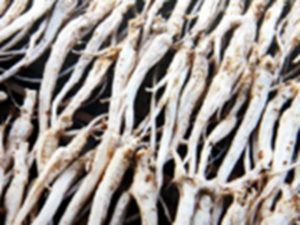
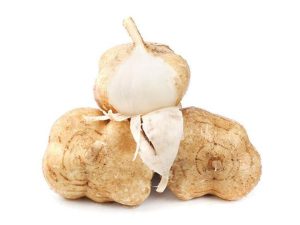
1. Wen Yujin: The tuber is oblong or ovoid, slightly flattened, sometimes slightly curved, with both ends tapering to a point. It measures 3.5–7 cm in length and 1.2–2.5 cm in diameter. The surface is grayish-brown or grayish-brown, with irregular longitudinal wrinkles; the raised areas of the longitudinal ridges are generally shallow. The texture is firm; the cross-section is grayish-brown or grayish-green with a waxy luster;the inner pericycle ring is distinct. It has a faintly fragrant aroma and a slightly bitter taste.
2. Yellow-thread Curcuma: The rhizome is spindle-shaped, with some specimens having one end slender and the other swollen. It measures 2.5–4.5 cm in length and 1–1.5 cm in diameter. The surface is brownish-gray or grayish-yellow, with fine wrinkles. The texture is hard. The cross-section is horny, with an orange-yellow center and a brownish-yellow to brownish-red outer ring.It has an aromatic odor and a pungent taste.
3. Cassia Curcuma: The rhizome is long conical or oblong, 2–6.5 cm long and 1–1.8 cm in diameter. The surface is dark brown or earthy yellow, with sparse, shallow longitudinal striations and a relatively coarse reticulate texture. It is hard in texture. The cross-section is horny, grayish-brown to brown, with a relatively distinct endodermis.It has a faint odor and a slightly bitter and pungent taste.
4. Green-threaded Curcuma: The rhizome is oblong-elliptical and relatively stout, 1.5–3.5 cm long and 1–1.2 cm in diameter. The surface is gray or grayish-black with wrinkles. It is hard in texture. The cross-section is semi-corky, faintly grayish-brown, with a relatively distinct inner cortex. It has a faint odor and a mild taste.
Properties of Processed Slices
1. Curcuma: Thin horizontal or oblique slices with a light grayish-yellow or grayish-brown surface that is horny and glossy, featuring a ring of lighter-colored endosperm in the center. The periphery ranges from grayish-yellow-brown to grayish-brown, with vertical or irregular wrinkles; the areas where the vertical lines are raised are lighter in color. It has a faint odor and a bland taste.
2. Roasted Curcuma: Similar in appearance to Curcuma; the surface is deep yellow with scorched spots.
3. Vinegar-Treated Curcuma: Similar in appearance to Curcuma; the surface is yellowish-brown with a slight vinegar odor.
4. Wine-Treated Curcuma: Similar in appearance to Curcuma; the color is darker with a slight wine odor.
Botanical Information
Botanical Classification
Plants of the genus Curcuma in the Zingiberaceae family: Curcuma wenyujin, Curcuma longa, Curcuma guangxiensis, and Curcuma pongshu.
Morphological Characteristics
1. Warm Curcuma: A perennial herb, 80–160 cm tall. The main rhizome is torus-shaped, while the lateral rhizomes are finger-like, with a lemon-colored interior. The fibrous roots are slender and long, often swelling at the tips into spindle-shaped tuberous roots with a white interior.Leaves number 4–7, arranged in two rows; petioles are short, less than half the length of the leaf blade; leaf blades are broadly elliptical, 35–75 cm long and 14–22 cm wide, with an acuminate or short-caudate apex, a cuneate base extending down the petiole, and an abaxial surface that is glabrous.The spike-like inflorescence is cylindrical, emerging from the rhizome before the leaves, 20–30 cm long and 4–6 cm in diameter. The upper, flowerless bracts are oblong, 5–7 cm long and 1.5–2.5 cm wide, rose-red in color; the middle and lower, flowered bracts are oblong, 3–5 cm long and 2–4 cm wide, greenish-white;The calyx tube is white, with three unequal teeth at the apex; the corolla tube is funnel-shaped and white, with three membranous, oblong lobes, the posterior lobe being larger, with a slightly pouch-like apex and coarse hairs near the tip;The lateral rudimentary stamens are petal-like and yellow; the labellum is obovate, reflexed, yellow, and slightly concave at the apex; there is one fertile stamen with a spur at the base of the anther; the ovary is covered with long soft hairs, and the style is slender and long. Flowering period: April–June.
2. Turmeric: A perennial herb, 1–1.5 m tall. The rhizome is well-developed, growing in clumps; branches are elliptical or cylindrical, orange-yellow, and highly fragrant; roots are stout, swelling at the tips into tuberous roots. Leaves are basal, 5–7 in number, arranged in two rows; petioles are 20–45 cm long;leaf blades are oblong or narrowly elliptic, 20–50 cm long and 5–15 cm wide, with an acuminate apex and a cuneate base extending down the petiole; the upper surface is yellowish-green, the lower surface is pale green, and both are glabrous. The flower stalk emerges from the leaf sheaths; the peduncle is 12–20 cm long, and the spike-like inflorescence is cylindrical, 12–18 cm long;the upper, flowerless bracts are pink or pale reddish-purple, oblong, 4–6 cm long, 1–1.5 cm wide; the middle and lower, flowered bracts are pale green or greenish-white, ovate to nearly round, 3–4 cm long; the calyx tube is greenish-white, with 3 teeth;The corolla tube is funnel-shaped, approximately 1.5 cm long, pale yellow, densely pubescent at the throat, with 3 lobes; there is one fertile stamen with a short, flattened filament and an oblong anther bearing a spur at the base; the ovary is inferior and externally pubescent; the style is slender and elongated, with two club-shaped glands at the base, and the stigma is slightly swollen and somewhat bilabiate. Flowering occurs in August.
3. Guangxi Curcuma: A perennial herb, 50–110 cm tall. The main rhizome is ovoid; lateral rhizomes are digitiform, with a white or slightly yellow cross-section. The tips of the fibrous roots often swell into spindle-shaped tuberous roots with a white cross-section. Leaves are basal; petioles are 1/4 the length of the leaf blade and covered with short soft hairs;leaf sheaths 10–33 cm long, covered with short soft hairs; 2–5 leaves, erect, leaf blades oblong-elliptic, 14–39 cm long, 4.5–9.5 cm wide, apex short-acuminate to acuminate, base gradually narrowing and extending downward, both surfaces densely covered with coarse soft hairs; in some forms, a purple halo is present on both sides of the midrib.The spikelike inflorescence emerges from the rhizome; it is cylindrical, appearing before or simultaneously with the leaves, approximately 15 cm long and 7 cm in diameter. The bracts below the inflorescence are broadly ovate and pale green, while the upper bracts are oblong and pale red; the calyx is white, approximately 1 cm long, split on one side to the middle, and bearing three blunt teeth at the apex;The corolla is nearly funnel-shaped, 2–2.5 cm long, with three petals that are pink, oblong, and with the rear petal being wider and slightly pouch-shaped at the apex; the lateral reduced stamens are petal-like and pale yellow; the labellum is nearly circular, pale yellow, with the apex shallowly and circularly 3-lobed, and a spur at the base of the anther; the ovary is covered with long soft hairs, the style is filiform, and the stigma is capitate and hairy.Flowering period: May–July.
4. Pongos: A perennial herb, 80–150 cm tall. The main rhizome is torus-shaped to conical-torus-shaped; lateral rhizomes are digitate, with an inner surface ranging from yellowish-green to dark green, or sometimes grayish-blue; the tips of the fibrous roots are swollen into fleshy spindle-shaped structures, with an inner surface that is yellowish-green or nearly white. The lower part of the leaf sheath is often brownish-purple.Leaves are basal, numbering 4–7; petioles are short, measuring 1/3–1/2 the length of the leaf blade or even shorter; leaf blades are oblong-elliptic, 20–50 cm long and 8–20 cm wide, with an apex that is acuminate to shortly caudate, the base extending downward into a petiole; both surfaces are glabrous, with a 1–2 cm wide purple halo on either side of the midrib on the upper surface.The spike-like inflorescence is cylindrical, emerging from the rhizome, 12–20 cm long, with more than 20 bracts; the upper bracts are oblong, 4–6 cm long, 1.5–2 cm wide, and pink to purplish-red; the middle and lower bracts are nearly circular, 2–3.5 cm long, 1.5–3.2 cm wide, and pale green to white.Flowering period: April–June.
Distribution Area
1. Zhejiang Curcuma: Mainly produced in Zhejiang. 2. Turmeric: Distributed in Jiangxi, Fujian, Taiwan, Guangdong, Guangxi, Sichuan, Yunnan, and other areas. 3. Guangxi Curcuma: Distributed in Guangxi. 4. Peng Curcuma: Distributed in Guangdong, Guangxi, Sichuan, Yunnan, and other areas. Small-scale cultivation occurs in Zhejiang, Fujian, Hunan, and other regions.
Growth Habits
Prefers a warm, humid climate with ample sunlight and abundant rainfall; intolerant of severe cold, frost, drought, or waterlogging. Best cultivated in sandy loam with a deep soil profile—loose in the upper layers and relatively compact in the lower layers. Avoid continuous cropping; it is often intercropped with tall-stemmed crops.
Propagation Methods
Propagation is by rhizomes.
Cultivation Techniques
At harvest time, select rhizomes free of pests, diseases, and damage for use as planting stock.Store the planting rhizomes in a dry, well-ventilated indoor area over the winter, and retrieve them for spring planting. Before planting, cut large rhizomes lengthwise into two halves or smaller pieces, ensuring each piece has at least two buds. To prevent the rhizomes from rotting, allow the cut surfaces to air-dry slightly before planting; alternatively, coat the cut surfaces with lime or wood ash as you cut them and plant immediately.Plant in raised beds with row spacing of 33–40 cm and hole spacing of 27–33 cm. Plant 3–5 rhizomes per hole with the buds facing upward, cover with soil, and lightly firm the soil. The seed rate is 2,250–3,000 kg per hectare.
Pest and Disease Control
1. Diseases include black spot disease, which affects the leaves. At the first sign of infection, promptly remove diseased leaves and spray with a 500-fold dilution of 50% Topsin-M or a 400–800-fold dilution of 65% zinc mancozeb wettable powder.
2. Insect pests include cutworms and wireworms, which feed on the fibrous roots during the seedling stage, preventing the formation of tubers. These can be controlled by manual removal or using poisoned bait. Other pests include the ginger white butterfly and the corn borer.