Stems and leaves of Rauvolfia verticillata are a traditional Chinese medicine. They are derived from the stems and leaves of Rauvolfia verticillata (Lour.) Baill. and other species of the same genus within the Apocynaceae family. They are distributed in Taiwan, Guangdong, Hainan, Guangxi, Guizhou, Yunnan, and other regions. They have a bitter taste and a cool nature. They enter the Lung, Spleen, and Liver meridians. They possess the effects of clearing heat and detoxifying, promoting blood circulation and reducing swelling, and lowering blood pressure.It is primarily used to treat sore throat, bruises and swelling from trauma, venomous snake bites, and hypertension.
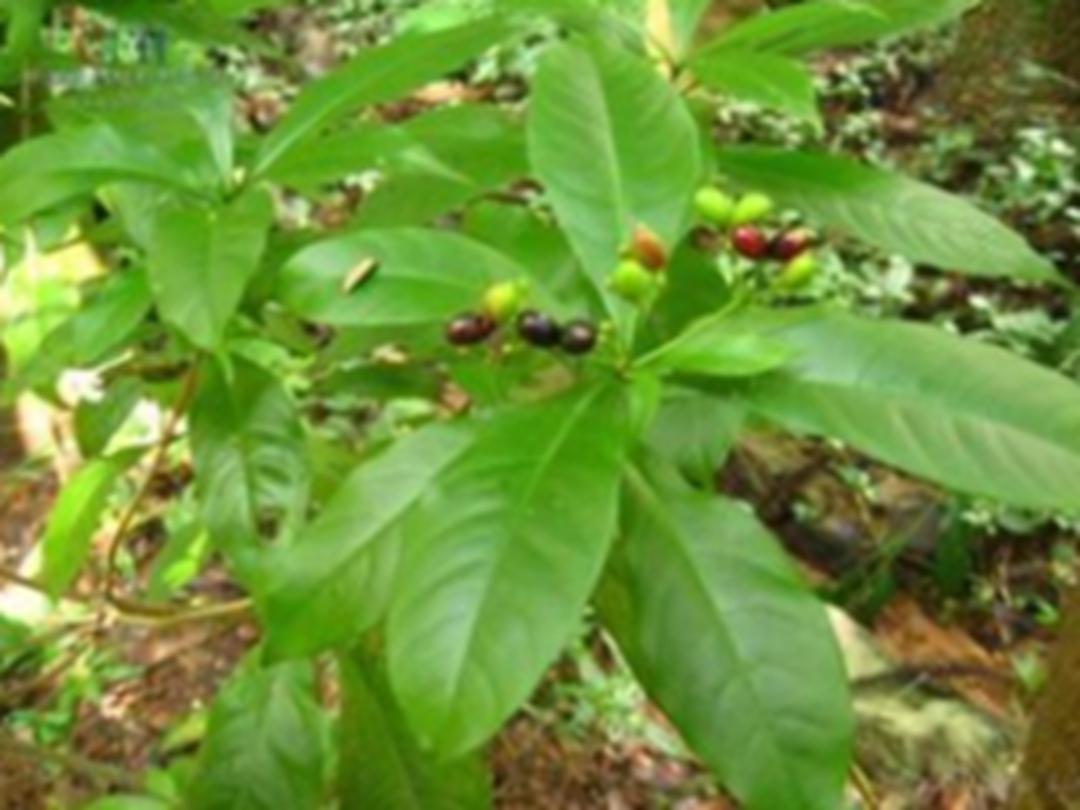
Rauvolfia Stems and Leaves
Stems and leaves of Rauvolfia verticillata are a traditional Chinese medicine. They are derived from the stems and leaves of Rauvolfia verticillata (Lour.) Baill. and other species of the same genus within the Apocynaceae family. They are distributed in Taiwan, Guangdong, Hainan, Guangxi, Guizhou, Yunnan, and other regions. They have a bitter taste and a cool nature. They enter the Lung, Spleen, and Liver meridians. They possess the effects of clearing heat and detoxifying, promoting blood circulation and reducing swelling, and lowering blood pressure.It is primarily used to treat sore throat, bruises and swelling from trauma, venomous snake bites, and hypertension.
Chinese Name : 萝芙木茎叶
Nature, Flavor & Meridian Tropism : Bitter, cool. Lung, Spleen, and Liver meridians
Benefits & Efficacy
Benefits
Clears heat and detoxifies; promotes blood circulation and reduces swelling; lowers blood pressure.
Indications
Sore throat, bruises and swelling from trauma, venomous snake bites, and hypertension.
Usage and Dosage
Internal use: Decoct 15–30 g. External use: Apply an appropriate amount, pounded into a paste; or decoct in water for washing.
Precautions
Contraindicated for those with gastric disorders or deficiency of qi and blood with cold.
Pharmacological Actions
1. Effects on the cardiovascular system: Produces an immediate blood pressure-lowering effect. 2. Effects on the central nervous system: Reserpine releases and depletes neurotransmitters in the brain, such as serotonin and norepinephrine; these central effects are believed to be related to reserpine’s sedative action. 3. Other effects: Long-term, high-dose use of reserpine may cause Parkinson’s syndrome, which may be related to the drug’s depletion of dopamine in the striatum of the brain; it lowers the threshold for electroconvulsive shock and pentylenetetrazole-induced seizures in rats; at high doses, it lowers body temperature and may also increase gastric acidity in rats, mice, cats, and humans, leading to gastric ulcers.
Applications
Related Compatibility
1. For treating common cold and wind-heat syndrome: Decoct Yangmu Naiye leaves and take orally. (*Illustrated Compendium of Guangxi Medicinal Plants*)
2. For contusions and snake bites: Apply a poultice of crushed fresh Lofah leaves. (Guangzhou Air Force *Manual of Common Chinese Herbal Medicines*)
3. For bleeding from knife wounds: Take an appropriate amount of tender Lofah leaves, crush them into a paste, and apply to the wound. (*Guizhou Herbal Medicine*)
Processing & Preparation
Harvesting & Processing
Harvest in summer and fall; cut into sections, sun-dry, or use fresh.
Crude Drug Identification
Botanical Information
Botanical Classification
Rofu wood, a plant of the Apocynaceae family.
Morphological Characteristics
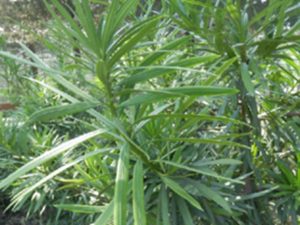
A shrub, 1–3 m tall. The entire plant is smooth and glabrous. Twigs are pale grayish-brown with sparse, dot-like lenticels.Leaves are usually 3–4 in a whorl, rarely opposite; petioles are 0.5–1 cm long; leaf blades are thin and supple, oblong-lanceolate, 4–14 cm long and 1–4 cm wide, with an acuminate or acute apex, a cuneate or acuminate base, and entire or slightly undulate margins; the upper surface is green, and the lower surface is pale green; lateral glands are arched and ascending, without wrinkles.The cymose inflorescence is trichotomously branched and arises from the axils of the upper twigs; the main peduncle is slender, 2–4 cm long, with filiform pedicels approximately 5 mm long; the bracts are needle-like or triangular;the calyx is deeply 5-lobed, with ovate-lanceolate lobes that are green; the corolla is white, saucer-shaped, 5-lobed at the top, with ovate lobes; the corolla tube is slender and elongated, slightly swollen near the middle; there are 5 stamens with short filaments and linear anthers attached dorsally;The disk is annular; the ovary consists of two free carpels; the style is cylindrical, with a short club-shaped stigma and a ring-shaped membrane at the base. The fruit is drupe-like, free or fused, ovoid to elliptical, turning purplish-black when ripe. It contains a single seed. Flowering occurs from May to July, and fruiting from April through the following spring.