Dwarf Willow-through-fish, a name in traditional Chinese medicine. It belongs to the order Lamiales, family Scrophulariaceae, genus Salix-through-fish. It is distributed in Inner Mongolia (northern part), Heilongjiang (Manzhouli), and other areas. The whole plant is used medicinally; it is cold in nature and bitter in taste, and possesses the effects of clearing heat, draining dampness, detoxifying, and reducing swelling. It is commonly used for damp-heat jaundice, erysipelas, sore throat, and mouth and tongue ulcers.

Dwarf Willow-leaf
Dwarf Willow-through-fish, a name in traditional Chinese medicine. It belongs to the order Lamiales, family Scrophulariaceae, genus Salix-through-fish. It is distributed in Inner Mongolia (northern part), Heilongjiang (Manzhouli), and other areas. The whole plant is used medicinally; it is cold in nature and bitter in taste, and possesses the effects of clearing heat, draining dampness, detoxifying, and reducing swelling. It is commonly used for damp-heat jaundice, erysipelas, sore throat, and mouth and tongue ulcers.
Chinese Name : 矮柳穿鱼
Nature, Flavor & Meridian Tropism : Bitter in taste, cold in nature
Benefits & Efficacy
Benefits
Clears heat, drains dampness, detoxifies, and reduces swelling.
Indications
Damp-heat jaundice, erysipelas, sore throat, and mouth and tongue ulcers.
Usage and Dosage
Oral use: Decoction, 10–15 g.
Applications
Processing & Preparation
Crude Drug Identification
Botanical Information
Botanical Classification
A plant of the Scrophulariaceae family and the genus Scutellaria, specifically Scutellaria multibractata.
Morphological Characteristics
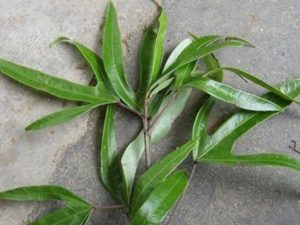
A perennial herb, profusely branched from the base, with branches often prostrate; only 8–20 cm tall. Leaves are completely alternate, numerous and dense, needle-shaped to narrowly linear, with a single midvein, glabrous, 1.5–5 cm long.Racemes are borne at the branch tips, 3–7 cm long; the rachis and pedicels are quite densely covered with glandular pubescence; bracts are linear-lanceolate, with the lower ones nearly 1 cm long; calyx lobes are long and narrow, linear-lanceolate, 4–6 mm long and 1 mm wide, glandular-pubescent on both surfaces;The corolla is yellow; excluding the spur, it is 12–15 mm long. The upper lip is longer than the lower lip; its lobes are 2 mm long with rounded-obtuse tips. The lateral lobes of the lower lip are oblong, 2–5 mm wide, while the median lobe is narrower. The spur is 8–15 mm long and slightly curved. The capsule is ovoid, 9 mm long and 7 mm in diameter.Seeds are disc-shaped with broad wings and a central tubercle. Flowering period: June–August.
Distribution Area
Inner Mongolia (northern part) and Heilongjiang (Manzhouli). Also found in Eastern Siberia, Soviet Union, and the People’s Republic of Mongolia. Grows in grasslands, wastelands, and sand dunes.