Tianchun Wuyingyi is the name of a traditional Chinese medicine. It is the whole plant of Smithia sensitiva Ait. (genus Smithia, family Fabaceae). The plant Smithia sensitiva is distributed in Fujian, Taiwan, Hunan, Guangdong, Hainan, Guangxi, Sichuan, and Yunnan. It has the effects of detoxifying, reducing swelling, and relieving coughs. It is primarily used to treat leptospirosis, abscesses, boils, and toxic sores, as well as venomous snake bites and coughs.
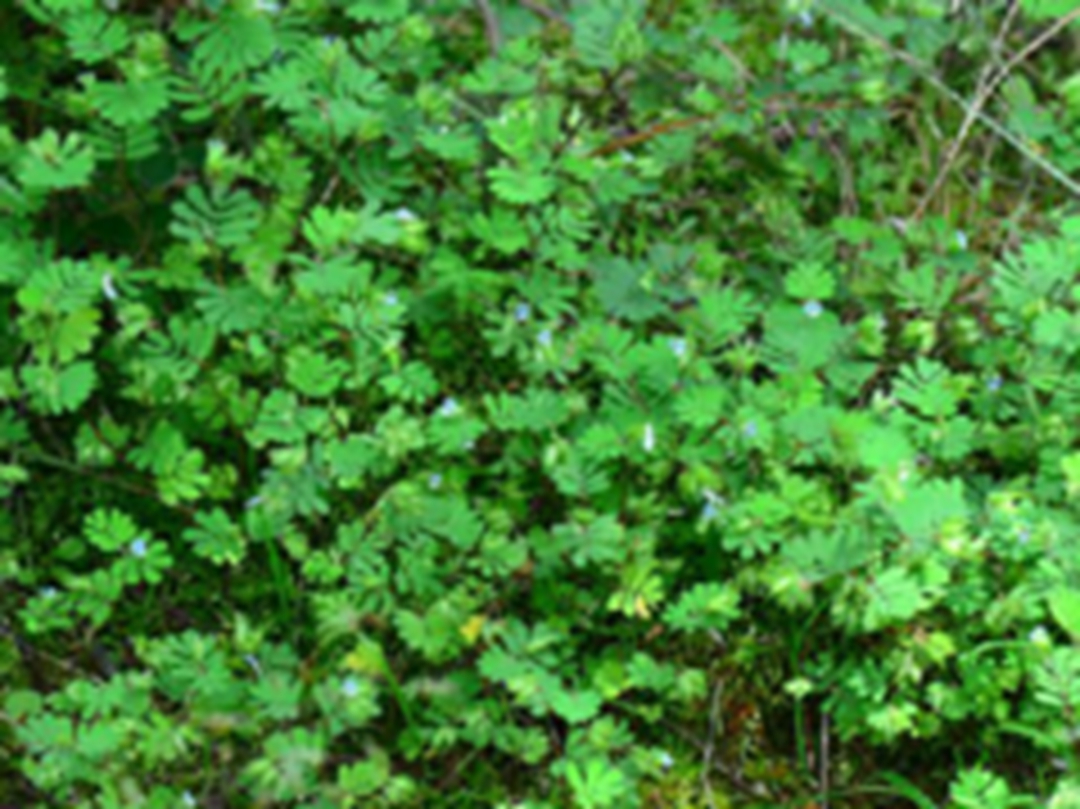
Field-lipped Blackfly-wing
Tianchun Wuyingyi is the name of a traditional Chinese medicine. It is the whole plant of Smithia sensitiva Ait. (genus Smithia, family Fabaceae). The plant Smithia sensitiva is distributed in Fujian, Taiwan, Hunan, Guangdong, Hainan, Guangxi, Sichuan, and Yunnan. It has the effects of detoxifying, reducing swelling, and relieving coughs. It is primarily used to treat leptospirosis, abscesses, boils, and toxic sores, as well as venomous snake bites and coughs.
Chinese Name : 田唇乌蝇翼
Aliases : Water Tiger, Water Centipede, Yellow Flower *Catalog of Medicinal Plants of Guangxi*
Nature, Flavor & Meridian Tropism : Slightly bitter in taste, neutral in nature. Enters the Lung Meridian
Benefits & Efficacy
Benefits
Detoxifies, reduces swelling, and relieves cough.
Indications
Leptospirosis, abscesses, boils, and toxic sores; venomous snake bites; cough.
Usage and Dosage
Internal use: Decoction, 15–30 g; fresh plant, 60–120 g. External use: Apply an appropriate amount of the fresh plant, pounded and applied as a poultice.
Relevant Discussions
*Fujian Materia Medica*: “Relieves cough, detoxifies, and reduces swelling. Primarily used to treat leptospirosis, cough, and abscesses.”
Applications
Related Compatibility
For the treatment of leptospirosis, use 60–120 g each of Tianchun Wufengyi, Huanliancao, and Jinhuacao, 30–60 g of Tangge Cai, and 120–240 g of Xieye Mantianxing. Use the fresh whole herbs for each dose. Prepare one dose daily, decoct in water, and divide the decoction into 3–4 doses to be taken over a period of more than 10 days.For cases with severe fever and muscle pain, add 30–60 g of Menggu Suo; for cases with scanty, dark urine, add 30–60 g of Plantain Herb; for cases of physical weakness due to cold, add 30 g of Paiqian Tree. (Selected Materials from the National Exhibition on New Traditional Chinese Medicine Therapies)
Processing & Preparation
Harvesting & Processing
Harvest the whole plant in the fall; use it fresh or sun-dry it.
Crude Drug Identification
Botanical Information
Botanical Classification
Tianjidou, a plant of the genus Poyougan in the Fabaceae family.
Morphological Characteristics
Tianjidou, also known as Membranose Pod (from *Names of Seed Plants in Lahan*), Po Yougan (from *Flora of Hainan*), and Sensitive Shi’s Bean (from *Illustrated Guide to Major Chinese Plants: Fabaceae*).An annual, prostrate herb reaching up to 1 m in length. Highly branched, with slender stems. Leaves are even-pinnate; leaflets number 8–14, oblong, 3–7 mm long, 1–2.5 mm wide, with rounded apices bearing short, bristly tips, obliquely rounded bases, and small bristles on the margins, the midvein on the underside, and the rachis; stipules are membranous, extending downward, and glabrous.Racemes axillary, with short pedicels; bracteoles 2, ovate, persistent, sparsely covered with minute spines; calyx bilabiate, 6–8 mm long, entire, sparsely covered with minute spines, which gradually fall off after fruiting;The corolla is yellow; the standard is obovate, slightly concave at the apex, and without a claw; the wings are oblong, shorter than the standard, and with claws; the keel is nearly as long as the wings; the stamens are arranged in two groups, with five stamens in each group. The pod has 4–6 pod segments, folded and enclosed within the calyx, and bears small tubercles. Flowering occurs in the fall.
Distribution Area
Distributed in Fujian, Taiwan, Hunan, Guangdong, Hainan, Guangxi, Sichuan, Yunnan, and other regions.