Wuyao is a traditional Chinese medicine consisting of the dried tuberous roots of Lindera aggregata (Sims) Kosterm., a plant belonging to the genus Lindera in the family Lauraceae. This herb has the therapeutic effects of regulating qi and relieving pain, as well as warming the kidneys and dispelling cold. It is primarily used to treat cold stagnation and qi stagnation, chest and abdominal distension and pain, qi reversal with shortness of breath, bladder deficiency with cold, enuresis and frequent urination, hernia pain, and menstrual cramps caused by cold.

Wuyao
Wuyao is a traditional Chinese medicine consisting of the dried tuberous roots of Lindera aggregata (Sims) Kosterm., a plant belonging to the genus Lindera in the family Lauraceae. This herb has the therapeutic effects of regulating qi and relieving pain, as well as warming the kidneys and dispelling cold. It is primarily used to treat cold stagnation and qi stagnation, chest and abdominal distension and pain, qi reversal with shortness of breath, bladder deficiency with cold, enuresis and frequent urination, hernia pain, and menstrual cramps caused by cold.
Chinese Name : 乌药
Latin Name : Linderae Radix
Aliases : Pangqi, Tiantai Wuyao, Dace, Dwarf Camphor, Dwarf Camphor Root, Tongqianchai, Tumu Xiang, Jiyu Jiang, Jigu Xiang, Baiye Chai
Authentic Producing Area : Zhejiang, Anhui, Hunan, Hubei
Nature, Flavor & Meridian Tropism : Warm in nature, pungent in taste; enters the Lung, Spleen, Kidney, and Bladder meridians
Benefits & Efficacy
Benefits
Promotes the flow of qi and relieves pain; warms the kidneys and dispels cold.
Indications
Mainly used for cold-induced qi stagnation, chest and abdominal distension and pain, qi reversal with shortness of breath, bladder deficiency with cold, enuresis and frequent urination, hernia pain, and menstrual cramps due to cold.
Usage and Dosage
Internal use: Decoct and take 3–9 g.
Precautions
Contraindicated for those with qi deficiency or internal heat.
Chemical Constituents
This product contains alkaloids and essential oils. The main components of the oil are lindane, lindene, lindanol, lindolic acid, and lindanol esters.
Pharmacological Actions
This product has pharmacological effects including regulation of gastrointestinal motility, analgesia, anti-inflammation, and antimicrobial activity.
Relevant Discussions
1. *Ben Cao Yan Yi*: “Wuyao has a mild, harmonizing nature and promotes the flow of qi, though it is not overly potent. When ground together with agarwood to make a decoction, it is highly effective in treating cold qi in the chest and abdomen.”
2. *Yao Pin Hua Yi*: “Wuyao has a strong, warm nature; therefore, it promotes the flow of qi and disperses stagnation more effectively than Xiangfu. Externally, it relieves exterior syndromes and regulates the muscles; internally, it soothes the middle burner and harmonizes qi.When used to disperse cold qi, external cold and cold qi are naturally eliminated; when used to expel pathogenic factors, epidemic miasms are immediately repelled; when used to relieve stagnant qi, abdominal pain from sudden illness and distending pain in the chest and diaphragm are instantly alleviated; when used to regulate meridian qi, paralysis of the limbs due to stroke and blood and qi stagnation after childbirth are gradually resolved—all thanks to its potent nature.”
3. *Ben Cao Qiu Zhen*: “For all diseases involving qi reversal that manifest as discomfort in the chest and abdomen, this herb is appropriate. Its effects are similar to those of Mu Xiang and Xiang Fu. However, Mu Xiang is bitter and warm, entering the Spleen to relieve stagnation, and is thus suitable for food stagnation; Xiang Fu is bitter and pungent, entering the Liver and Gallbladder meridians to disperse stagnation and resolve nodules, and is particularly effective for emotional depression. This herb, however, addresses pathogenic factors that reverse and spread throughout the chest, reaching every part of the body; therefore, it is used as a key herb for treating pathogenic factors causing reversal in the chest and abdomen.”
Applications
Clinical Applications
1. To treat oppression and pain in the chest, abdomen, and flanks, it is often combined with Xiangfu and Licorice, as in the Xiao Wu Chen Decoction (*Formulas of the Bureau of Harmonious Medicines*); it may also be used with Xie Bai, Trichosanthes Rind, and Corydalis;For treating distension and pain in the epigastrium and abdomen, it can be combined with Mu Xiang, Qing Pi, and E Zhu, as in the Wuyao San (from *Shenghui Fang*), or used with Xiangfu, Mu Xiang, and Chen Pi; for treating abdominal pain due to cold hernia, it is often used with Xiao Hui Xiang, Qing Pi, and Gao Liang Jiang, as in the Tiantai Wuyao San (from *Yixue Faming*);For dysmenorrhea caused by cold stagnation and qi stagnation, it can be used in combination with Danggui, Xiangfu, and MuXiang, as in Wuyao Decoction (*Ji Yin Gang Mu*).
2. To treat frequent urination due to kidney yang deficiency and bladder cold, as well as enuresis in children, it is often used in combination with Yizhiren and Shanyao, as in Suoquan Pills (*Jiaozhu Fu Ren Liang Fang*).
Related Compatibility
1. Combination of Wuyao and Yizhiren: Wuyao is pungent, dispersing, and warming; it ascends to the Spleen and Lung meridians to regulate qi and reverse counterflow, dispel cold, and relieve pain. It descends to the Kidney and Bladder meridians to warm the lower jiao and regulate cold qi in the lower jiao. Yizhiren is pungent, warm, and aromatic; it not only warms and tonifies Kidney yang, astringes, and reduces urination, but also warms the Stomach to expel cold, warms the Spleen to stop diarrhea, and curbs excessive salivation.Wuyao primarily promotes circulation and disperses, while Yizhiren focuses on warming, tonifying, and astringing. When combined, one disperses and the other astringes, significantly enhancing their ability to warm the lower jiao, dispel cold pathogens, tonify the spleen and kidneys, and reduce frequent urination. This combination is used to treat deficiency-cold in the lower jiao, frequent urination, and enuresis in children.
2. Wuyao Combined with Xiangfu: Wuyao is pungent and opening, warming and unblocking; it regulates qi, descends counterflow, dispels cold, relieves pain, warms the lower jiao, and regulates cold qi in the lower jiao. Xiangfu is pungent and dispersing, bitter and descending; neither cold nor hot in nature, it excels at regulating qi and resolving stagnation, and can also enter the blood division—hence some refer to it as the “qi herb within the blood”—making it an essential herb for regulating menstruation in gynecology. Xiangfu excels at soothing the liver, regulating qi, regulating menstruation, and relieving pain.Xiangfu primarily acts on the blood; Wuyao primarily acts on the qi. Xiangfu tends to soothe the liver and regulate qi; Wuyao excels at regulating qi and dispelling cold. When used together, these two herbs synergistically promote qi circulation, relieve distension, dispel cold, and alleviate pain. They are used to treat cold-induced qi stagnation, abdominal fullness, distension, pain, borborygmi, and diarrhea.
3. Wuyao Combined with Muxiang: Wuyao is pungent and warm, opening and unblocking; it regulates qi, dispels cold, and relieves pain;Muxiang is pungent and dispersing, bitter and descending; its aromatic properties transform dampness and regulate the qi of the Three Jiao, excelling particularly in resolving qi stagnation in the spleen and stomach. Wuyao excels at warming and dispelling cold and dampness in the Lower Jiao, while Muxiang excels at resolving qi stagnation in the spleen and stomach. When combined, these two herbs regulate qi, transform dampness, dispel cold, and relieve pain. They are used to treat epigastric and abdominal distension, pain, vomiting, belching, and loss of appetite caused by cold and dampness with qi stagnation in the spleen and stomach.
4. Wuyao Combined with Chenxiang: Wuyao is pungent and warming, ascending to the Spleen and Lung meridians to regulate qi and reverse counterflow, dispel cold, and relieve pain; it also descends to the Kidney and Bladder meridians to warm the lower jiao and regulate cold qi in the lower jiao. It not only regulates qi throughout the upper and lower jiao—regulating qi, dispelling cold, promoting qi flow, and relieving pain—but also warms the lower jiao, expels cold and dampness, and reduces frequent urination;Aquilaria is pungent, bitter, and aromatic, specializing in promoting circulation and dispersing stagnation. It can invigorate the spleen and stimulate appetite, eliminate dampness and transform turbidity, regulate qi and relieve pain, and, as it enters the Kidney meridian, it anchors the qi to alleviate wheezing. When combined, these two herbs act together on the Qi level, descending to the Lower Jiao, and jointly achieve the effects of subduing counterflow, resolving stagnation, invigorating the spleen, and dispelling cold. They are used to treat conditions such as cold-induced qi stagnation, epigastric and abdominal distension and pain, chest tightness and shortness of breath, and vomiting.
5. Wuyao Combined with Danggui: Wuyao is pungent and warm, a Qi-regulating herb that promotes the flow of Qi, relieves depression, dispels cold, and alleviates pain; it primarily enters the Lower Jiao to warm and disperse cold Qi in the lower abdomen. Danggui is pungent, sweet, and warm, a blood-regulating herb that nourishes and invigorates the blood, regulates menstruation, and relieves pain. Danggui’s pungent nature disperses, and its warm nature promotes circulation, primarily acting on the blood aspect; Wuyao’s pungent nature opens and its warm nature unblocks, primarily acting on the Qi aspect.When combined, these two herbs treat both qi and blood simultaneously, effectively regulating qi and blood, dispelling cold, and relieving pain. This combination is primarily used for amenorrhea and dysmenorrhea caused by exposure to cold and disharmony of qi and blood, as well as postpartum abdominal pain, cold hernias, and cold pain associated with testicular torsion.
6. Wuyao Combined with Chuanxiong: Wuyao is pungent and warm, capable of regulating qi, dispelling cold, and relieving pain; Chuanxiong is pungent, warm, and aromatic, with the ability to ascend, disperse, descend, and drain. It can ascend to the crown of the head, descend to the Blood Sea, penetrate the skin and hair, and reach the limbs, functioning as a qi-regulating herb within the blood.When combined, Wuyao primarily regulates qi, while Chuanxiong primarily activates blood circulation; together, they achieve the effects of activating blood circulation, resolving blood stasis, regulating qi, and relieving pain. Clinically, this combination is used for menstrual irregularities, dysmenorrhea, and amenorrhea caused by qi stagnation and blood stasis.
Medicinal Identification
1. Raw Wuyao, Wine-Processed Wuyao, and Charred Wuyao: Raw Wuyao regulates qi and relieves pain, warms the kidneys, and dispels cold. It is commonly used for chest and abdominal distension and pain, qi reversal with shortness of breath, cold deficiency of the bladder, enuresis and frequent urination, cold hernia pain, and dysmenorrhea. After being processed with wine, Wuyao enhances its effects of promoting circulation, dispersing, warming, and unblocking; its action leans toward warming, unblocking, and regulating qi, and it is frequently used for small intestine qi and奔豚气 (a type of abdominal distension).When Wuyao is stir-fried until charred, its astringent properties increase, and its action becomes specifically focused on astringing and stopping bleeding; it is frequently used for bloody stools and bloody dysentery.
2. Wuyao and Aconite: Both herbs are pungent and warm in nature, entering the Spleen and Kidney meridians, and both possess the ability to dispel cold and relieve pain.However, Wuyao also enters the Lung and Bladder meridians; it can regulate qi to relieve pain, warm the Kidneys to dispel cold, and reduce urination to stop enuresis. It is used to treat various chest and abdominal pains, frequent urination, and enuresis caused by cold stagnation and qi stagnation. Aconite enters the Heart and Liver meridians and is highly toxic; it can dispel wind and dampness, dispel cold, and relieve pain. It is used to treat wind-cold-damp bi syndrome, various cold-induced pains, trauma, and for anesthesia and pain relief.
Related Medicines
Nuanqi Ointment, Anti-Endometritis Tablets (Capsules), Jin-Gu-Tong-Xiao Pills, Menstrual Regulation and Blood-Activating Tablets, Shuquan Pills.
Related Prescriptions
Five-Spice Powder (from *Comprehensive Effective Formulas for Women*), Bi-Xie Fenqing Decoction (from *Yang’s Family-Treasure Formulas*), Tiantai Wuyao Powder (from *Comprehensive Record of Holy Remedies*), Liver-Warming Decoction (from *Complete Works of Jingyue*), and Diapia Stasis-Expelling Decoction (from *Corrections to Medical Forest*).
Medicinal Diet Therapy
Wuyao and Xiangfu Tea:
1. Effects: Warms the meridians and relieves pain; suitable for young women experiencing abdominal pain and bloating before or during menstruation.
2. Ingredients: Xiangfu 9 g, Wuyao 9 g, Yanhu 9 g, Cinnamon Bark 3 g.
3. Preparation: Grind all the above herbs into a fine powder, steep in 40 mL of boiling water, and drink as tea.
4. Dosage: During menstruation, take one dose daily for 5 consecutive days.
Notes
Patients requiring treatment with traditional Chinese medicine should first consult a licensed TCM hospital, where a TCM practitioner will conduct a professional diagnosis and prescribe the appropriate herbal formula.
Processing & Preparation
Harvesting & Processing
It can be harvested year-round. Remove the fine roots, wash thoroughly, slice while fresh, and sun-dry, or sun-dry directly.
Processing Methods
1. Wuyao Slices: Take the raw herb (if unsliced), remove the fine roots, sort by size, soak thoroughly, slice thinly, and dry.
2. Roasted Wuyao: Place clean Wuyao slices in a pan and roast over low heat until deep yellow; remove and let cool.
3. Vinegar-treated Wuyao: Take Wuyao slices, mix thoroughly with vinegar, let stand briefly, place in a pan, and heat over low heat until slight scorch marks appear; remove and let cool. Use 12 kg of vinegar per 100 kg of Wuyao.
4. Wine-processed Wuyao: Take Wuyao slices, sprinkle with yellow wine and mix thoroughly, let stand to moisten, place in a pan, heat over low heat, and stir-fry until slightly dry; remove and let cool. Use 12 kg of yellow wine for every 100 kg of Wuyao slices.
Storage Methods
Store in a dry container, tightly sealed, in a cool, dry place to prevent insect infestation.
Crude Drug Identification
Identification
1. The powder of this product is yellowish-white. Starch granules are very numerous; single granules are subglobose, oblong, or ovoid, with a diameter of 4–39 μm; the hilum is fork-shaped, chevron-shaped, or fissured; compound granules consist of 2–4 subgranules. Wood fibers are pale yellow, often occurring in bundles, with a diameter of 20–30 μm and a wall thickness of approximately 5 μm; they have single pits, and the cell cavities contain starch granules.Phloem fibers are nearly colorless, long fusiform, mostly scattered singly, with a diameter of 15–17 μm; their walls are extremely thick, and the pits are indistinct. Vessels with marginal pits have a diameter of up to approximately 68 μm, and the marginal pits are densely arranged. The cell walls of wood rays are slightly thickened, and the pits are relatively dense. Oil cells are oblong and contain brown secretions.
2. Take 1 g of the powdered sample, add 30 mL of petroleum ether (30–60 °C), let stand for 30 minutes, subject to ultrasonic treatment (maintaining the water temperature below 30 °C) for 10 minutes, filter, evaporate the filtrate to dryness, and dissolve the residue in 1 mL of ethyl acetate to prepare the test solution.Separately, take 1 g of reference Wuyao herbal material and prepare a reference herbal material solution using the same method. Then, take the Wuyao ether lactone reference standard, dissolve it in ethyl acetate to prepare a solution containing 0.75 mg per mL, and use this as the reference standard solution.Perform the test according to the thin-layer chromatography method (General Chapter 0502). Pipette 4 μL of the test solution, 4 μL of the reference herbal material solution, and 3 μL of the reference standard solution, and apply them separately onto the same silica gel H thin-layer plate. Develop the plate using a toluene–ethyl acetate (15:1) mobile phase, remove the plate, allow it to air-dry, and spray it with a 1% vanillin-sulfuric acid solution.In the test sample chromatogram, spots of the same color appear at positions corresponding to those in the reference herbal material chromatogram and the reference standard chromatogram.
Properties of Crude Drugs
This product is mostly spindle-shaped and slightly curved; some are constricted in the middle, forming a bead-like appearance. It measures 6–15 cm in length and 1–3 cm in diameter. The surface is yellowish-brown or yellowish-gray, with longitudinal wrinkles and sparse fine root scars.The texture is hard. Cross-sections are 0.2–2 mm thick; the cut surface is yellowish-white or pale yellowish-brown, with radiating rays and visible annual rings, and the center is darker in color. It has a fragrant odor and a slightly bitter, pungent taste with a cooling sensation. Old, straight roots that do not have a spindle-shaped form are not suitable for medicinal use.
Properties of Processed Slices
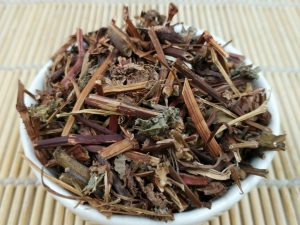
1. Wuyao Slices: This product consists of thin, nearly circular slices. The outer surface is yellowish-brown or yellowish-gray. The cross-section is yellowish-white or pale yellowish-brown, with radiating rays and visible annual rings. The texture is brittle. It has a fragrant aroma, a slightly bitter and pungent taste, and a cooling sensation.
2. Roasted Wuyao: Resembles Wuyao Slices in shape, yellow in color, occasionally with scorched spots.
3. Vinegar-Treated Wuyao: Resembles Wuyao in shape.
4. Wine-Treated Wuyao: Has a faint aroma of wine.
Botanical Information
Botanical Classification
Eucommia, a plant of the genus Eucommia in the family Lauraceae.
Morphological Characteristics
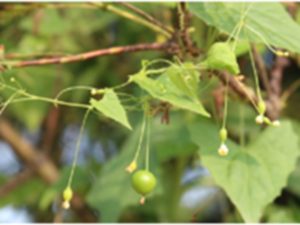
An evergreen shrub or small tree, growing up to 4–5 meters tall. The root is woody, swollen, and robust, slightly bead-like. The bark is gray-green. Young twigs are densely covered with rust-colored short soft hairs; mature twigs are smooth and glabrous; stems and branches are tough and resilient, not easily broken.Leaves are alternate, leathery, elliptic to broadly obovate, 3–8 cm long and 1.5–5 cm wide, with an acuminate or caudate-acuminate apex, a rounded or broadly cuneate base, and entire margins; the upper surface is green and glossy, smooth and glabrous except for the midrib, while the lower surface is grayish-white, initially covered with pale brown long soft hairs but later becoming smooth; there are three basal veins that are extremely prominent;Petiole short, with short soft hairs. Umbels axillary, almost without a main axis; florets 1.5–3 mm long, hairy, clustered in large numbers; flowers unisexual, dioecious, yellowish-green;The perianth consists of 6 segments, nearly equal in size and broadly elliptic; male flowers have 9 stamens arranged in 3 whorls, with glands at the base of the innermost whorl, and 2-celled anthers; female flowers have numerous staminodes, a superior, spherical, 1-celled ovary, and a single ovule. The drupe is nearly spherical, initially green, turning black upon maturity.Flowering period: March–April. Fruiting period: October–November.
Distribution Area
It is distributed in Anhui, Jiangsu, Zhejiang, Fujian, Taiwan, Guangdong, Guangxi, Jiangxi, Hubei, Hunan, Shaanxi, and other regions.
Growth Habits
It thrives in subtropical climates and is highly adaptable. It is best cultivated in sunny locations with loose, fertile, acidic soil.
Propagation Methods
Propagated by seed.
Cultivation Techniques
Seed propagation: The fruit ripens from September to October; after harvesting, the seeds are stored in sand. Sow the seeds the following spring; seedlings grow slowly and should be transplanted once they reach a height of 30 cm or more.