Foxtail Grass is the name of a traditional Chinese medicinal herb. This product is the whole plant of Setaria viridis (L.) Beauv., a member of the Poaceae family.It has a sweet and bland taste and a cool nature. It clears heat and drains dampness, dispels wind and improves vision, detoxifies, and kills parasites. It is primarily used to treat wind-heat colds, jaundice, malnutrition in children, dysentery, painful and difficult urination, red, swollen, and painful eyes, boils, common warts, and skin sores and ringworm.

Foxtail Grass
Foxtail Grass is the name of a traditional Chinese medicinal herb. This product is the whole plant of Setaria viridis (L.) Beauv., a member of the Poaceae family.It has a sweet and bland taste and a cool nature. It clears heat and drains dampness, dispels wind and improves vision, detoxifies, and kills parasites. It is primarily used to treat wind-heat colds, jaundice, malnutrition in children, dysentery, painful and difficult urination, red, swollen, and painful eyes, boils, common warts, and skin sores and ringworm.
Chinese Name : 狗尾草
Aliases : Weed, Weed Seeds, Weed Grass, Bright Grass, Arhat Grass, Half-Stem Dogtail, Grain Weed Seeds, Washing Grass, Big-Tail Grass, Big-Tail Curve, Hairy Baby, Hairy Dum-Dum, Hairy Grass
Nature, Flavor & Meridian Tropism : Taste: sweet, bland; Nature: cool
Benefits & Efficacy
Benefits
Clears heat and drains dampness; dispels wind and improves vision; detoxifies; and kills parasites.
Indications
Dogtail Grass is primarily used to treat wind-heat common cold, jaundice, pediatric malnutrition, dysentery, painful and difficult urination, red, swollen, and painful eyes, boils, common warts, and skin sores and ringworm.
Usage and Dosage
1. Internal use: Decoct 6–12 g; fresh material may be used in amounts of up to 30–60 g. 2. External use: Wash with a decoction or apply as a poultice.
Precautions
Use with caution in patients with spleen and stomach deficiency-cold.
Chemical Constituents
This product contains starch.
Relevant Discussions
1. *Compendium of Materia Medica*: Treats warts on the eyes and ingrown hairs; piercing them with this herb causes them to dry up and disappear. For red eyes with curled or inverted eyelashes, turn the eyelid outward and use one or two stems dipped in water to scrape away the stagnant blood.
2. *Supplement to the Compendium of Materia Medica*: Treats boils, abscesses, and ringworm, including ringworm on the face.
3. *Chongqing Herbal Medicine*: Treats eye disorders characterized by tearing and blurred vision.
4. *Compendium of Chinese Herbal Medicine*: Dispels wind and improves vision; clears heat and promotes urination. Mainly used to treat wind-heat common cold, trachoma, red and painful eyes, jaundice and hepatitis, and difficulty urinating; used externally to treat tuberculous cervical lymph nodes.
5. *Flora of Medicinal Plants of Zhejiang*: Detoxifies, kills parasites, and relieves itching. Mainly used to treat malnutrition in children, heat-induced dysuria, and toothache.
6. *Pharmacopoeia of Fujian*: The whole plant or inflorescences treat liver heat in children, dysentery, acute jaundice-type infectious hepatitis, conjunctivitis, gonorrhea, and whooping cough; the inflorescence axis treats trachoma and warts.
Applications
Clinical Applications
1. For pediatric liver heat: 15–30 g of fresh dogtail grass, 6 g of green-calyx plum, and 15 g of rock sugar. Decoct in water and take orally. (*Fujian Materia Medica*)
2. For pediatric malnutrition: 9–21 g of the whole dogtail grass plant and 100 g of pork liver. Simmer in water; drink the broth and eat the liver. (*Southern Medicine: Chinese Herbal Medicine*)
3. For whooping cough: 30 g of dogtail grass, 9 g of yellow solomon’s seal, and 15 g of coinwort. Decoct in water and drink the decoction. (*Fujian Materia Medica*)
4. For heat-induced dysuria: 30 g of the whole dogtail grass plant. Decoct in rice washing water and drink the decoction. (*Zhejiang Medicinal Plants*)
5. For red, swollen, and painful eyes with photophobia: 31 g of dogtail grass, 31 g of Chinese coriander. Decoct in water and drink the decoction. (Southern Medicinal Herbs: *Chinese Herbal Medicine*)
6. For toothache: 30 g of (dogtail grass) root. Decoct in water, strain out the residue, add 2 eggs, and boil until cooked. Eat the eggs and drink the broth. (*Chronicle of Medicinal Plants of Zhejiang*)
7. For treating warts: Take the inflorescence axis of dogtail grass, trim the tip to a slanted point, disinfect with ethanol, then pierce the base of the wart in a “cross” pattern. Trim off the portion of the inflorescence axis protruding from the wart, secure with adhesive tape, and the wart will fall off after 7 days. (*Fujian Pharmacopoeia*)
Notes
Patients requiring treatment with Chinese herbal medicine should first consult a licensed Traditional Chinese Medicine (TCM) hospital, where a TCM practitioner will conduct a professional pattern differentiation and prescribe an herbal formula.
Processing & Preparation
Harvesting & Processing
Harvest in summer or fall; sun-dry or use fresh.
Processing Methods
Take the raw herb, remove impurities, wash thoroughly, moisten slightly, cut into sections, dry, and sift out any dust or debris.
Storage Methods
Store in a dry container in a well-ventilated, dry place, protected from moisture.
Crude Drug Identification
Properties of Crude Drugs
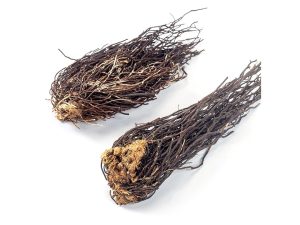
Stems grow in loose clumps, erect or ascending with a geniculate base. Leaves are linear-lanceolate and smooth; the sheath openings are hairy; the panicles are dense and cylindrical.
Properties of Processed Slices
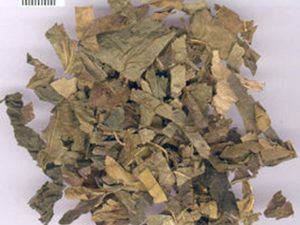
The crude drug consists of irregular segments comprising a mixture of stems, leaves, and inflorescences. The stem surface is smooth, pale yellowish-green, and hollow when cut. The leaf veins are parallel; the upper surface is slightly rough or lightly covered with short soft hairs. The inflorescence is a panicle. It is light in weight and flexible. It has a faint odor and a bland taste.
Botanical Information
Botanical Classification
A species of the genus Setaria in the family Poaceae.
Morphological Characteristics
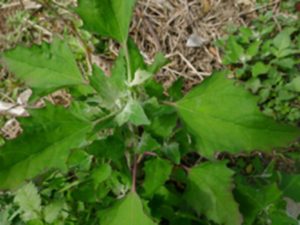
An annual herb. The culm is erect or geniculate at the base, 10–100 cm tall, with a basal diameter of up to 3–7 mm.Leaf sheaths are loose, with longer, dense, cottony cilia along the margins; the ligule is extremely short, with cilia along the margins; leaf blades are flat, oblong-narrowly lanceolate or linear-lanceolate, with a long, acuminate apex and a bluntly rounded base that is nearly truncate or gradually narrowing, 4–30 cm long and 2–18 mm wide, usually glabrous or sparsely warty, with rough margins.The panicle is dense and cylindrical or slightly loose at the base, erect or slightly pendulous; the main axis is covered with relatively long soft hairs, 2–15 cm long and 4–13 mm wide (excluding the bristles); the bristles are 4–12 mm long, rough, straight or slightly twisted, usually green or brownish-yellow to purplish-red or purple;2–5 spikelets are clustered on the main axis, or more spikelets are borne on short branches; they are elliptical, with a blunt apex, 2–2.5 mm long, and lead-green; the first glume is ovate, about one-third the length of the spikelet, with 3 veins; the second glume is nearly as long as the spikelet, elliptical, with 5–7 veins;The first glume is as long as the spikelet, with 5–7 veins and a blunt apex; its inner glume is short and narrow. The second glume is elliptical, with fine punctate wrinkles, the margins rolled inward, and narrow; the scales are wedge-shaped with a slightly concave apex; the styles are separate at the base. The caryopsis is grayish-white. Flowering and fruiting occur from May to October.
Distribution Area
Distributed throughout China.