Jinyingzi is a commonly used medicinal herb for consolidating semen, stopping leukorrhea, and reducing urination. It is the dried, mature fruit of Rosa laevigata Michx., a plant in the Rosaceae family. It is primarily produced in Sichuan, Hunan, Guangdong, and Jiangxi. It has the effects of consolidating semen and reducing urination, arresting metrorrhagia and leukorrhea, and astringing the intestines to stop diarrhea. It is used to treat nocturnal emissions and seminal leakage, enuresis and frequent urination, metrorrhagia and leukorrhea, as well as chronic diarrhea and dysentery.

Golden Rosehip
Jinyingzi is a commonly used medicinal herb for consolidating semen, stopping leukorrhea, and reducing urination. It is the dried, mature fruit of Rosa laevigata Michx., a plant in the Rosaceae family. It is primarily produced in Sichuan, Hunan, Guangdong, and Jiangxi. It has the effects of consolidating semen and reducing urination, arresting metrorrhagia and leukorrhea, and astringing the intestines to stop diarrhea. It is used to treat nocturnal emissions and seminal leakage, enuresis and frequent urination, metrorrhagia and leukorrhea, as well as chronic diarrhea and dysentery.
Chinese Name : 金樱子
Latin Name : Rosae Laevigatae Fructus
Aliases : Prickly elm fruit, prickly pear fruit, golden poppy fruit, wild pomegranate, wild lily bulb, sugar oriole fruit, sugar jar, candy, prickly orchid fruit, lantern fruit
Authentic Producing Area : Mainly produced in Sichuan, Hunan, Guangdong, and Jiangxi
Nature, Flavor & Meridian Tropism : Taste: sour, sweet, and astringent; nature: neutral; enters the Kidney, Bladder, and Large Intestine meridians
Benefits & Efficacy
Benefits
It consolidates essence and reduces urination; stops metrorrhagia and leukorrhea; and astringes the intestines to stop diarrhea.
Indications
Mainly used to treat nocturnal emission and seminal leakage, enuresis and frequent urination, metrorrhagia and leukorrhea, as well as chronic diarrhea and dysentery.
Usage and Dosage
Decoct and take 6–12 g.
Precautions
1. Should not be combined with quinine, ephedrine, or atropine to prevent precipitation and impaired absorption. 2. Should not be combined with cardiac glycosides, as this may lead to toxicity. Should not be combined with hypoglycemic agents to avoid antagonistic effects. 3. Should not be combined with salicylic acid preparations to avoid causing peptic ulcers. 4. Should not be combined with potassium-wasting diuretics to avoid causing hypokalemia.
Chemical Constituents
This product primarily contains polysaccharides, flavonoids, triterpenes, and tannins.
Pharmacological Actions
This product has antidiabetic, immunomodulatory, and lipid-lowering effects.
Relevant Discussions
1. *Shu Bencao*: “Mainly treats spleen-related diarrhea and dysentery, regulates urination, and astringes vital energy.”
2. *Bencao Beiyao*: “Consolidates essence and preserves vital energy; treats nocturnal emissions and seminal emissions, as well as diarrhea and frequent bowel movements.”
3. *Ben Cao Qiu Zhen*: “When raw, it is sour and astringent; when ripe, it is sweet and astringent. It should be used when it is nearly ripe to capture the subtle balance of slight sourness, sweetness, and astringency. Its astringency stops leakage, its sweetness tonifies the middle, and its sourness consolidates yin; thus, it is highly effective in treating nocturnal emissions, uterine bleeding, leukorrhea, and enuresis.”
Applications
Clinical Applications
1. Treats seminal emission and spermatorrhea caused by kidney deficiency and instability of the essence gate; enuresis and frequent urination caused by bladder incontinence; and excessive leukorrhea caused by laxity of the Belt Vessel. It may be used alone to prepare a decoction, such as Golden Rosehip Decoction (*Ming Yi Zhi Zhang*); or combined synergistically with Euryale Seed, as in the Water-Land Two Immortals Pill (*Ren Cun Tang Experience Formulas*); or combined with kidney-tonifying and astringent herbs such as Dodder Seed (Tu Si Zi), Psoralea (Bu Gu Zhi), and Sea Squid (Hai Piao Xiao).
2. For chronic diarrhea and dysentery due to spleen deficiency, it may be taken alone as a concentrated decoction; or combined with Codonopsis (Dang Shen), Atractylodes (Bai Zhu), Euryale Seed (Qian Shi), Schisandra (Wu Wei Zi), and other herbs, such as in the Secret Essence Decoction (Mi Yuan Jian) from *The Complete Works of Jingyue*.
Related Compatibility
1. Schisandra Fruit Combined with Oyster Shell: Schisandra Fruit enters the Kidney and Bladder meridians and can consolidate essence, reduce urination, and stop seminal emission; Oyster Shell is heavy and sinking in nature, salty in taste, and slightly cold in nature, with the function of nourishing yin and clearing heat; its astringent taste also provides astringent and consolidating effects. When combined, these two herbs can nourish yin and subdue yang, consolidate essence, and stop seminal emission, and are used to treat conditions such as seminal emission and spermatorrhea due to kidney deficiency.
2. Schisandra combined with Mulberry Cuttlefish Bone: Schisandra can consolidate essence, reduce urination, and stop seminal emission; Mulberry Cuttlefish Bone can tonify the Kidney and assist Yang, as well as consolidate essence and reduce urination. When used together, these two herbs enhance the effects of tonifying the Kidney, consolidating essence, reducing urination, and stopping seminal emission. This combination is suitable for conditions such as seminal emission and spermatorrhea due to Kidney Qi deficiency and weakened retention ability, as well as frequent urination or even urinary incontinence.
Medicinal Identification
Schisandra and Cornus officinalis: Both herbs possess sour and astringent properties and can astringe and consolidate to treat deficiency-type seminal leakage, including nocturnal emissions, seminal leakage, enuresis, and leukorrhea.However, Golden Rosehip (Jinyingzi) specializes solely in astringent action and lacks tonifying properties. Mountain Cornel (Shanzhuyu), on the other hand, combines astringent properties with tonifying effects; it can both tonify the kidneys and nourish essence, as well as warm the kidneys and assist yang. Its scope of application is far broader than that of Golden Rosehip. It can be used for conditions such as liver and kidney deficiency, dizziness, tinnitus, soreness and weakness in the lower back and knees, as well as metrorrhagia, metrorrhagia with excessive bleeding, impending loss of primordial yang, and uncontrollable profuse sweating.
Related Medicines
Gui Lu Bu Shen Wan (capsules, oral solution), Shou Wu Wan, and Yi Shen Ling Granules (capsules).
Medicinal Diet Therapy
A medicinal dish related to Schisandra chinensis is Enhanced Schisandra Porridge.
1. Effects: Astringent, consolidates essence, regulates qi, and stops diarrhea. Suitable for seminal emission, nocturnal emission, enuresis, frequent urination, spleen-deficiency diarrhea, leukorrhea in women, and uterine prolapse.
2. Ingredients: 10–15 g Schisandra chinensis,30 g each of Zhi Ke and cotton root, 50–100 g of japonica rice or glutinous rice.
3. Preparation: Decoct Jin Ying Zi, Zhi Ke, and cotton root in water to obtain a concentrated decoction; strain out the residue, then cook with japonica rice or glutinous rice to make porridge.
4. Usage: Take twice daily while warm; one course of treatment lasts 10 days.
Notes
Patients requiring treatment with Chinese herbal medicine should first consult a licensed Traditional Chinese Medicine (TCM) hospital to receive a prescription following a professional TCM differential diagnosis.
Processing & Preparation
Harvesting & Processing
Harvest the fruits between October and November when they are fully ripe and red, remove the spines, and sun-dry them.
Processing Methods
1. Schisandra Fruit: Take the raw herb, remove impurities, wash thoroughly, soak briefly until thoroughly moistened, cut lengthwise into two halves, remove the hairs and seeds, and dry.
2. Honey-coated Schisandra: Take refined honey, dilute it with an appropriate amount of boiling water, add the Schisandra berries, mix thoroughly, and let stand until thoroughly moistened. Place the mixture in a pot, heat over low heat, and stir-fry until the surface turns reddish-brown and no longer sticks to the hands. Remove and let cool. Use 20 kg of refined honey for every 100 kg of Schisandra berries.
3. Roasted Schisandra: Take the Schisandra pulp, place it in a pan, and roast over medium heat until slightly blackened; remove and let cool.
4. Wheat Bran-Roasted Schisandra: Roast the Schisandra using wheat bran until it turns yellow; remove and let cool.
5. Blanched Schisandra: First, heat sand in a pan; add the Schisandra berries and stir-fry until the skins swell and turn purplish-red. Remove the sand, rinse thoroughly, and sun-dry.
6. Salted Schisandra: Take the Schisandra pulp, mix thoroughly with salt water, and let it sit until moistened. Once the salt water has been fully absorbed, steam for 2–3 hours, then remove and dry.
Storage Methods
Store in a dry container. Honey-processed Golden Cherry, Stir-Fried Golden Cherry, Wheat Bran-Stir-Fried Golden Cherry, Scalded Golden Cherry, and Salted Golden Cherry should be kept in airtight containers and stored in a well-ventilated, dry place.
Crude Drug Identification
Properties of Crude Drugs
This product is a pseudofruit developed from the flower receptacle. It is obovate in shape, 2–3.5 cm long, and 1–2 cm in diameter. The surface is reddish-yellow or reddish-brown, with raised brown specks—the remnants of shed spines. The apex bears a disc-shaped calyx remnant, with a yellow columnar base in the center and a gradually tapering lower part. It is hard in texture.When cut open, the wall of the receptacle is 1–2 mm thick and contains numerous hard, small achenes; both the inner wall and the achenes are covered with pale yellow downy hairs. It has a faint odor and a sweet, slightly astringent taste.
Properties of Processed Slices
1. Schisandra Fruit: See “Characteristics of the Medicinal Material.”
2. Honey-processed Schisandra Fruit: Resembles Schisandra Fruit, with a dark brown surface; sweet in taste, with a honey-like aroma.
3. Roasted Schisandra Fruit: Resembles Schisandra Fruit, with a brownish-black surface.
4. Bran-Roasted Schisandra: Resembles Schisandra, with a deep yellow surface.
5. Blanched Schisandra: Resembles Schisandra, with a reddish-purple surface and slightly swollen skin.
6. Salted Schisandra: Resembles Schisandra, with a dark reddish-brown surface and a slightly salty taste.
Botanical Information
Botanical Classification
Schisandra chinensis, a plant of the genus Schisandra in the Rosaceae family.
Morphological Characteristics
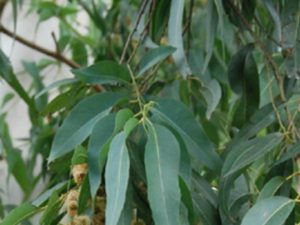
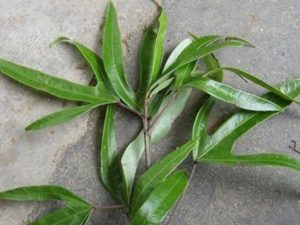
An evergreen climbing shrub, approximately 5 m tall. Stems are glabrous, bearing hook-like prickles and bristly hairs. Leaves are pinnately compound; petioles and rachis bear small prickles and bristly hairs; stipules are lanceolate, separate from the petiole, and early deciduous.Leaflets are leathery, usually 3 but rarely 5 in number, elliptic-ovate or lanceolate-ovate, 2.5–7 cm long and 1.5–4.5 cm wide, with an acute or acuminate apex, a nearly rounded base, and finely serrate margins; they are glabrous and glossy. Flowers are solitary at the tips of lateral branches; both the pedicel and the outer surface of the calyx tube are densely covered with bristles;5 sepals; 5 petals; white, 5–9 cm in diameter; numerous stamens; numerous carpels, with stigmas clustered at the mouth of the receptacle. The fruit is obovate, 2–4 cm long, purplish-brown, and densely covered with spiny hairs on the outside. Flowering period: April–June; fruiting period: July–November.
Distribution Area
It is distributed in Jiangsu, Zhejiang, Anhui, Fujian, Jiangxi, Henan, Hubei, Hunan, Guangdong, Guangxi, Hainan, Sichuan, Guizhou, Yunnan, Shaanxi, Taiwan, and other regions.
Growth Habits
It prefers a warm, dry climate. It is best cultivated in well-drained, loose, fertile sandy loam.
Propagation Methods
Propagated by seeds and cuttings, with cuttings being the primary method.
Cultivation Techniques
1. Seed Propagation: Sow fresh seeds in winter. Dig shallow furrows 30 cm apart, scatter the seeds evenly into the furrows, and cover with 1.5 cm of soil. Seedlings emerge in the following spring. Manage the seedlings carefully after emergence; generally, weed 3–4 times and apply fertilizer twice annually during the seedling stage. Transplant in the spring after 2–3 years of seedling cultivation.
2. Propagation by Cuttings: Before bud break in spring, select a healthy mother plant and cut 1- to 2-year-old branches into cuttings 12–15 cm long. Plant the cuttings at an angle in a sand bed, press them firmly into the soil, water thoroughly, keep the soil consistently moist, and cover with a reed mat to provide shade. Roots and new shoots will typically develop in about two months.Transplant in February–March or September–October of the following year. Dig holes with row and plant spacing of 40–60 cm each; plant one seedling per hole, cover with soil, firm it down, and water.