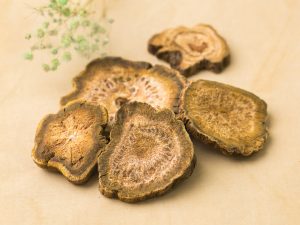
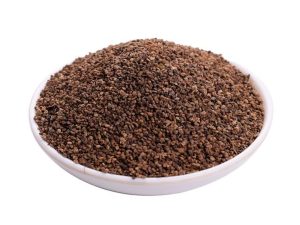
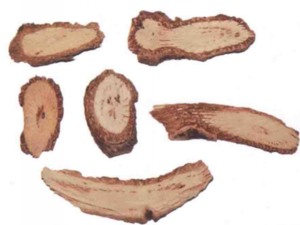
Gypsophila acutifolia, a name in traditional Chinese medicine. It refers to the whole plant of Gypsophila acutifolia Fisch. var. gmelini Regel, of the family Caryophyllaceae. It is produced in Inner Mongolia, Qinghai Province, and other regions. It has the effects of relieving coughs and resolving phlegm. It is used to treat coughs.

Gypsophila acutifolia
Gypsophila acutifolia, a name in traditional Chinese medicine. It refers to the whole plant of Gypsophila acutifolia Fisch. var. gmelini Regel, of the family Caryophyllaceae. It is produced in Inner Mongolia, Qinghai Province, and other regions. It has the effects of relieving coughs and resolving phlegm. It is used to treat coughs.
Chinese Name : 光梗丝石竹
Nature, Flavor & Meridian Tropism : Slightly sweet and pungent; neutral in nature
Benefits & Efficacy
Benefits
Relieves cough and resolves phlegm.
Indications
Used to treat coughs.
Usage and Dosage
Oral use: Decoct 6–9 g.
Relevant Discussions
*Illustrated Compendium of Medicinal Plants of the Qinghai-Tibet Plateau*: “Relieves cough and resolves phlegm. Treats coughs, deafness, and other conditions.”
Applications
Related Compatibility
For various nasal disorders, such as nasal congestion: Combine with Dianthus glabriflorus, Wood Fragrance, Du Huo, and Realgar to make the Five-Ingredient Wood Fragrance Ointment.
Processing & Preparation
Harvesting & Processing
Harvest the whole plant in June–July; remove withered branches, residual leaves, and fibrous roots; wash thoroughly; lightly pound with a stick; cover with paper; and sun-dry.
Crude Drug Identification
Botanical Information
Botanical Classification
Caryophyllaceae, *Caryophyllus glabrus*.
Morphological Characteristics
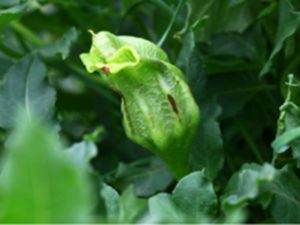
A perennial herb, glabrous throughout, 30–40 cm tall. The taproot is thick and robust. Stems grow in clusters, branching at the base, and are erect or ascending at an angle.Leaves are simple and opposite; leaf blades are linear or linear-lanceolate, 1.4–4 cm long, 1–2 mm wide, with an acute apex; the leaf bases are fused, forming a short sheath; there is a single vein; the axils of lower stem leaves contain young, flowerless shoots. The panicle-like corymbs are arranged in a loose pattern;bracts are ovate-lanceolate or lanceolate, 3–9 mm long, 1–1.5 mm wide, with a gradually tapering apex; the base is fused, forming a short sheath; there is a single vein, and the margins are membranous; the calyx is campanulate-cylindrical, 3–4 mm long, 1.5–2 mm wide, 5-lobed; the calyx lobes are triangular, with acute apices and membranous margins;There are 5 petals, white or pink, 1.5–2 times as long as the calyx, with a slightly concave or truncate base; 10 stamens; the ovary is ovate, with 2 styles. Flowering and fruiting occur from July to August.
Distribution Area
Native to Inner Mongolia, Qinghai Province, and other areas.