Kochia seeds, a name in traditional Chinese medicine. They are the mature fruits of Kochia scoparia (L.) Schrad, a plant in the genus Kochia of the Chenopodiaceae family. They have the effects of clearing heat, draining dampness, dispelling wind, and relieving itching. They are primarily used to treat painful and difficult urination, genital itching with vaginal discharge, hives, eczema, and skin itching.

Kochia Seeds
Kochia seeds, a name in traditional Chinese medicine. They are the mature fruits of Kochia scoparia (L.) Schrad, a plant in the genus Kochia of the Chenopodiaceae family. They have the effects of clearing heat, draining dampness, dispelling wind, and relieving itching. They are primarily used to treat painful and difficult urination, genital itching with vaginal discharge, hives, eczema, and skin itching.
Chinese Name : 地肤子
Latin Name : Kochiae Fructus
Aliases : Di Kui, Di Mai, Luo Zhou Zi, Du Sao Zi, Zhu Zhou Zi, Qian Tou Zi, Zhou Cai Zi, Tie Sao Ba Zi, Sao Zhou Zi
Authentic Producing Area : Hebei, Shanxi, Shandong
Nature, Flavor & Meridian Tropism : Pungent and bitter in taste; cold in nature; enters the Kidney and Bladder meridians
Benefits & Efficacy
Benefits
Clears heat and drains dampness; dispels wind and relieves itching.
Indications
Painful and difficult urination, genital itching with vaginal discharge, hives, eczema, and skin itching.
Usage and Dosage
1. Internal use: Decoct 6–15 g; or incorporate into pills or powders. 2. External use: Use an appropriate amount; decoct in water for washing.
Precautions
1. Contraindicated for those without internal damp-heat or with excessive urination. 2. Kochiae Fructus is incompatible with cuttlefish bone; they should not be used simultaneously, as this may reduce efficacy or cause adverse reactions. 3. Aluminum hydroxide, mineral oil, sucralfate, neomycin, and colestipol may affect absorption and should not be used concurrently. 4. Avoid raw green onions, peaches, and plums. Avoid spicy foods, alcohol, and other irritants. Avoid fish, shrimp, and other foods with a strong, fishy odor.
Chemical Constituents
This product contains triterpene saponins, fatty oils, and vitamin A-like substances.
Pharmacological Actions
This product has antibacterial, anti-allergic, gastrointestinal motility-regulating, and cardioprotective effects.
Relevant Discussions
1. *Shennong’s Classic of Materia Medica*: “Treats bladder heat and promotes urination.”
2. *Materia Medica of Southern Yunnan*: “Clears accumulated heat in the bladder and promotes urination; alleviates skin rashes; treats various types of transient fever in women; clears fetal heat; and is highly effective for treating damp-heat leukorrhea in women.”
Applications
Clinical Applications
1. Used for symptoms of damp-heat in the bladder, difficulty urinating, and painful, dribbling urination; it is often combined with Akebia stem, Lycopodium, and winter mallow seeds, as in the Di Fu Zi Decoction (*Jisheng Fang*).
2. For treating hives and eczema, it is often used in combination with *Baixianpi*, *Chantui*, and *Huangbo*; in cases of damp-heat in the lower jiao with vulvar itching, it can be decocted with *Kushen*, *Longdancao*, and *Baihan* to prepare a wash for the affected area; to treat damp-heat leukorrhea, it can be decocted with *Huangbo* and *Cangzhu* for oral administration.
Related Compatibility
Combination of Groundsel Seeds and Cnidium Seeds: Groundsel seeds are cold in nature, while Cnidium seeds are warm; both possess the ability to dispel wind, dry dampness, kill parasites, and relieve itching. When used together, their complementary cold and warm properties significantly enhance their efficacy in dispelling wind, drying dampness, killing parasites, and relieving itching. This combination is suitable for vulvar itching, damp sores, eczema, scabies, and tinea, and can be used regardless of whether the condition is characterized by cold or heat.
Medicinal Identification
1. Di Fu Zi and Bian Xu: Both are diuretic and urinary tract-clearing herbs; they are bitter in taste and cold in nature. They can clear heat, promote diuresis, relieve dysuria, kill parasites, and relieve itching. They are both used to treat heat-induced dysuria with burning pain, scanty and reddish urine, as well as skin conditions such as eczema, damp sores, genital itching, and generalized pruritus. The two are often used in combination.The difference lies in the fact that Polygonum aviculare has a stronger diuretic and dysuria-relieving effect and excels at clearing damp-heat from the bladder; it is particularly frequently used to treat dysuria characterized by painful and scanty urination. Kochia seed has a milder diuretic and dysuria-relieving effect and acts as a guide for diuresis, while its ability to clear damp-heat, dispel wind, and relieve itching is stronger; therefore, it is particularly frequently used for skin diseases.
2. Dìfúzǐ and Kǔshēn: Both clear damp-heat, dispel wind, and relieve itching, and both possess diuretic effects. Therefore, they can be combined to treat skin itching caused by wind-dampness invading the skin, vaginal itching and leukorrhea in women, as well as symptoms of dribbling, painful, and difficult urination resulting from the accumulation of damp-heat.However, they each have distinct characteristics. Di Fu Zi is more effective at dispelling wind, draining dampness, and relieving itching; therefore, it is primarily used to treat skin itching caused by wind-damp-heat pathogens, as well as vaginal itching and painful, scanty urination in women. In addition, Di Fu Zi’s primary function is to promote urination and relieve dysuria, making it suitable for conditions such as heat-induced dysuria with burning pain.Kushen is bitter and cold in nature and possesses strong ability to clear damp-heat; its primary functions are to clear heat and dry dampness. Therefore, it is used externally to treat heat-toxin sores and swellings, and internally to treat diarrhea, dysentery, and jaundice.
Related Medicines
Jie’erying Effervescent Tablets (Wash).
Related Prescriptions
Difuzi Powder (from *Shenghui Fang*).
Notes
Patients requiring treatment with Chinese herbal medicine should first consult a licensed Traditional Chinese Medicine (TCM) hospital, where a TCM practitioner will conduct a professional pattern differentiation and prescribe an herbal formula.
Processing & Preparation
Harvesting & Processing
Harvest the plant when the fruits ripen in the fall, sun-dry it, thresh off the fruits, remove impurities, and use it raw.
Processing Methods
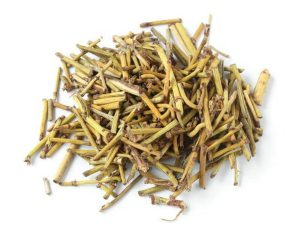
1. Difuzi: Take the raw herbal material, remove the branches and stems, and sift out soil and impurities.
2. Roasted Difuzi: Take the cleaned Difuzi and roast it over low heat until it turns a slightly deeper yellow and emits a fragrant aroma; then remove it and let it cool.
Storage Methods
Store in a dry container in a well-ventilated, dry place to prevent insect infestation.
Crude Drug Identification
Identification
1. The powder of this product is brownish-yellow. The perianth epidermal cells are polygonal, with irregular stomata; the parenchyma cells contain clusters of calcium oxalate crystals. The fruit peel cells are oblong or polygonal, with thin, undulating walls, and contain numerous small cubic calcium oxalate crystals. The seed coat cells are brownish-yellow, polygonal or square-like, and mostly shriveled.
2. Take 1 g of the powdered sample, add 10 mL of methanol, sonicate for 30 minutes, filter, and use the filtrate as the test solution. Separately, take the reference standard for Kochia saponin Ic, dissolve it in methanol to prepare a solution containing 0.5 mg per mL, and use this as the reference solution.Perform the test by thin-layer chromatography (General Chapter 0502). Pipette 5 μl of each of the two solutions and apply them separately onto the same silica gel G plate. Develop with a mobile phase of chloroform–methanol–water (16:9:2), remove the plate, allow it to air-dry, spray with a 10% ethanol solution of sulfuric acid, and blow with hot air until the spots appear clearly.In the chromatogram of the test sample, purple-red spots corresponding to those in the reference standard chromatogram appear at the same positions.
Properties of Crude Drugs
The capsule is flattened, globose, and pentagonal in shape, 1–3 mm in diameter, and covered externally by a persistent perianth. The surface is grayish-green or pale brown, with five small triangular membranous wings around the periphery; the center of the back has a raised, punctate scar from the fruit stalk and 5–10 radial veins. After removing the perianth, a translucent, membranous pericarp is visible; the seeds are flattened-ovoid, approximately 1 mm long, and black.Odorless, with a slightly bitter taste. Plump specimens with a gray-green color are considered superior.
Properties of Processed Slices
1. Kochia seeds: See the “Characteristics of the Medicinal Material” section.
2. Roasted Kochia seeds: Resemble Kochia seeds but are slightly darker yellow in color; they have a faintly fragrant odor and a slightly bitter taste.
Botanical Information
Botanical Classification
A plant of the genus Kochia in the Chenopodiaceae family.
Morphological Characteristics
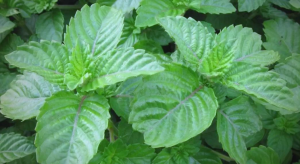
An annual herb, approximately 50–150 cm tall. The stem is erect, highly branched, pale green or light red, and covered with short soft hairs. Leaves are alternate; sessile; leaf blades are narrowly lanceolate or linear-lanceolate, 2–7 cm long, 3–7 mm wide, with a short acuminate apex, a cuneate base, and entire margins; the upper surface is green and glabrous, while the lower surface is pale green, glabrous or with short soft hairs;usually with 3 main veins; upper stem leaves are smaller, with a single midvein. Flowers solitary or in pairs in leaf axils, arranged in sparse spikelike inflorescences; sometimes with rust-colored, long, soft hairs beneath the flowers; flowers small, hermaphroditic or female; yellowish-green, with 5 perianth segments, nearly spherical, fused at the base, bearing triangular transverse projections or wings on the back when fruiting, sometimes nearly fan-shaped;There are 5 stamens with filaments that are thread-like; the style is extremely short, with 2 filiform stigmas. The capsule is flattened-globose; the pericarp is separate from the seed and enclosed within the perianth. There is a single seed, which is flattened-globose and blackish-brown. Flowering occurs from June to September, and fruiting from August to October.
Distribution Area
It is distributed throughout most regions of China.
Growth Habits
It prefers a warm and humid climate, is drought-tolerant, and thrives in sunny locations. It is best cultivated in sunny areas with humus-rich, well-drained loam soil.
Propagation Methods
Propagated by seed.
Cultivation Techniques
Sow in spring, either by direct seeding or by raising seedlings and transplanting them, with row and plant spacing of approximately 50 cm each; seed rate is 7.5–15 kg per hectare. During the growing season, perform weeding and apply fertilizer twice.
Pest and Disease Control
Pests include cutworms, which can be controlled using poison baits or by manual removal.