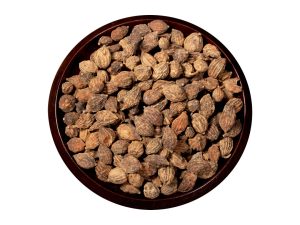
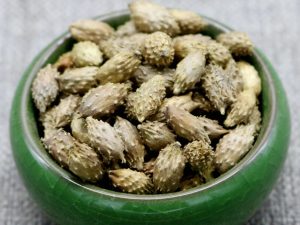
Honglian is the name of a traditional Chinese medicine. It is a medicinal herb commonly used by the Tibetan people and consists of the dried whole plant of *Stachys breviscapula* (family Scrophulariaceae).It is harvested during the flowering seasons of summer and fall, then cleaned of impurities, washed, and air-dried in the shade. It has a bitter and sweet taste and a cold nature. It possesses the therapeutic effects of clearing heat, detoxifying, draining dampness, calming the liver, promoting blood circulation, and regulating menstruation. It is used to treat fever with intense thirst, cough due to lung heat, headache and dizziness, damp-heat jaundice, irregular menstruation, and poisoning from medicinal substances or food.

Honglian
Honglian is the name of a traditional Chinese medicine. It is a medicinal herb commonly used by the Tibetan people and consists of the dried whole plant of *Stachys breviscapula* (family Scrophulariaceae).It is harvested during the flowering seasons of summer and fall, then cleaned of impurities, washed, and air-dried in the shade. It has a bitter and sweet taste and a cold nature. It possesses the therapeutic effects of clearing heat, detoxifying, draining dampness, calming the liver, promoting blood circulation, and regulating menstruation. It is used to treat fever with intense thirst, cough due to lung heat, headache and dizziness, damp-heat jaundice, irregular menstruation, and poisoning from medicinal substances or food.
Chinese Name : 洪连
Aliases : Tibetan Coptis, Rabbit-Ear Grass
Nature, Flavor & Meridian Tropism : Taste: bitter and sweet; nature: cold. Enters the Lung, Heart, and Liver meridians
Benefits & Efficacy
Benefits
Clears heat, detoxifies, drains dampness, calms the liver, promotes blood circulation, and regulates menstruation.
Indications
Used for fever with thirst, cough due to lung heat, headache and dizziness, damp-heat jaundice, irregular menstruation, and poisoning from drugs or food.
Usage and Dosage
1–6 g.
Applications
Processing & Preparation
Crude Drug Identification
Botanical Information
Botanical Classification
Short-tubed Rabbit-ear Grass, a plant of the Scrophulariaceae family.
Morphological Characteristics
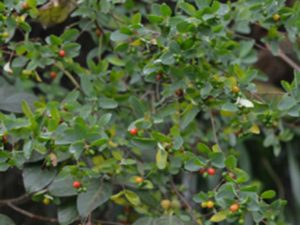
Short-tubed Rabbit-ear Grass is a perennial herb with a cylindrical, slightly curved rhizome featuring closely spaced nodes, resembling a silkworm; its surface is grayish-brown or pale purplish-brown; it is brittle and breaks easily; the cross-section is brownish-yellow or grayish-yellow, with 3–4 white, dot-like vascular bundles arranged in a ring.The roots are slender, cylindrical, and twisted, with a surface that is light yellowish-brown or grayish-brown and bears longitudinal wrinkles. The basal leaves have long petioles; the leaf blades are often curled and fragmented, but when intact and flattened, they are circular or ovate, with a bluntly rounded apex, rounded teeth along the margins, and a broadly wedge-shaped base. The inflorescence is a terminal spike.The fruit is oblong and blackish-brown. It has a faint odor and a slightly bitter taste. It commonly grows in alpine meadows and on gravelly slopes at elevations of 3,000–4,420 m.
Distribution Area
It is distributed in Qinghai, Tibet, and other regions.