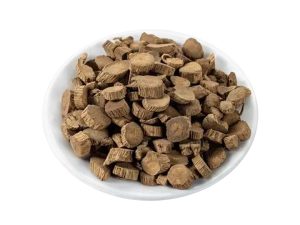
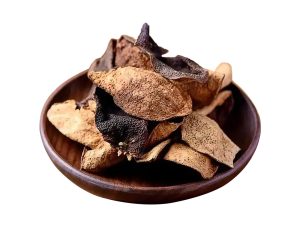
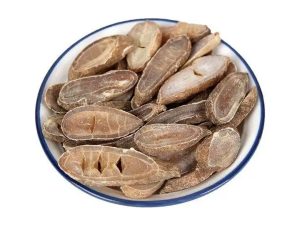
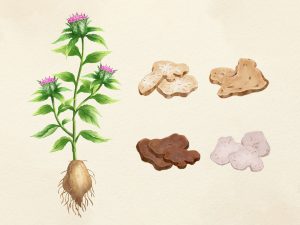
Ma Ya Guan Zhong is the name of a traditional Chinese medicine. It is the rhizome of Athyrium pachyphlebium C.Chr., a plant in the family Athyriaceae. It is distributed in North China, as well as in Liaoning, Shaanxi, Shandong, Sichuan, and other regions. It has the effects of clearing heat and detoxifying, stopping bleeding, and expelling parasites. It is commonly used to treat toxic sores and boils, dysentery, nosebleeds, and ascariasis.

Horse-tooth Polygonatum
Ma Ya Guan Zhong is the name of a traditional Chinese medicine. It is the rhizome of Athyrium pachyphlebium C.Chr., a plant in the family Athyriaceae. It is distributed in North China, as well as in Liaoning, Shaanxi, Shandong, Sichuan, and other regions. It has the effects of clearing heat and detoxifying, stopping bleeding, and expelling parasites. It is commonly used to treat toxic sores and boils, dysentery, nosebleeds, and ascariasis.
Chinese Name : 马牙贯众
Nature, Flavor & Meridian Tropism : Bitter in taste, cool in nature
Benefits & Efficacy
Benefits
Clears heat, detoxifies, stops bleeding, and expels parasites.
Indications
Used for toxic sores and boils, dysentery, nosebleeds, and ascariasis.
Usage and Dosage
Internal use: Decoct 10–15 g. External use: Apply an appropriate amount after pounding into a paste.
Applications
Processing & Preparation
Harvesting & Processing
Harvested in summer and fall; remove fibrous roots, wash thoroughly, and sun-dry.
Crude Drug Identification
Botanical Information
Botanical Classification
North China Pteridium (Pteridaceae).
Morphological Characteristics
North China Hoof-cap Fern: Plants grow up to 80 cm tall. The rhizome is short, thick, and ascending; the apex and the base of the petiole are covered with brown, lanceolate scales. Leaves are clustered; petioles are 15–35 cm long, straw-colored, black at the base, and nearly smooth toward the tip;the leaf blade is papery; the rachis and pinnae are often purplish-red, ovate or elliptic, 25–40 cm long and 20–30 cm wide, deeply dissected into secondary or tertiary pinnate segments; the pinnae number 10–15 pairs, arranged alternately, petiolate, broadly lanceolate, with the basal ones being larger, 13–18 cm long and 4–7 cm wide, deeply dissected into secondary pinnate segments;minor pinnae: 15–20 pairs, slightly obliquely ascending, lanceolate; the middle ones are larger, 2–4 cm long, 1–2 cm wide, with an acuminate apex, a cuneate, asymmetrical base, and deeply pinnately lobed; lobes are narrowly oblong, with a blunt apex and margins bearing small teeth or shallow lobes; veins are pinnate on the lobes and raised on the underside; lateral veins are single and extend to the tips of the teeth.Sporangia are short linear or hook-shaped, attached along the upper side of the lateral veins near the midrib; there are 4–5 pairs per segment, covering the entire underside of the leaf when mature; indusia are light brown, membranous, with eroded margins.
Distribution Area
It is distributed in Northern China, as well as in Liaoning, Shaanxi, Shandong, Sichuan, and other areas.