Red-feathered Pheasant, a name in traditional Chinese medicine. It refers to the meat of the brown-winged cuckoo (Centropus sinensis (Stephens)), a bird of the family Cuculidae. It is distributed in China from southern Zhejiang to Guangdong, Guangxi, Yunnan, and other regions. It has the effects of nourishing yin and replenishing blood, regulating menstruation and promoting lactation, and dispelling wind and dampness. It is commonly used to treat postpartum weakness and headaches in women, numbness in the hands and feet, rheumatic pain, and injuries from falls or blows.
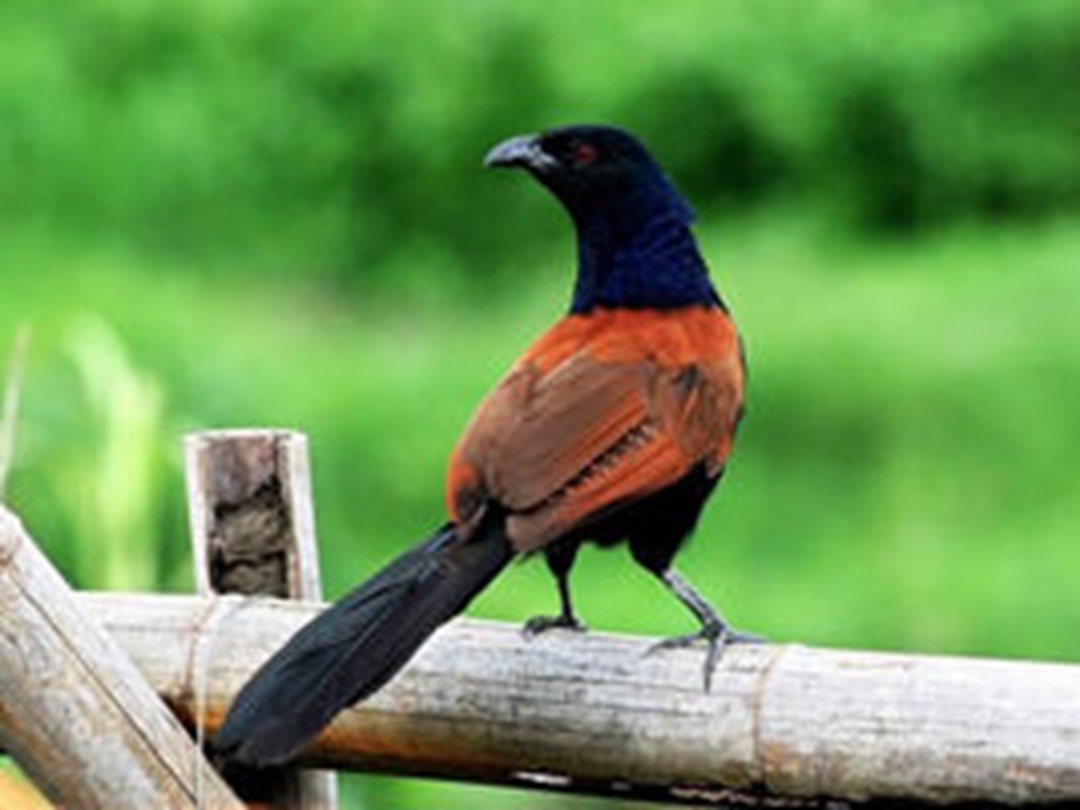
Red-feathered Pheasant
Red-feathered Pheasant, a name in traditional Chinese medicine. It refers to the meat of the brown-winged cuckoo (Centropus sinensis (Stephens)), a bird of the family Cuculidae. It is distributed in China from southern Zhejiang to Guangdong, Guangxi, Yunnan, and other regions. It has the effects of nourishing yin and replenishing blood, regulating menstruation and promoting lactation, and dispelling wind and dampness. It is commonly used to treat postpartum weakness and headaches in women, numbness in the hands and feet, rheumatic pain, and injuries from falls or blows.
Chinese Name : 红毛鸡
Aliases : Bird in a Reed Cage, Green-knotted Chicken, Hairy Chicken, Brown-winged Cuckoo, Large Hairy Chicken
Nature, Flavor & Meridian Tropism : Sweet in taste, warm in nature. Enters the Liver Meridian
Benefits & Efficacy
Benefits
Nourishes yin and replenishes blood; regulates menstruation and promotes lactation; dispels wind and removes dampness.
Indications
For postpartum weakness and headaches in women, numbness in the hands and feet, rheumatic pain, and injuries from falls or blows.
Usage and Dosage
Internal use: Boil and consume, 15–30 g; or soak in wine, 25–50 ml per dose. External use: Apply an appropriate amount of the wine-soaked preparation topically.
Precautions
Contraindicated in cases of excessive yang and exogenous febrile diseases. 1. *Compendium of Guangxi Traditional Chinese Medicine*: “Contraindicated for those with excessive yang or blood dryness.” 2. *Medicinal Animals of Guangxi*: “Contraindicated for patients with rashes, mania, or exogenous fever.”
Relevant Discussions
*Medicinal Animals of Guangxi*: “It tonifies the body, nourishes yin and blood, regulates menstruation, promotes lactation, and dispels wind-dampness. It treats postpartum physical weakness, headaches, and numbness in the hands and feet. Externally, it treats contusions and rheumatic conditions.”
Applications
Related Compatibility
1. For postpartum blood stasis, physical weakness, and low milk production: Take one gu of feathered chicken wine per dose, twice daily. (*Medicinal Animals of Guangxi*)
2. For contusions and rheumatism: Apply an appropriate amount of feathered chicken wine to the affected area 2–3 times daily. (*Medicinal Animals of Guangxi*)
Processing & Preparation
Harvesting & Processing
They are generally captured in summer and autumn. After capture and slaughter, the abdomen is incised to remove the internal organs; the head and lower beak are cut open down the center; an incision is made along the neck and chest all the way to the cloaca; bloodstains are wiped away; the abdomen is propped open with two bamboo sticks, with the abdominal cavity facing downward; it is slowly dried over low heat; the bamboo sticks are removed; and the legs and tail are tied together to prevent them from breaking off.
Processing Methods
1. Raw Soaking Method
Kill the hairy chicken, bleed it, perform a laparotomy to remove the internal organs, and pluck the feathers (leaving a few feathers on the wings and tail as identification markers). Wash it thoroughly and air-dry it. Roast the side facing the abdominal cavity over charcoal until a fragrant aroma is released and the meat turns from red to chestnut brown (this roasting process enhances the wine’s aroma).Then, seal and steep the chicken in pure white liquor with an alcohol content of 50 degrees or higher (Sanhua liquor is preferable). Use 5–7 adult feathered chickens per 50 kilograms of liquor. If you can add 400 grams each of Codonopsis, Ligusticum, Angelica dahurica, dragon bone, Cistanche, longan flesh, Polygonatum, and red dates to the mixture, it will not only enhance the aroma but also boost the medicinal efficacy.After 3 months of maceration, the liquor will turn ochre-red, develop a mellow and fragrant flavor, and be ready for consumption.
2. Dry Maceration Method
Soak the dried feathered chickens in warm water to remove dirt, then pluck the feathers (leaving some head, wing, and tail feathers for identification). Air-dry them thoroughly. Use 1–1.5 kg of dried feathered chickens per 50 kg of liquor, add the aforementioned Chinese herbs, and macerate for 3 months.
Crude Drug Identification
Properties of Crude Drugs
Refer to the original animal morphology for live specimens. Dried feathered chickens have a flat body, are fully feathered, and have no internal organs. Live specimens should be large and vigorous. Dried specimens should be dry, large, intact with feathers, and free of mold or insect damage.
Botanical Information
Morphological Characteristics
The Brown-winged Cuckoo-Pheasant, also known as the Green-knotted Chicken, Hairy Chicken, or Red Pheasant, is approximately 50 cm in length and resembles a chicken in body shape. The head, neck, upper back, and chest are metallic purple-blue; the shoulders, wings, and interscapular region are generally chestnut-red; the tips of the primary flight feathers and outer secondary flight feathers are slightly tinged with brown;the remainder of the body is pure black, and the tail feathers have a metallic green sheen. The iris is reddish-brown; the bill is black, with the tip of the upper mandible curving downward, and the bill extends to just below the eye; the legs, toes, and claws are all black, with the hind claws notably elongated and straight.
Distribution Area
It is distributed in China from southern Zhejiang to Guangdong, Guangxi, and Yunnan. The Brown-winged Cuckoo is a Class II nationally protected species, and its indiscriminate hunting is prohibited.