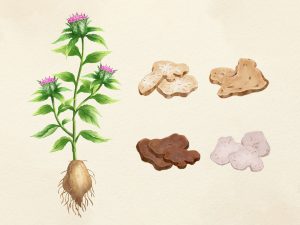
Loropetalum Leaf, a name for a Chinese medicinal herb. It refers to the leaves of Loropetalum chinense (R.) Oliv., a plant in the Hamamelidaceae family. It is distributed throughout central, southern, and southwestern China. It possesses astringent and hemostatic properties, as well as the ability to clear heat and eliminate toxins.It is primarily used to treat hemoptysis, hematemesis, hematochezia, metrorrhagia and menorrhagia, prolonged postpartum lochia, purpura, summer-heat-induced diarrhea and dysentery, trauma and contusions, traumatic bleeding, red eyes due to liver heat, and sore throat.
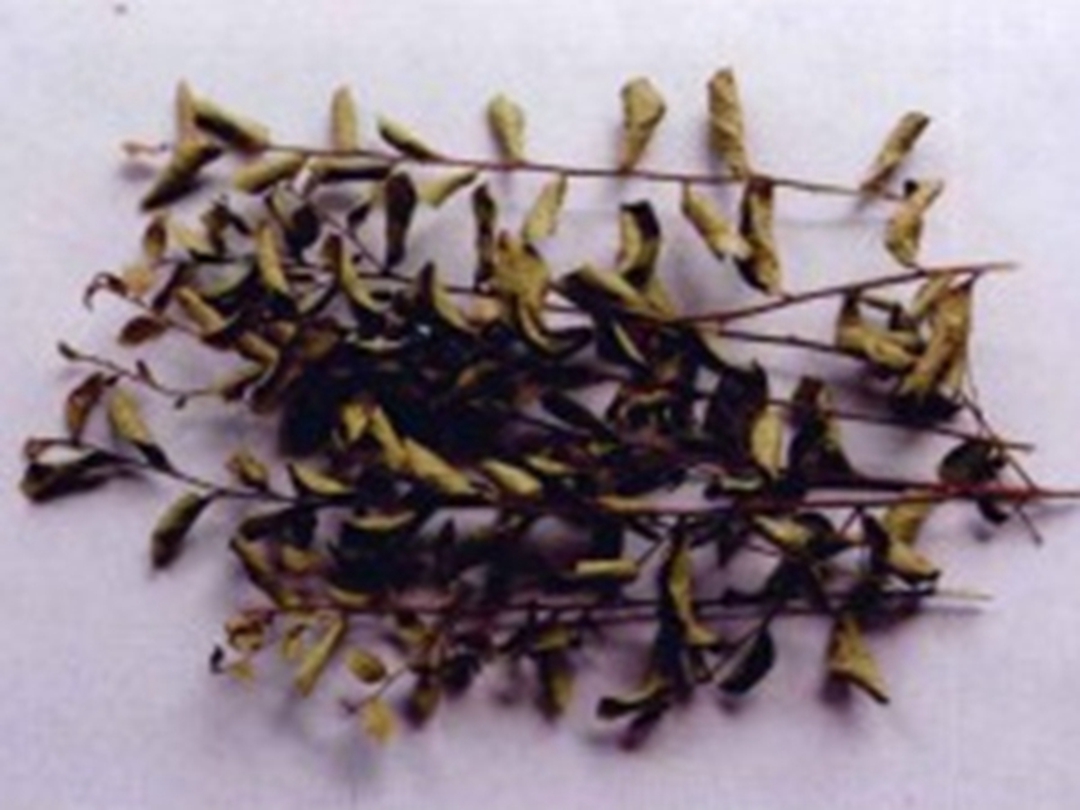
Loropetalum Leaves
Loropetalum Leaf, a name for a Chinese medicinal herb. It refers to the leaves of Loropetalum chinense (R.) Oliv., a plant in the Hamamelidaceae family. It is distributed throughout central, southern, and southwestern China. It possesses astringent and hemostatic properties, as well as the ability to clear heat and eliminate toxins.It is primarily used to treat hemoptysis, hematemesis, hematochezia, metrorrhagia and menorrhagia, prolonged postpartum lochia, purpura, summer-heat-induced diarrhea and dysentery, trauma and contusions, traumatic bleeding, red eyes due to liver heat, and sore throat.
Chinese Name : 檵木叶
Aliases : Gardenia Leaf
Authentic Producing Area : Hunan, Jiangxi, Fujian, Guizhou, Anhui, Zhejiang, Jiangsu, Guangdong, Guangxi, Sichuan
Nature, Flavor & Meridian Tropism : Taste: bitter and astringent; nature: cool; enters the Liver, Stomach, and Large Intestine meridians
Benefits & Efficacy
Benefits
Astringent to stop bleeding; clears heat and detoxifies.
Indications
Hemoptysis, hematemesis, hematochezia, metrorrhagia and menorrhagia, persistent lochia after childbirth, purpura, summer-heat-induced diarrhea and fever, contusions and bruises, traumatic bleeding, red eyes due to liver heat, and sore throat.
Usage and Dosage
Internal use: Decocted as a soup, 15–30 g; or pounded to extract juice. External use: Apply an appropriate amount as a poultice, apply as a powder, wash with a decoction, or use as a mouthwash.
Precautions
Use with caution in patients with spleen-stomach deficiency-cold, pregnant women, and children.
Chemical Constituents
Cinnamomum leaves contain quercetin and tannins. They also contain gallic acid and flavonoids.
Pharmacological Actions
1. Antimicrobial Effects: A 20% decoction of Schisandra chinensis leaves exhibits inhibitory effects against Staphylococcus aureus, Shigella flexneri, Salmonella typhi, and other pathogens. It has been used clinically as a skin disinfectant. 2. Cardiovascular Effects: Injectable preparations containing flavonoids can increase coronary sinus blood flow in cats, reduce myocardial oxygen utilization, and lower relative myocardial oxygen consumption;Additionally, they increase coronary blood flow in isolated rabbit hearts and enhance contractility. These effects may be related to the presence of quercetin. The plant also has a direct vasodilatory effect on peripheral blood vessels. 3. Other Effects: Components such as tannins have hemostatic effects, and the plant exerts a strong and sustained contractile effect on the uterus.
Relevant Discussions
1. *Illustrated Compendium of Plant Names and Realities*: “When the leaves are pounded into a paste and applied to stab wounds, they can stop bleeding.”
2. *Hunan Materia Medica*: “Treats heatstroke, sore throat, and wind-heat eye pain.”
3. *Hubei Materia Medica*: “Clears heat and drains dampness; astringes and stops bleeding. Used for dysentery, diarrhea, gastrointestinal bleeding, eczema, and bleeding from external injuries.”
Applications
Related Compatibility
1. For summer heat-induced diarrhea and dysentery: 21g of Schisandra stem and leaves. Decoct in water and drink. For bloody dysentery, add 15g of white sugar; for non-bloody dysentery, add 15g of brown sugar, and mix into the decoction before drinking. (*Folk Herbal Medicine of Jiangxi*)
2. For muscle sprains: A handful of fresh Schisandra flower leaves, pounded with rice wine until pulverized, then strained to yield 1 cup of juice. Take 1–2 times daily. (*Folk Herbal Medicine of Fujian*)
3. For gastrointestinal bleeding: Equal parts of Schisandra leaves, lotus root nodes, Platycladus orientalis leaves, Hua Rui Shi, and charred human hair. Grind into a fine powder. Take 6g per dose, 3 times daily, washed down with cold boiled water. (*Compendium of Hubei Chinese Herbal Medicine*)
4. For bleeding from external injuries: A handful of fresh Schisandra leaves; pound into a paste and apply externally. (*Fujian Folk Herbal Medicine*)
5. For early-stage knife wounds or infected, ulcerated wounds: For fresh wounds, wash with tea water and apply a paste of crushed tender Camellia sinensis leaves. If the wound has become suppurative and is oozing yellow pus, take 30g of this herb, grind it into a fine powder, mix with vegetable oil, and apply to the wound. (From *Folk Medicines of Guizhou*)
6. For purpura: Take 30 g of fresh Osmanthus leaves. Pound them into a paste, add an appropriate amount of boiling water, and strain to extract the juice for oral administration. (《Jiangxi Herbal Manual》)
Processing & Preparation
Harvesting & Processing
Can be harvested year-round and sun-dried.
Processing Methods
Take the raw herbal material, remove impurities and fine shoots, and sift out any dust or debris.
Storage Methods
Store in a dry container, seal tightly, and keep in a cool, dry place. Protect from moisture.
Crude Drug Identification
Properties of Crude Drugs
The leaves are mostly shriveled and curled; when flattened, intact leaves are elliptical or ovate, 1.5–3 cm long and 1–2.5 cm wide; the apex is sharply pointed, the base is slightly oblique, and the margin is entire or finely serrated; the upper surface is gray-green or light brownish-gray, the lower surface is lighter in color, and both surfaces are sparsely covered with short downy hairs; the petiole is covered with brown downy hairs.It has a faint odor and a astringent, slightly bitter taste.
Green specimens are considered superior.
Botanical Information
Botanical Classification
Hamamelis, genus Hamamelis, family Hamamelidaceae.
Morphological Characteristics
An evergreen shrub or small tree, approximately 1–4 m tall. The bark is dark gray; young branches, new leaves, inflorescences, the abaxial surface of the calyx, and the capsules are all covered with yellow stellate hairs. Leaves are alternate; petioles are 2–3 mm long; stipules are early deciduous;leaf blades are leathery, ovate or ovate-elliptic, 1.5–6 cm long and 0.8–2 cm wide, with a short acute apex, a blunt, asymmetrical base, and entire margins. Flowers are borne in clusters of 6–8 at the tips of twigs, sessile; the calyx is short and 4-lobed; petals are 4, linear, and pale yellowish-white;4 stamens with extremely short filaments; anthers with inward-curving lobes, connectives protruding spiny; ovary semi-inferior, 2-chambered; 2 styles, extremely short. Woody capsule spherical, about 1 cm long, brown, 2-lobed at the apex. 2 seeds, long-ovate, 4–5 mm long. Flowering period: April–May; fruiting period: October.
Distribution Area
Distributed throughout central, southern, and southwestern China.
Growth Habits
It is highly adaptable, undemanding in terms of soil, and can be planted on barren slopes or along forest edges.
Propagation Methods
Propagated by seed; seedlings are raised and transplanted.
Cultivation Techniques
Seedling propagation and transplanting: In March–April, on prepared ground, create 1.3-meter-wide beds with transverse furrows spaced 33 cm apart and approximately 3 cm deep. Sow seeds at a spacing of 10–13 cm; use 112.5–150 kg of seeds per hectare, scattering them evenly in the furrows. After applying manure and livestock slurry, cover with approximately 1 cm of wood ash.Cultivate until the spring of the fourth year, when the seedlings are ready for transplanting. In March–April, on prepared soil, dig holes with row and plant spacing of 1 m each. Plant two seedlings per hole, fill with soil, press firmly, and water.