Multileaf Prickly Ash, a name in traditional Chinese medicine. It refers to the root of Zanthoxylum multijugum Franch., a plant in the Rutaceae family. It is distributed in Guizhou and other areas. It has the therapeutic effects of dispelling wind, alleviating cold, and relieving pain. It is commonly used to treat wind-cold colds, headaches, rheumatic joint pain accompanied by a sensation of cold, and toothaches.
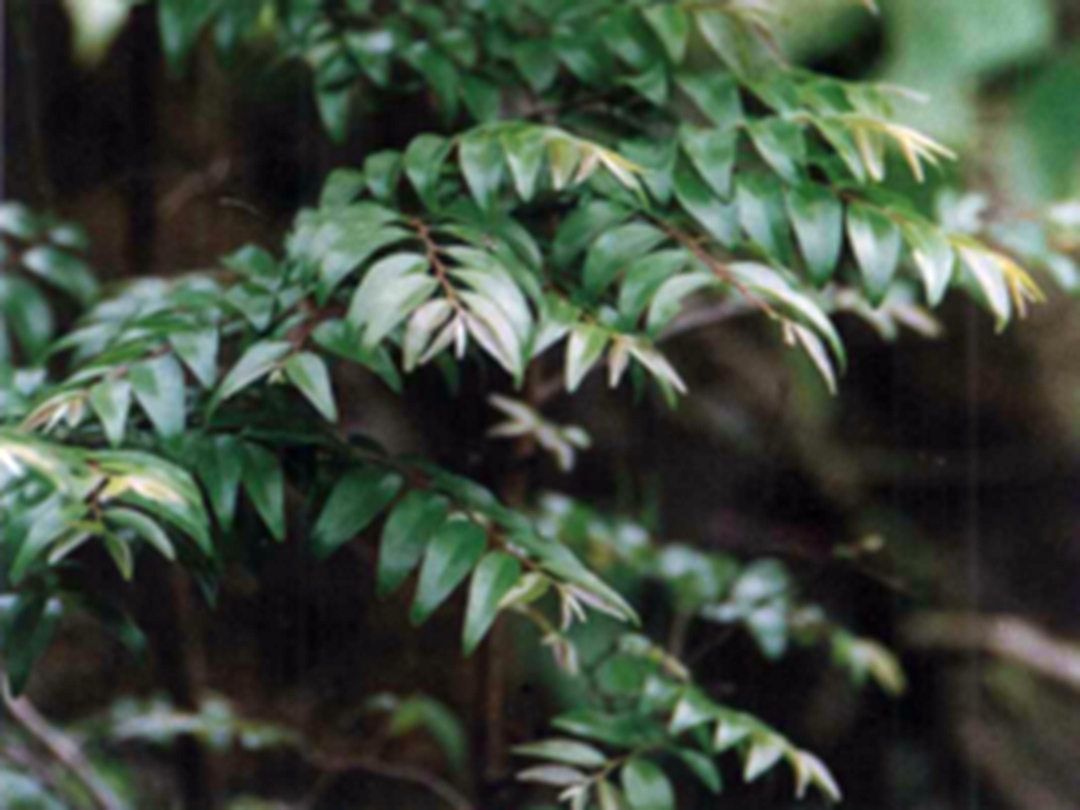
Multileaf Prickly Ash
Multileaf Prickly Ash, a name in traditional Chinese medicine. It refers to the root of Zanthoxylum multijugum Franch., a plant in the Rutaceae family. It is distributed in Guizhou and other areas. It has the therapeutic effects of dispelling wind, alleviating cold, and relieving pain. It is commonly used to treat wind-cold colds, headaches, rheumatic joint pain accompanied by a sensation of cold, and toothaches.
Chinese Name : 多叶花椒
Aliases : Small-leaved Prickly Pepper, Centipede Vine
Nature, Flavor & Meridian Tropism : Pungent in taste, warm in nature. Enters the Lung and Liver meridians
Benefits & Efficacy
Benefits
Dispels wind, dispels cold, and relieves pain.
Indications
Wind-cold common cold, headache, rheumatic joint pain with a sensation of cold, toothache, and other conditions.
Usage and Dosage
Internal use: Decoct 6–9 g; or steep in alcohol and consume. External use: Apply to the affected area.
Relevant Discussions
*Guizhou Herbal Medicine*: “Dispels cold and relieves pain.”
Applications
Related Compatibility
1. For cold pain in rheumatic joints: 1 liang of multi-leaf Sichuan pepper root. Soak in wine and consume. (*Guizhou Herbal Medicine*)
2. For toothache: Place a piece of multi-leaf Sichuan pepper root bark on the painful area. (*Guizhou Herbal Medicine*)
Processing & Preparation
Harvesting & Processing
Can be harvested year-round.
Crude Drug Identification
Botanical Information
Botanical Classification
A plant of the Rutaceae family, multi-leaved Sichuan pepper.
Morphological Characteristics
A climbing vine; the stem bears scattered, thickened, cushion-like spines at the base; the leaf rachis has numerous hooked spines, and the adaxial surface features narrow, rigid, leaf-like margins, giving it a grooved appearance; the current-year branches are pale reddish-brown and usually glabrous. The leaves consist of 19–51 leaflets,rarely fewer; the leaflets are irregularly opposite or alternate, lanceolate, obliquely elliptic, or ovate, asymmetrical on both sides, 1.5–5 cm long and 0.5–2 cm wide, with a blunt, rounded, or short-pointed and blunt-tipped apex; the upper portion of the leaf margin is rarely entirely finely serrate; there are numerous translucent oil dots; the midrib is slightly raised or flat on the upper surface and is covered with fine hairs when young;The leaflets are nearly sessile. Inflorescences are axillary; both sepals and petals number four, rarely five; sepals are ovate, rounded or blunt at the apex, less than 1 mm long;Petals are oblong, about 2 mm long, and pale yellowish-green; male flowers have 4 stamens with broadly elliptical anthers; the anther connective bears 1 oil dot at the apex, which turns brownish-black when dry; the rudimentary pistil is oblong-conical, with a slender, unbranched style; the pedicel of female flowers is 2–5 mm long, extending to 1 cm when fruiting.The mericarps are brownish-red, about 5 mm in diameter or slightly larger, with an awn at the apex up to 1 mm long; seeds are 4–4.5 mm in diameter. Flowering occurs from May to June, and fruiting from October to November.
Distribution Area
It is distributed in Guizhou and other areas.