Laoqiang Millet, a name in traditional Chinese medicine. It refers to the seeds of Amaranthus caudatus L., a plant in the Amaranthaceae family. It is cultivated throughout China and also grows wild. It has the therapeutic effects of clearing heat and promoting surface release. It is commonly used to treat chickenpox and measles in children.

Laoqiang Millet
Laoqiang Millet, a name in traditional Chinese medicine. It refers to the seeds of Amaranthus caudatus L., a plant in the Amaranthaceae family. It is cultivated throughout China and also grows wild. It has the therapeutic effects of clearing heat and promoting surface release. It is commonly used to treat chickenpox and measles in children.
Chinese Name : 老枪谷子
Nature, Flavor & Meridian Tropism : Pungent in taste, cool in nature. Entering the Lung and Spleen meridians
Benefits & Efficacy
Benefits
Clears heat and relieves exterior symptoms.
Indications
Chickenpox and measles in children.
Usage and Dosage
Oral use: Decocted as a soup, 3–6 g.
Pharmacological Actions
1. Inhibits fungal growth. 2. Antibacterial effect.
Applications
Related Compatibility
For treating contusions, bone injuries, and swelling and pain: Take equal parts of Laoqianggu seeds and Fagopyrum tataricum seeds, crush them, mix with vinegar, and apply externally to the affected area. (*Color Illustrated Guide to Source Plants of the Compendium of Common Chinese Herbal Medicines*)
Processing & Preparation
Harvesting & Processing
Cut the fruit spikes when the fruits ripen in autumn, sun-dry them, rub off the seeds, and dry them.
Crude Drug Identification
Properties of Crude Drugs
The capsule is nearly ovate and dehisces by a cap. The seeds are round or oval, biconvex and lens-shaped, with a relatively thin, band-like margin; they measure 0.6–1.0 mm in diameter and are yellow or black in color. The seed scar is located on one side of the base; it is brown and slightly protruding. The embryo is coiled into a ring, the cotyledons are linear, and the endosperm is located in the center. The thousand-seed weight is approximately 0.5 g.
Botanical Information
Morphological Characteristics
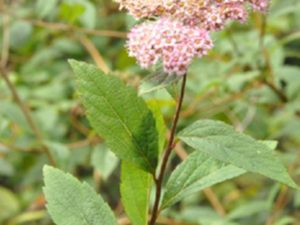
Tail-spike Amaranth, also known as Old Spear Grain, Spike Crown Flower, or Red Amaranth. An annual herb reaching up to 15 meters in height; the stem is erect, robust, with blunt ridges, simple or slightly branched, green or often tinged with pink, pubescent with short soft hairs when young, which gradually fall off later.Leaves are rhombo-ovate or rhombo-lanceolate, 4–15 cm long and 2–8 cm wide, with a short acuminate or rounded-obtuse apex bearing a prominent tip; the base is broadly cuneate and slightly asymmetrical; margins are entire or undulate; leaves are green or red and glabrous on both surfaces except for slight pubescence along the veins; petioles are 1–15 cm long, green or pinkish, and sparsely pubescent.The panicle is terminal, pendulous, and highly branched; the central branch is exceptionally long and consists of numerous spikelike inflorescences. The apex is obtuse, and the flowers are densely clustered in mixed clusters of female and male flowers; the bracts and bracteoles are lanceolate, 3 mm long, red, translucent, with a caudate apex, sparsely toothed margins, and a single midvein on the abaxial surface;Tepals 2–2.5 mm long, red, translucent, with a convex apex, margins overlapping, bearing 1 midvein; tepals of male flowers oblong, those of female flowers oblong-lanceolate; stamens slightly exserted; stigmas 3, less than 1 mm long. Capsule nearly spherical, 3 mm in diameter, red in the upper half, extending beyond the tepals.Seeds are nearly spherical, 1 mm in diameter, pale brownish-yellow, with a thick ring. Flowering period: July–August; fruiting period: September–October.