Stem-flowered Laijiang Vine, a name in traditional Chinese medicine. It refers to the whole plant of Brandisiacauliflora Tsoong et Lu (family Scrophulariaceae). It is distributed in southwestern Guangxi. It has the therapeutic effect of relaxing tendons and activating meridians. It is commonly used to treat rheumatic bone pain and injuries resulting from falls or blows, including fractures.
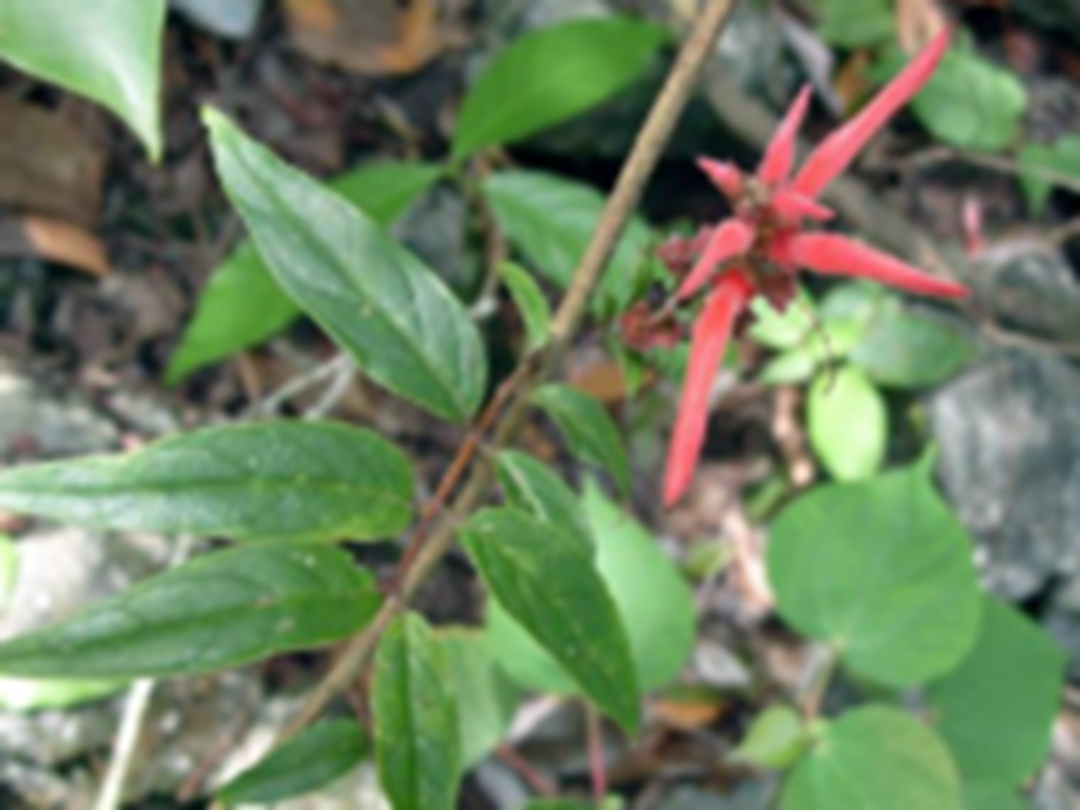
Stem-flowered Laijiang Vine
Stem-flowered Laijiang Vine, a name in traditional Chinese medicine. It refers to the whole plant of Brandisiacauliflora Tsoong et Lu (family Scrophulariaceae). It is distributed in southwestern Guangxi. It has the therapeutic effect of relaxing tendons and activating meridians. It is commonly used to treat rheumatic bone pain and injuries resulting from falls or blows, including fractures.
Chinese Name : 茎花来江藤
Aliases : Red-flowered Brandisia
Nature, Flavor & Meridian Tropism : Slightly bitter in taste; neutral in nature. Entering the Liver and Kidney meridians
Benefits & Efficacy
Benefits
Relieves muscle stiffness and promotes the flow of meridian energy.
Indications
Used for rheumatic bone pain and fractures caused by falls or blows.
Usage and Dosage
Internal use: Decoct 6–9 g. External use: Pound an appropriate amount of the fresh herb into a paste and apply topically.
Relevant Discussions
*Xinhua Compendium of Materia Medica*: “The whole plant: has the efficacy of relaxing tendons and activating meridians. Used for rheumatic bone pain; applied externally for fractures.”
Applications
Processing & Preparation
Harvesting & Processing
Harvest in summer or fall; cut into sections and sun-dry, or use fresh.
Crude Drug Identification
Botanical Information
Botanical Classification
A vine of the Scrophulariaceae family, Hua Lai Jiang Teng.
Morphological Characteristics
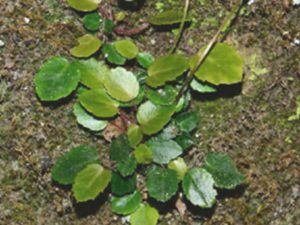
A vine-like shrub. Branches are light brown to brown, with numerous prominent lenticels. Leaves are opposite; short-petiolate; leaf blades are lanceolate, 5–10 cm long, 1–2.5 cm wide, with a long acuminate apex and a cuneate base; when dry, the upper surface is dark black; when mature, both surfaces are glabrous, with entire margins.Racemes arise from the main stem, 5–6 cm long; the rachis, bracts, pedicels, and calyx are all glabrous; bracts are leaf-like, small, and petiolate, with most falling off by the fruiting stage; flowers are paired in the axils of the bracts; pedicels are 5–8 mm long, with a pair of small, lanceolate bracteoles at the upper end;The calyx is campanulate, 5–6 mm long, shallowly 5-lobed, with triangular calyx teeth bearing acute tips; the corolla is bright red, with the lower lip half as long as the upper lip; there are 4 stamens, with two stronger ones. The capsule is ovoid-globose, with an acute apex, and glabrous externally. Flowering occurs from June to July, and fruiting in the fall.
Distribution Area
Southwestern Guangxi.