Torreya seeds, a name in traditional Chinese medicine. They are the dried, mature seeds of Torreya grandis Fort., a plant in the genus Torreya of the Taxodiaceae family. They have the effects of killing parasites and eliminating intestinal accumulation, moistening the intestines and relieving constipation, and moistening the lungs and relieving coughs. They are primarily used to treat abdominal pain caused by parasitic infestation, constipation due to intestinal dryness, coughs caused by lung dryness, and filariasis.
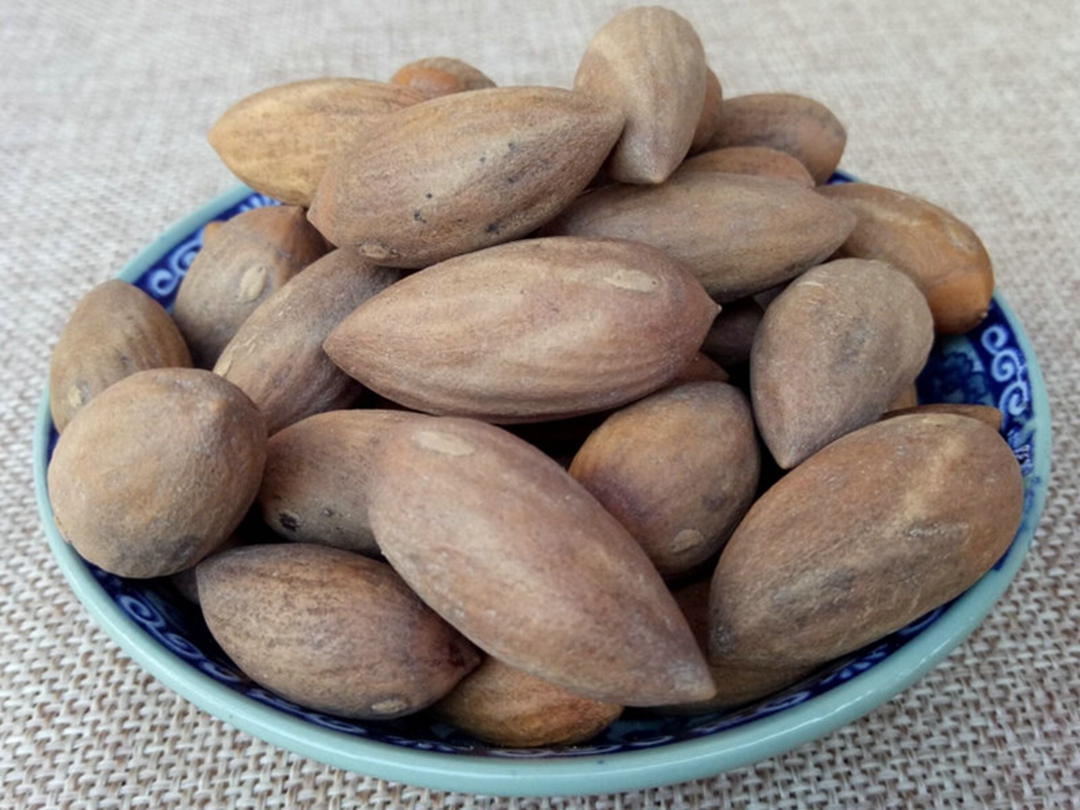
Torreya Seed
Torreya seeds, a name in traditional Chinese medicine. They are the dried, mature seeds of Torreya grandis Fort., a plant in the genus Torreya of the Taxodiaceae family. They have the effects of killing parasites and eliminating intestinal accumulation, moistening the intestines and relieving constipation, and moistening the lungs and relieving coughs. They are primarily used to treat abdominal pain caused by parasitic infestation, constipation due to intestinal dryness, coughs caused by lung dryness, and filariasis.
Chinese Name : 榧子
Latin Name : Torreyae Semen
Aliases : Bi Zi, Gai Shi, Zhi Zi, Yushan Fruit, Red Fruit, Jade Gai, Fragrant Gai, Wild Cedar Seed
Nature, Flavor & Meridian Tropism : Sweet in taste, neutral in nature; enters the Lung, Stomach, and Large Intestine meridians
Benefits & Efficacy
Benefits
Kills parasites and eliminates food stagnation; moistens the intestines and promotes bowel movements; moistens the lungs and relieves cough.
Indications
1. Abdominal pain due to parasitic infestation: This herb kills parasites, eliminates accumulations, moistens the intestines, and promotes bowel movements. 2. Constipation due to intestinal dryness: This herb is sweet, moisturizing, and neutral in nature; it enters the Large Intestine Meridian and has the effect of moistening the intestines and promoting bowel movements. 3. Cough due to lung dryness: This herb is sweet and moisturizing and enters the Lung Meridian; it can moisten lung dryness and relieve cough. 4. Can be used to treat filariasis.
Usage and Dosage
Oral use: Decoct and take 10–15 g. Roast until crisp and chew; take 15 g at a time.
Precautions
Not suitable for individuals with loose stools or coughs caused by lung heat.
Chemical Constituents
The seeds contain 54.3% fatty oil, with unsaturated fatty acids accounting for as much as 74.88%; the main components of the oil are linoleic acid, stearic acid, and oleic acid, and it also contains gluten, sterols, oxalic acid, glucose, polysaccharides, essential oils, and tannins.
Pharmacological Actions
Chinaberry seeds contain active ingredients that expel cat tapeworms; the extract exhibits toxic effects in vitro against pork roundworms, earthworms, and leeches; a 5% decoction can kill schistosome cercariae within 2 hours; chinaberry seed oil has an anthelmintic effect against hookworms; and the alkaloids found in chinaberry seeds from Japan can induce uterine contractions, which are used in folk medicine for abortion.
Relevant Discussions
*Essentials of Materia Medica*: “Moistens the lungs; kills parasites.”
Applications
Clinical Applications
1. It is commonly used in combination with Xishijun and Melia azedarach bark to treat ascariasis. Used alone or in combination with areca nut and Isatis root, it treats hookworm infection. When used with areca nut and pumpkin seeds, it treats tapeworm infection.*Practical Modern Chinese Herbal Medicine*: To treat intestinal parasitic infections such as ascaridiasis, enterobiasis, hookworm infection, and tapeworm infection, use one liang (30 g) of this herb, one liang (30 g) of *Sichuan Prunus*, and one liang (30 g) of garlic. Decoct in water, strain out the residue, and take three times daily on an empty stomach before meals.
2. It can be used in combination with hemp seeds, prunus mume seeds, and trichosanthes seeds to treat constipation caused by intestinal dryness.
3. When used with herbs that nourish yin, moisten the lungs, and relieve cough—such as Sichuan fritillary bulb, trichosanthes seeds, fried mulberry leaves, and glehnia root—it can moisten lung dryness and relieve cough.
Medicinal Identification
1. Ginkgo Nuts, Ginkgo Flowers, and Ginkgo Roots: Ginkgo nuts have a sweet, neutral taste and enter the Lung, Stomach, and Large Intestine meridians. They function to kill parasites, eliminate food stagnation, moisten the lungs, and provide a mild laxative effect. They are primarily used to treat abdominal pain caused by parasitic infestations, dry-lung cough, and intestinal dryness-induced constipation. Regarding ginkgo flowers, the *Bie Lu* states: “They have a bitter taste. They treat water retention and eliminate red worms. They should be harvested in spring. They should not be taken for an extended period.”The *Ben Cao Shi Yi* states, “Eating them promotes weight gain; they treat hemorrhoids and kill parasites.” Ginkgo roots are primarily used to treat rheumatic swelling and pain.
2. Raw Ginkgo Nuts vs. Roasted Ginkgo Nuts: Raw ginkgo nuts are more effective at killing parasites, eliminating food stagnation, and moistening and lubricating the intestines; they are commonly used for abdominal pain caused by parasitic infestations, dry cough due to lung dryness,intestinal dryness and constipation; when roasted, Chinese arbutus nuts excel at aiding digestion and promoting appetite, nourishing the middle burner, and treating malnutrition, and are often used for malnutrition in children.
3. Chinese Arbutus Nuts and Chinese Prunus: Both are anthelmintics with very low toxicity; they expel parasites without harming the spleen and stomach, and also have the effect of moistening the intestines and promoting bowel movements, so no additional laxatives are needed during deworming.Ginkgo nuts are particularly effective against hookworms and tapeworms, and also have the effect of moistening the lungs and relieving coughs, making them suitable for treating dry coughs caused by lung dryness; Shijunzi is most effective against roundworms and can also tonify the spleen and stomach and clear deficiency heat, making it a key herb for treating malnutrition in children.
4. Ginkgo Nut and Areca Nut: Both are anthelmintics capable of treating abdominal pain caused by various parasitic infestations, but the ginkgo nut is more effective than the areca nut at killing roundworms. The areca nut has the effects of killing parasites, eliminating accumulations, regulating qi, promoting bowel movements, and promoting diuresis to reduce swelling.It is primarily used to expel tapeworms. Ginkgo nuts are sweet, mild, and moisturizing; they facilitate bowel movements without harming the spleen and stomach. They also treat abdominal pain caused by parasitic infestations, have low toxicity, and are convenient to use. They are primarily used to expel roundworms and pinworms, and they also have the effect of moistening the lungs and relieving coughs, making them suitable for treating dry coughs caused by lung dryness.
Related Medicines
Jian’er Ganji San, Xia’er Kang Granules, Ying’er Xiaoshi San, and Tong’er Qingre Daozhi Pills.
Related Prescriptions
“Worm-Expelling Decoction” (*Jingyue Quanshu*).
Processing & Preparation
Harvesting & Processing
Harvest in the fall when the seeds are ripe; remove the fleshy aril, wash thoroughly, and dry.
Processing Methods
1. Ginkgo Kernels: Take the raw herbal material, remove impurities, shell the seeds to extract the kernels, and crush them before use.
2. Roasted Ginkgo Kernels: Place the cleaned ginkgo kernels in a pan, heat over low heat, and roast until deep yellow; when the aroma is released, remove and let cool.
3. Sand-roasted Ginkgo Kernels: First, heat sand in a pan until hot; then add the cleaned ginkgo kernels and roast until the surface turns deep yellow with slight scorch marks. Remove and sift out the sand.
Storage Methods
Store in a dry container. Keep the roasted Chinese pine nut kernels in an airtight container in a well-ventilated, dry place to prevent insect infestation and oil separation.
Crude Drug Identification
Identification
Take 3 g of the powdered sample, add 30 mL of methanol, sonicate for 30 minutes, filter, and evaporate the filtrate to dryness. Dissolve the residue in 20 mL of water, extract with 30 mL of chloroform by shaking, separate the chloroform layer, evaporate to dryness, and dissolve the residue in 2 mL of ethyl acetate to prepare the test solution.Separately, take 3 g of the reference material (Phellodendron bark) and prepare a reference solution using the same method. Perform thin-layer chromatography (General Chapter 0502): pipette 2 μL of each of the two solutions and apply them separately onto the same silica gel G plate. Develop with a mobile phase of petroleum ether (60–90°C) and ethyl acetate (8:2), remove the plate, and allow it to air-dry.spray with a 10% ethanol solution of sulfuric acid, heat at 105°C until the spots become clearly visible, and examine under natural light and ultraviolet light (365 nm), respectively. In the test sample chromatogram, spots of the same color or fluorescent spots appear at positions corresponding to those in the reference herbal material chromatogram.
Properties of Crude Drugs
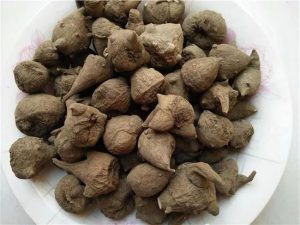
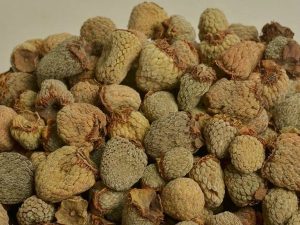
Seeds are elliptical or oblong-ovate, 2–4 cm long and 1.5–2.5 cm in diameter. The outer surface is yellowish-brown to dark brown, with faint longitudinal ridges; one end is bluntly rounded, bearing an elliptical hilum that is slightly paler in color and relatively smooth, while the other end is slightly pointed.The seed coat is hard and brittle; when broken open, a single seed kernel is visible. The kernel is ovoid, with an outer endosperm that is membranous, grayish-brown, and extremely shriveled, while the inner endosperm is enlarged, yellowish-white, firm in texture, and rich in oil. It has a faint odor and a slightly sweet and astringent taste. When roasted, it emits a fragrant aroma.
Properties of Processed Slices
1. Ginkgo Kernel: See the “Medicinal Material” entry.
2. Roasted Ginkgo Kernel: Resembles the Ginkgo Kernel in shape; the surface is deep yellow with slight scorch marks; the interior is yellow and has a fragrant aroma.
Botanical Information
Botanical Classification
Taxus chinensis, a species of the genus Taxus in the family Taxodiaceae.
Morphological Characteristics
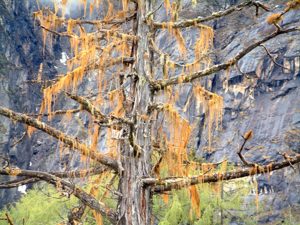
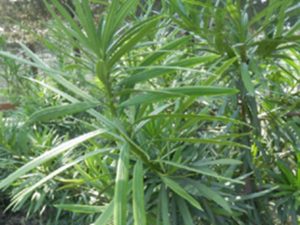
An evergreen tree reaching up to 25 m in height with a breast height diameter of 55 cm. The bark is pale grayish-yellow, dark gray, or grayish-brown, with irregular longitudinal fissures. Twigs are nearly opposite or whorled; one-year-old twigs are green, while two- to three-year-old twigs are yellowish-green, pale brown, or dark greenish-yellow, rarely pale brown.Leaves are linear, usually straight, 1.1–2.5 cm long and 2.5–4 cm wide, with a convex or spiny-short-pointed apex and a rounded base; the upper surface is glossy green with an indistinct midrib and two slightly prominent longitudinal grooves; the lower surface is pale green, with the stomatal band and midrib band nearly equal in width, and the green marginal band equal to or slightly wider than the stomatal band.The species is dioecious; male cones are solitary in the leaf axils, while female cones are paired in the leaf axils. Each female cone has two pairs of crossing, opposite bracts at the base, along with a small lateral bract; the ovules are erect and solitary on the aril.The seeds are elliptic, ovoid, obovate, or oblong-elliptic, 2–4.5 cm long and 1.5–2.5 cm in diameter; when ripe, the aril is pale purplish-brown with a white powdery coating, bearing a small, protruding tip at the apex, and the endosperm is slightly wrinkled. Flowering occurs in April, and the seeds mature in October of the following year.
Distribution Area
It is distributed in the mountainous regions below 1,400 m elevation in southern Jiangsu, Zhejiang, southern Anhui, northern Fujian, and northern Jiangxi; the Dabie Mountains; and westward to southwestern Hunan and Songtao in Guizhou. Large wild specimens can be found in areas below 1,000 m elevation on Mount Xitianmu in Zhejiang.
Growth Habits
The Chinese arbutus thrives in cool, foggy, and humid environments; it tolerates shade when young but requires ample sunlight during the flowering and fruiting periods. It grows best in deep, loose, fertile, well-drained acidic or slightly acidic loam; it is not suitable for cultivation in dry, barren areas.
Propagation Methods
Propagation can be achieved through seeds, cuttings, layering, or root division.
Cultivation Techniques
1. Seed Propagation: Sow in the fall or in early February to early March. Sow in rows with furrows 10 cm wide and 10 cm deep, covering the seeds with soil to a depth of twice the seed diameter. Cover the seeds with straw after sowing, using a maximum of 1,500 kg per hectare. Once the seedlings emerge, remove the straw and erect a shade structure. In the following spring, transplant the seedlings with a row spacing of 35 cm and a plant spacing of 15 cm.Water for several days after transplanting to ensure survival.
2. Propagation by Cuttings: Cut hardwood branches. Dig a trench every 25 cm along the bed, arrange the cuttings along one side of the trench, cover with soil and firm it down, leaving one-third of the cutting exposed above ground. Transplant in early spring of the following year.
3. Layering: In the spring, select a new shoot near the base, bend it down close to the ground, make an incision in the outer bark, cover the cut section with a mound of soil, and water it. In early spring of the following year, first sever the node connecting to the parent tree, then transplant and establish the new plant in the fall.
4. Division: In early spring, separate the new shoots growing in clumps and transplant them, watering frequently until they become established.
Pest and Disease Control
The main pests are longhorn beetles.