Tropical Ganoderma is the name of a traditional Chinese medicine. It is the fruiting body of the fungus Ganoderma tropicum (Jungh.) Bres., belonging to the Polyporaceae family. It is distributed in Jiangxi, Zhejiang, Fujian, Guangxi, Guangdong, Guizhou, and Yunnan. It has tonic, fortifying, and antitumor effects. It is commonly used to treat coronary heart disease and tumors.

Tropical Reishi
Disclaimer: These statements have not been evaluated by the Food and Drug Administration (FDA). This product is not intended to diagnose, treat, cure, or prevent any disease. All references in this article to TCM syndrome differentiation, herbal medicines, teas, and decoctions are intended to promote TCM culture and are provided solely for educational and reference purposes.
Tropical Ganoderma is the name of a traditional Chinese medicine. It is the fruiting body of the fungus Ganoderma tropicum (Jungh.) Bres., belonging to the Polyporaceae family. It is distributed in Jiangxi, Zhejiang, Fujian, Guangxi, Guangdong, Guizhou, and Yunnan. It has tonic, fortifying, and antitumor effects. It is commonly used to treat coronary heart disease and tumors.
Chinese Name : 热带灵芝
Nature, Flavor & Meridian Tropism : Slightly bitter in taste; neutral in nature
Benefits & Efficacy
Benefits
Tonic, fortifying, and antitumor.
Indications
Used for coronary heart disease and tumors.
Usage and Dosage
Oral use: Decoct 3–9 g; or grind into powder and dissolve in water.
Processing & Preparation
Harvesting & Processing
Harvest in fall and winter; sun-dry for later use.
Crude Drug Identification
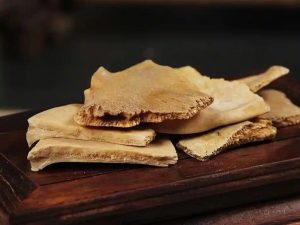
Properties of Crude Drugs
Cap: Kidney-shaped or semicircular, 10–20 cm in diameter, about 3 mm thick. Surface reddish-brown or purplish-reddish-brown, with a lacquer-like luster, featuring concentric rings or wrinkles; margin bluntly rounded, wavy, or shallowly lobed.Pores are white or light brown; pore openings are oblong or polygonal, with 4–5 per millimeter. The stem is usually lateral, 5–10 cm long, up to 4 cm in diameter, and reddish-brown. Corky texture. Slight odor; bland taste.
Botanical Information
Botanical Classification
A tropical Ganoderma species in the Polyporaceae family.
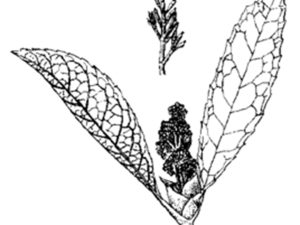
Morphological Characteristics
The cap is kidney-shaped, semicircular with a posterior margin, and sometimes circular, 10–20 cm in diameter and 1–3 cm thick; the surface is reddish-brown to purplish-reddish-brown, with a lacquer-like luster and concentric rings or wrinkles; the margin is rounded and blunt or thin and sharp, and is yellowish-white or reddish-brown when fresh.The stem is lateral, rarely central, oblique or erect, 5–10 cm long, thicker at the top and tapering toward the base, up to 4 cm in diameter, reddish-brown to date-brown.The pore surface is white when fresh, turning pale brown when injured; the pores are oblong to nearly angular, with 4–5 per 1 mm; the tubes are pale brown, 2–5 mm long. Spores are seed-shaped, flat-topped, brown, with spiny grooves on the inner wall, (5–8) μm × (4–5.5) μm, containing oil droplets.
Distribution Area
Found in Jiangxi, Zhejiang, Fujian, Guangxi, Guangdong, Guizhou, Yunnan, and other regions.
Copyright: Excerpt from Internet, Copyright belongs to the Original Author and all original sources, This article was shared by DeDe on August 2, 2026, Please credit the source and include a link to the original article when reposting.
Terminology Proofreading: [Cheng Bo] | August 2, 2026 Reviewed by: [Wang Zhongxiang, Associate Chief TCM Physician (China)] | August 2, 2026
Correct Content Errors: Errors may occur during the writing, editing, translation, and publication of website content. If you find any errors or inaccurate information in this article, please feel free to Contact Us to report them, and we will correct them promptly.
FDA Disclaimer: The descriptions of the efficacy of Chinese herbal medicines, herbal teas, decoctions, and formulas, as well as the content on Traditional Chinese Medicine (TCM) diagnostic theory and traditional TCM therapies contained on this site, are intended solely for the purpose of popularizing TCM culture and serving as an educational reference; they do not constitute medical diagnosis or treatment advice. Please do not attempt to use these products on your own without proper guidance. These statements have not been evaluated by the Food and Drug Administration. This product is not intended to diagnose, treat, cure, or prevent any disease. If you are experiencing any physical discomfort, please consult a licensed healthcare professional and seek treatment at a reputable medical institution. This platform assumes no responsibility for any consequences resulting from the use of herbs or formulas by any individual based on the information provided on this site. Please read Medical Disclaimer.